On this page
- What a Field-Level Hazard Assessment Is and When You Need One
- Who's Involved in an FLHA
- How a Field-Level Hazard Assessment Is Done Well
- Start From the JHA, Don't Repeat It
- Walk the Work Area Before You Write
- List Today's Tasks and What Could Go Wrong
- Confirm the Controls Before Work Starts
- Review It With the Crew and Get Everyone's Signature
- One Shift, One Day: Why an FLHA Expires
- Update the FLHA When Conditions Change
- FLHAs Beyond Construction
- Close Out the FLHA and Learn From It
- A Practical Workplace Example
- Common FLHA Mistakes to Avoid
- What an Auditor Expects to See
- Download the FLHA Quick Guide and Template
- Frequently Asked Questions
- Related Guides and Articles
- How Calgary Safety Consultants Can Help
- Sources
What a Field-Level Hazard Assessment Is and When You Need One
A field-level hazard assessment, or FLHA, looks at the work in front of you today, at the place where it's being done. It answers a simple question before anyone starts: what's different here, right now, from what our planning assumed?
Your formal hazard assessment and your job hazard analyses (JHAs) are prepared in advance. They describe a job and its usual hazards, and they set the controls. What they can't know is that it rained overnight, that another contractor is working above you, that the usual forklift is in for repair or that a new worker joined the crew this morning. The FLHA is where those things get caught.
You'll hear it called many things: a field-level risk assessment (FLRA), a site-specific hazard assessment, a pre-job or pre-task hazard assessment, a tailboard or a point-of-work risk assessment. The names differ, but the idea is the same. Alberta's hazard assessment and control handbook treats site-specific and field-level hazard assessments as the same thing: an administrative control for hazards that show up because circumstances at a work site change, done before work starts and again when conditions change or non-routine work is added.
The law points the same way. Alberta's Occupational Health and Safety Code requires employers to assess a work site and identify existing and potential hazards before work begins, to prepare a report of the results, to repeat the assessment when a work process is new or changes and to involve affected workers.
In the Northwest Territories and Nunavut, the WSCC Hazard Assessment Code of Practice describes a site-specific hazard assessment as a snapshot of the site and the tasks under way, completed at the start of the shift, before work starts on a new site or project, when tasks change and when new hazards are found. Yukon's Workers' Safety and Compensation Board publishes a site-specific hazard assessment template alongside its formal one. Most other Canadian jurisdictions don't name the FLHA, but every one expects employers to find and control the hazards in their work, and a good FLHA is one of the clearest ways to show you do that day to day.
You need an FLHA whenever the conditions of the work can vary from one day to the next: work at sites you don't control, work that moves from place to place, shared work areas, outdoor work, maintenance and other non-routine tasks. Many employers simply require one at the start of every job or shift for field, maintenance and mobile work.
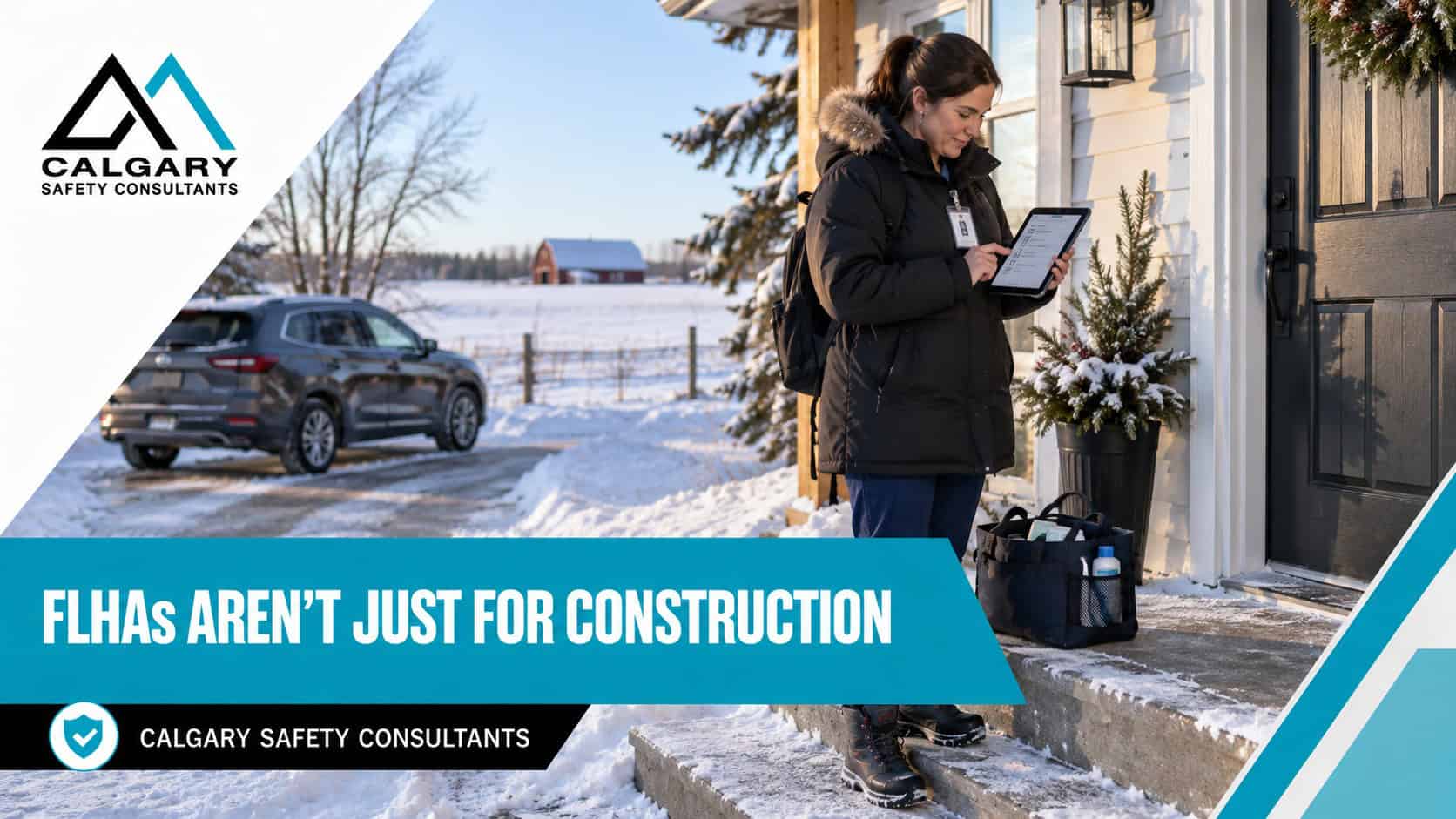
FLHAs aren't just for construction. Oil and gas, utilities, municipal crews, manufacturing maintenance, warehousing, agriculture, forestry, home care, cleaning and facilities services, events and delivery work all use them, under one name or another. Health care uses the same idea at the bedside: Public Health Ontario's routine practices call for every health care provider to assess each patient's risk of transmitting infection, and that assessment guides the precautions they use.
Who's Involved in an FLHA
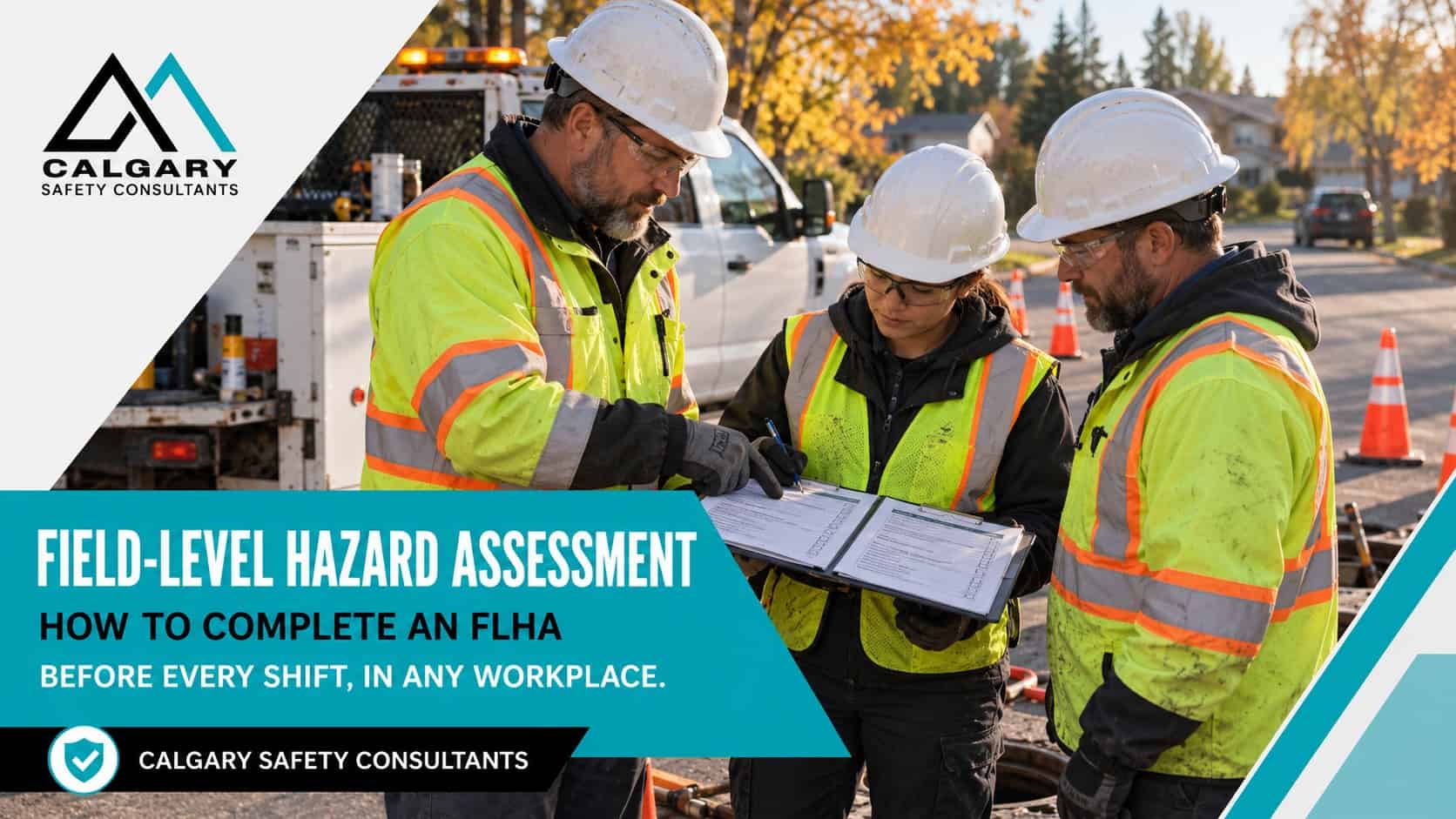
An FLHA is a crew activity, not a form one person fills in for everyone else. These are the people who should be part of it.
- The crew doing the work. Everyone who will work under the FLHA helps build it at the work area, because they're the ones who'll notice what's changed. Each person reviews it and signs it before starting.
- The crew lead or supervisor. Usually leads the FLHA, so they need to be competent in the work being done. They confirm the controls are in place before work starts, keep the FLHA current through the shift and review it at the end.
- Anyone who joins the work area later. A late arrival, a relief worker, another trade, a delivery driver who has to enter the area, an inspector or a visitor. Best practice is that anyone new to the work area reviews the FLHA and signs it to acknowledge it before they start work or move into the area.
- Others affected by the work. Other crews nearby, the host employer or client, the prime contractor on a multi-employer site and members of the public. Their activities can create hazards for you, and yours can create hazards for them.
- Managers and the joint health and safety committee or representative. Managers make sure crews have the time, equipment and people to control what the FLHA finds. The committee or representative can review completed FLHAs for patterns and raise what they see.
In Alberta, the Occupational Health and Safety Act extends the employer's duty to workers who aren't its own but are present at the work site, and to other people at or near the site who could be affected by its hazards. It also requires employers to keep information on work site hazards and controls readily available and provide it to workers. Bringing everyone in the area onto one FLHA is a practical way to meet both.
How a Field-Level Hazard Assessment Is Done Well
A good FLHA is short, specific and current. It's built by the crew at the work area, it deals with today's conditions instead of restating the job's paperwork, and it stays live for the whole shift. It isn't a checklist you tick in the truck and forget.
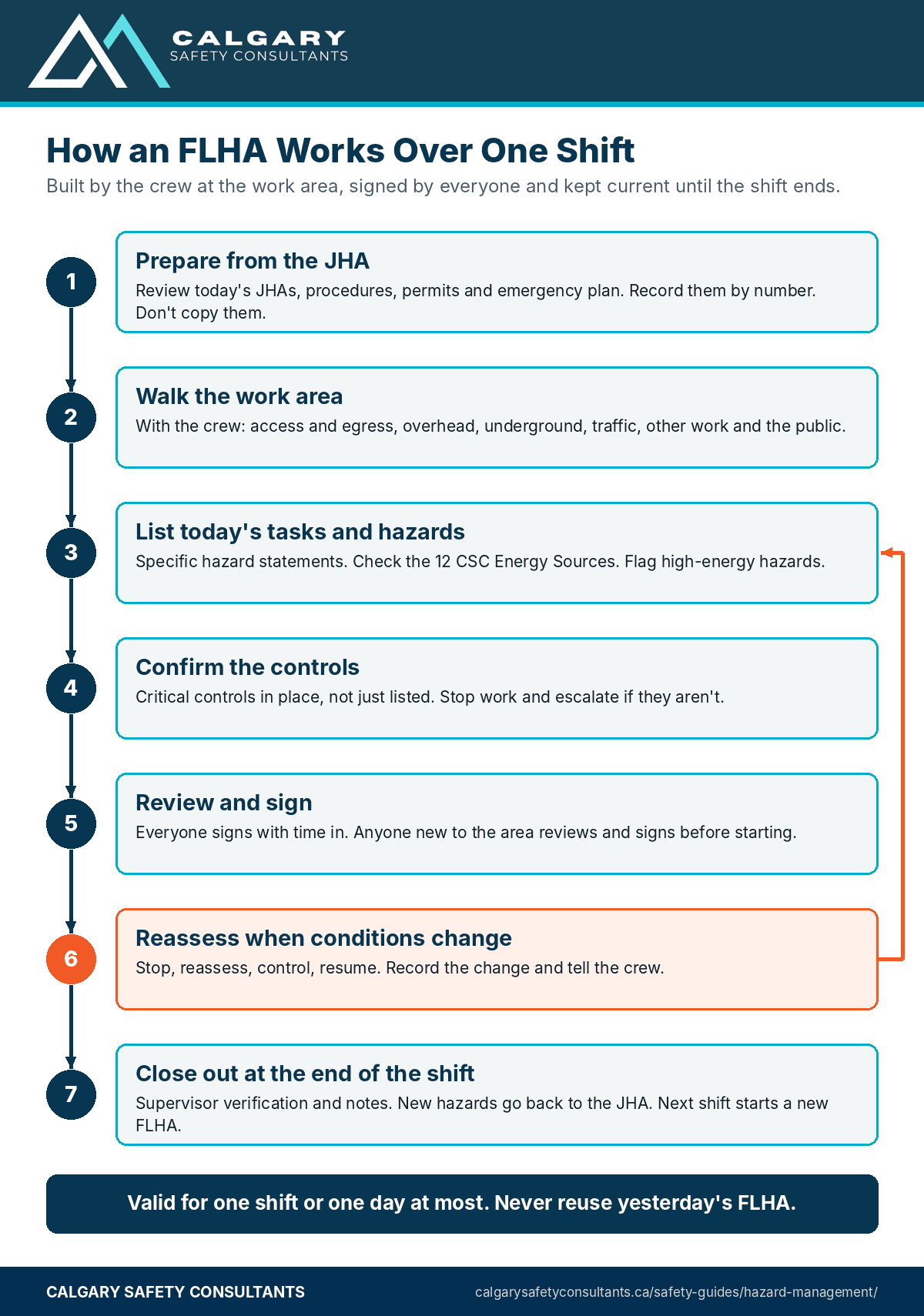
The flow is the same in any workplace. You prepare from the JHA, walk the work area, list today's tasks and what could go wrong, confirm the controls, review it with the crew and get everyone's signature. Then you keep it current as conditions change and close it out at the end of the shift. Our free FLHA template follows that order, and the sections below explain the judgement calls at each stage.
Start From the JHA, Don't Repeat It
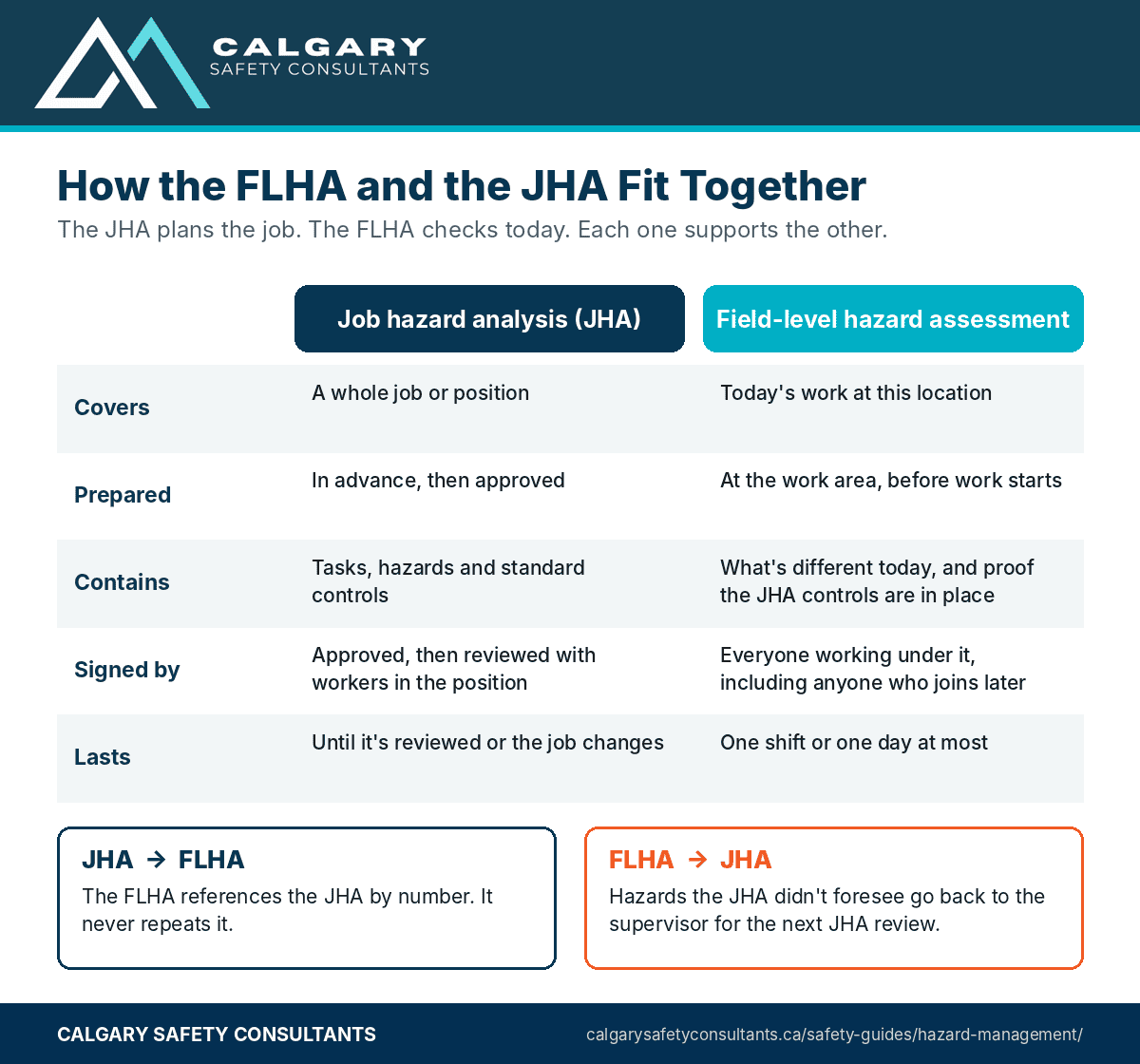
The FLHA should never repeat the JHA. The two are meant to complement each other. The job hazard analysis has already worked through the job's tasks, hazards and standard controls, and it's been approved and communicated. Copying all of that onto the FLHA every morning makes the form long and generic, and the few things that are genuinely different today get buried under hazards everyone already knows.
Instead, the crew lead starts by reviewing the JHA and any safe work procedures for today's tasks, and confirms the permits and the emergency plan the work needs. On the FLHA, the crew records which JHA and procedures apply, by number, and ticks the box confirming they've been reviewed. Our template's required plans and permits checklist includes a line for exactly that. The rest of the FLHA is reserved for what the JHA couldn't know: this location, this weather, this crew, this equipment and the work going on around you.
That doesn't mean ignoring the JHA's controls. Part of the FLHA is confirming that the controls the JHA relies on are actually in place today: the guard is on, the spotter is here, the gas monitor has been bump tested, the lockout devices are on the truck. If a JHA control can't be put in place, that's a finding for the FLHA and a reason to stop and escalate.
If a task has no JHA or written procedure at all, the FLHA isn't a substitute for one. Tell the supervisor. For low-risk work the supervisor may decide the FLHA is enough for the day, but higher-risk work shouldn't start until it's been properly assessed and the controls are agreed.
Walk the Work Area Before You Write
An FLHA completed in the truck, the office or the lunchroom is a guess. The crew should walk the whole work area first, including the way in and out, and look at it with fresh eyes, even if they worked there yesterday.
Look at the ground, overhead and around you: footing and housekeeping, overhead lines and underground services, access and egress, traffic and mobile equipment, other workers and the public. Note who else could be affected by your work, and whose work could affect yours. Our template's pre-job checklist groups these under site, access and conditions; tools, equipment and energy; health and exposure; and environment and special hazards.
A checklist is a prompt, not a ceiling. To find what a list might miss, think in terms of energy. Our CSC Energy Sources list has 12 sources to check for each task: gravity, motion, mechanical, electrical, pressure, temperature, radiation, sound, chemical, biological, ergonomic and psychosocial. Uncontrolled energy is what hurts people, so working through the sources for each task is a reliable way to catch what a quick glance won't.
Then check the conditions the energy sources don't cover:
- Competence. Is everyone trained and authorized for the tasks they'll do today, including lockout, confined space entry or equipment operation?
- Communication. Can people hear each other over the noise and distance? Is anyone working alone, and how will they check in?
- Other work nearby. What are other crews doing above, below or beside you, and what does your work do to them?
- Weather and lighting. What are the conditions now, and what's the forecast for the rest of the shift?
- Emergency and rescue. Does the emergency plan work today, at this location? Where's the first aid kit, the muster point and the nearest help, and is there a rescue plan for work at height or in a confined space?
List Today's Tasks and What Could Go Wrong
Section 4 of our template is where the FLHA gets specific. List today's tasks in the order you'll do them, starting each one with an action, such as "remove the damaged panel" or "set up the traffic cones." For each task, write the hazard as a specific statement of what could go wrong and rate the initial risk. Then record the control or safe work method, the residual risk with the controls in place and who's responsible. Initial risk always comes before the controls.
Specific beats general every time. "Traffic" tells nobody anything. "Forklifts crossing the dock door opening while we work from the lift" tells the crew exactly what to watch for and what the control has to address. "Slippery" becomes "ice on the client's front steps and driveway." If a hazard isn't present, it's fine to say so; an honest "none identified" is better than a blank that might mean "didn't look."
Flag the high-energy hazards: the ones that could kill or seriously injure someone, such as falls from height, mobile equipment, suspended loads, stored energy, electrical contact or hazardous atmospheres. Each one needs a direct control in place, something that physically stops the energy from reaching a person, like a barrier, a lockout, guarding or fall protection. Awareness, signs and "be careful" aren't direct controls for a hazard that can kill.
Rate the risk the same way your JHAs do. Our template uses a five-by-five matrix that multiplies likelihood by severity for a score from 1 to 25, with action levels from low to extreme. Rating the initial risk first tells you how much the controls have to do, and re-rating the residual risk shows whether the controls you've chosen actually bring it down to a level you can accept.
Confirm the Controls Before Work Starts
Identifying hazards is only half the FLHA. Before anyone starts, the crew confirms that the controls are actually in place, not just written down. Our template's critical controls check covers it: the task and work area are understood, the required permits and procedures are in place, equipment has been inspected and is fit for use, energy sources are isolated where required, the right PPE is available and worn, emergency arrangements are confirmed and the crew agrees the work can proceed safely.
The hierarchy of controls applies in the field just as it does in a JHA. Before reaching for PPE or a reminder, ask whether the hazard can be removed, swapped for something less hazardous or physically separated from people. Moving the work out of a traffic lane, closing a path, using a different tool or rescheduling a task until the weather clears are all field-level controls that sit high in the hierarchy. Our post on the hierarchy of controls in Canadian workplaces explains each level.
The FLHA also has to give the crew permission to stop. If a required control isn't available, the risk is still high or extreme, or the crew doesn't understand the conditions, the work doesn't start until it's sorted out. Our template says this in plain words beside the critical controls: stop work and escalate. A crew lead who stops a job because the FLHA found a problem is using the FLHA exactly as intended.
Review It With the Crew and Get Everyone's Signature
Before work starts, the crew lead reviews the completed FLHA with everyone who'll work under it: the tasks, the hazards found today, the controls and the stop-work conditions. Questions get answered then and there. Each person then signs, with the time they came on, to confirm the FLHA was reviewed with them and their questions were addressed. A signature on an FLHA nobody read is worthless, so keep the review short, specific and two-way.
The sign-on doesn't end at the start of the shift. Best practice is that anyone new to the work area reviews the FLHA and signs to acknowledge it before they start work or enter the area. That includes a worker who arrives late, a relief or replacement worker, another trade or contractor, a supervisor or manager who comes to help, an inspector, a delivery driver who has to come into the area and a visitor. Our template's crew sign-on table records each person's name, signature, time in and time out, so the FLHA shows who was in the area and when.
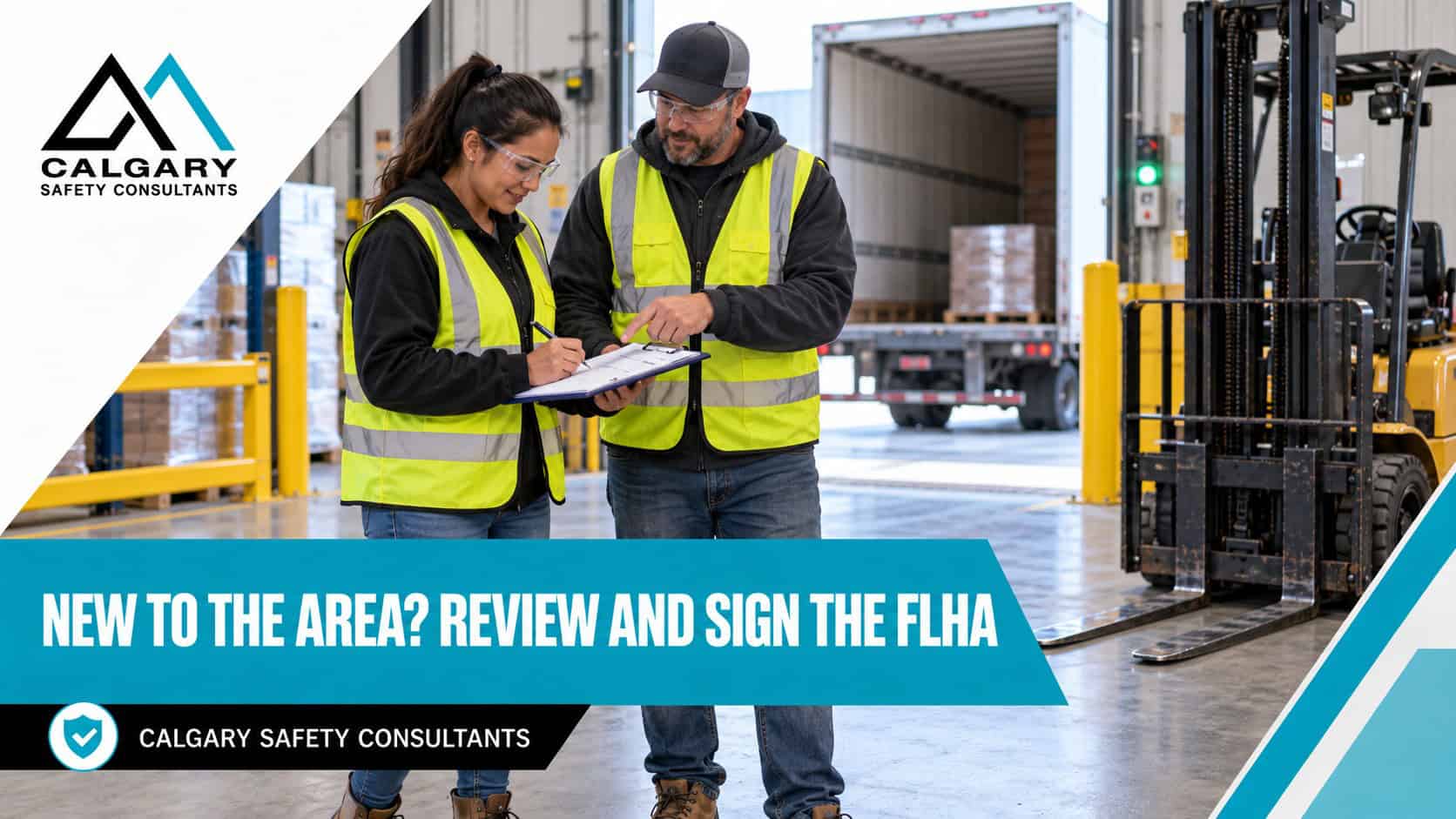
There are good reasons behind this. A person who arrives at 10:30 missed the walk-around, the review and any changes since. They don't know the forklift route was moved or that the stairwell is closed. Regulators expect new people to be told about the hazards they face: in British Columbia, for example, the Occupational Health and Safety Regulation requires the orientation of new and young workers to cover the hazards they may be exposed to. The FLHA sign-on is a quick, practical way to make sure nobody is in the work area without knowing what's going on there.
Keep the FLHA at the work area, where the crew and anyone joining them can see it: on the clipboard at the job, posted at the entrance to the area, in the truck or on the tablet everyone uses. An FLHA locked in the supervisor's vehicle a kilometre away doesn't help the person who just arrived.
One Shift, One Day: Why an FLHA Expires
An FLHA should never be valid for more than one shift or one day, whichever is shorter. When the next shift starts, or the crew comes back the next morning, they complete a new one, even if it's the same task, the same crew and the same location.
That can feel like duplication, but it's the whole point of the FLHA. Overnight, the weather changes, ground freezes or thaws, another contractor moves in, equipment gets used by someone else, materials get delivered and the crew itself changes. People are rested differently at 6 a.m. than at the end of a long day. An FLHA from yesterday describes yesterday's conditions, and the hazards that hurt people are often the ones that changed while nobody was looking.
For multi-day jobs, carry forward what's useful, such as the JHA reference, the permit numbers and the lessons from the day before, but redo the walk-around, the hazards for today's tasks and the sign-on. If you use a digital FLHA app, resist the "copy yesterday's" button, or at least make sure the crew genuinely walks the area and edits it rather than signing a copy. At shift change on continuous operations, the outgoing crew should hand over what they found, and the incoming crew starts its own FLHA with that information in hand.
Update the FLHA When Conditions Change
An FLHA is a snapshot, so it has to be updated as soon as the picture changes. Our template prompts the crew to reassess whenever the task, conditions, crew, equipment or hazards change. These are the kinds of changes that should trigger an update:
- The task or scope changes. A new task is added, the method changes or non-routine work comes up, such as clearing a jam or troubleshooting a breakdown.
- The work location moves. A different room, floor, bay, road section or site, even if it's the same job.
- The weather changes. Thunder or lightning, high wind, rain, freezing rain, snow, heat, extreme cold or wildfire smoke.
- Lighting or visibility changes. Dusk, darkness, fog, glare or a power outage.
- Equipment or tools change. A substitute or rented machine, a breakdown, a tool that isn't working right or equipment that wasn't planned for.
- The crew changes. Someone new arrives, someone leaves and a worker is now alone, a contractor or another trade joins, or the supervisor changes.
- Other work starts nearby. A crane lift, hot work, excavation, cleaning with chemicals, vehicle traffic or another crew working above or below you.
- People in the area change. Customers, students, patients, residents or pedestrians come into or near the work area.
- Materials or chemicals change. A different product, a new supplier or a substance the crew hasn't used before.
- The energy state changes. Lockout is removed, a line is re-energized or pressurized, or a system is started up.
- A control fails or isn't available. A barricade is moved, a gas monitor alarms, the spotter is called away or the rescue plan no longer works.
- Something goes wrong or the work is interrupted. An incident or near miss, an emergency, or a long break or interruption before restarting.
- Someone's condition changes. A worker is unwell, exhausted or possibly impaired, or a client, customer or member of the public becomes aggressive.
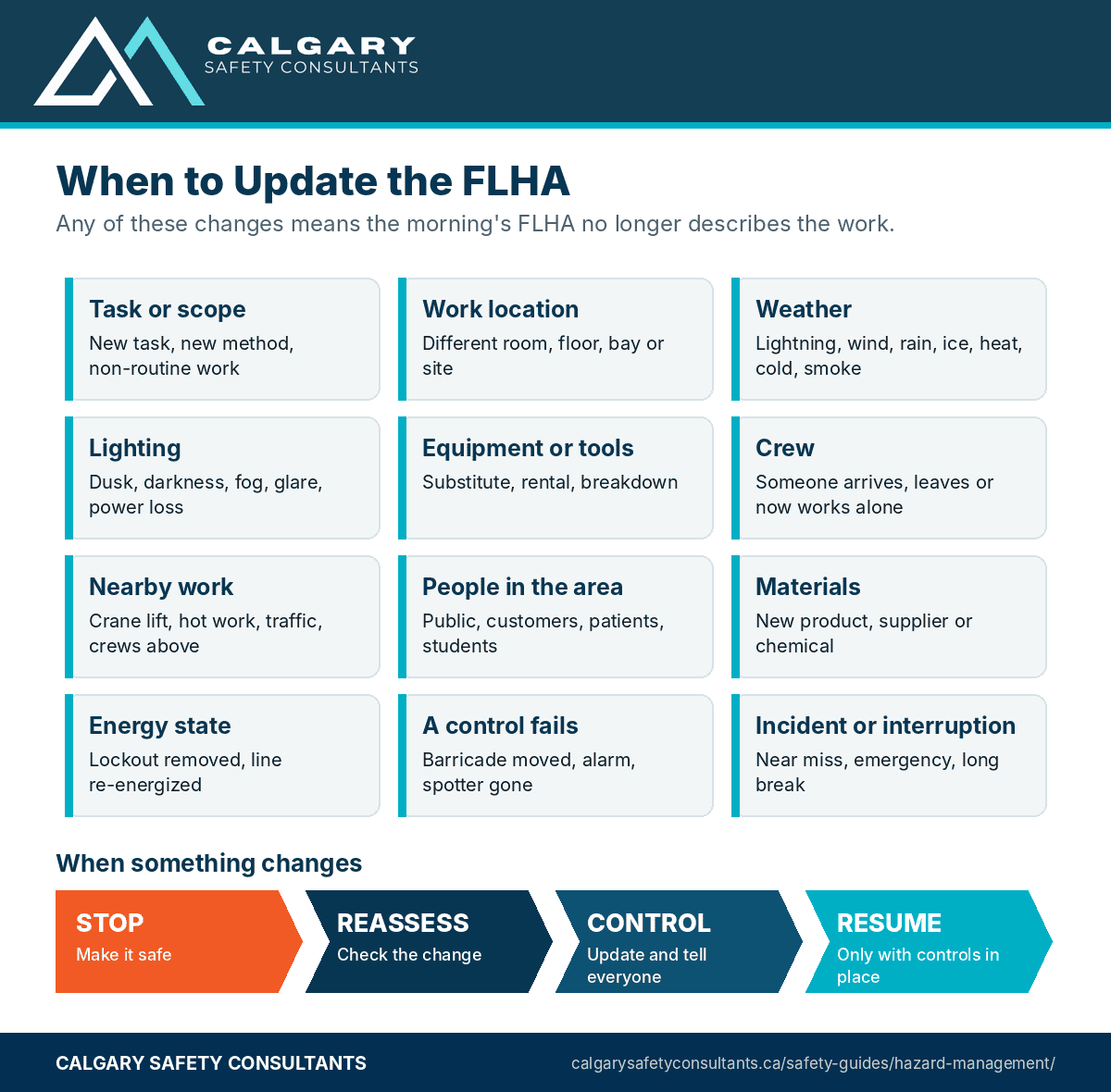
When something changes, the order matters. Stop the work and make it safe first. Reassess the change, using the energy sources if it helps. Put the new controls in place, update the FLHA and tell everyone, then resume only when the controls are working. Our template's reassessment section has a box for each common change, and any new hazards and controls go into the task table or the notes. If the change is significant, the crew reviews the update and initials it.
The same principle runs through risk management guidance everywhere. The UK's Health and Safety Executive tells employers to review their controls when staff, processes, substances or equipment change and when there have been problems, accidents or near misses. The US Occupational Safety and Health Administration tells employers to identify the hazards of non-routine and emergency situations and to check planned changes for new hazards before they're made.
Some changes are bigger than one shift and mean the JHA itself needs review: new equipment, tools or materials, a new or changed work process or method, a type of location the JHA didn't consider, a hazard it never mentioned, an incident or near miss, or the same FLHA finding turning up day after day. Deal with it on the day through the FLHA, then report it to the supervisor so the formal assessment is updated. Alberta's handbook makes the same point: if a site-specific assessment finds a hazard the formal assessment missed, the formal assessment should be updated to include it.
FLHAs Beyond Construction
Because the FLHA started in construction and energy, it's easy to think it belongs there. It doesn't. Any work where conditions change from day to day or place to place benefits from it. Here's what an FLHA looks like in a few other settings.
Home care. A personal support worker heading to a rural client's home in January completes an FLHA before the visit: winter roads and wildlife on the drive, an icy driveway and steps, a dog that isn't always secured, wet bathroom floors, a mechanical lift for transfers, oxygen in use so there's no open flame, and a working-alone check-in. The JHA for home visits covers lifting and infection control. The FLHA covers this client's home today.
Warehousing and maintenance. A technician replacing a damaged dock door panel at a busy distribution centre deals with torsion springs and lockout, trucks backing into the next door, forklift traffic on the dock, working from a lift at about three metres and noise that can mask backup alarms. The FLHA sets up physical separation from the forklift route, not just cones, and confirms that only trained and authorized people touch the springs.
Municipal and parks crews. A crew trimming trees along a busy river path deals with cyclists and pedestrians, a steep bank, a chipper in the parking lot and changing weather. Their FLHA closes the path section, sets an exclusion zone around the chipper and names the weather that would stop the work.
Facilities, cleaning and retail. A cleaner in a hospital, an electrician in an occupied office tower and a store employee stocking high shelves before opening all face conditions that change shift to shift: wet floors, people moving through the area, ladders in aisles, chemicals and lone work at night. A short FLHA at the start of the shift, updated when the area or task changes, fits these workplaces just as well as a job site.
Close Out the FLHA and Learn From It
At the end of the task or shift, the crew lead closes out the FLHA: confirms the work area is left safe, notes anything that happened, such as hazards found, near misses and controls that didn't work, and records any corrective actions with an owner. Our template has a supervisor verification line and a yes-or-no box to show the FLHA was closed out at the end of the task.
Completed FLHAs are a source of information most employers never use. A supervisor who reviews them regularly can see whether they're specific or copied, whether every energy source was considered, whether high-energy hazards had direct controls and whether the FLHA was updated when conditions changed. Patterns across many FLHAs, like the same hazard turning up week after week, point to something the JHA, the equipment or the work planning should fix permanently. Our post on worker participation in workplace safety explains how this kind of feedback shows workers their input matters.
Research on pre-task planning backs this up. A study of construction pre-task planning by researchers at CPWR, the Center for Construction Research and Training, found that effective planning depends on workers' direct involvement in identifying task requirements and hazards, and on updates that reflect changing conditions. An earlier case study of hazard analysis in construction named the most common obstacles: lack of worker involvement, lack of buy-in, management absence, complacency, and poor coordination and communication. Those are the same problems that turn an FLHA into a tick-box exercise, and they're fixed by the same habits this guide describes.
Keep completed FLHAs according to your program's records rule and any legislative, client or certifying partner requirements. They're your evidence that hazards were assessed before work started, and auditors will ask for them.
Workplace example
A Practical Workplace Example
Situation: Consider a four-person municipal parks crew trimming trees along a river path in July. At 7 a.m., the crew lead completed the FLHA at the truck. Instead of copying the tree-trimming JHA, the crew recorded its number and added today's conditions: a busy path with cyclists and pedestrians, a steep and slippery bank, a chipper set up in the parking lot and a clear forecast. Everyone signed on. By mid-morning, the crew heard thunder and saw a storm moving in. At noon, a summer student was sent to help.
Action: The crew lead stopped the work, moved everyone off the bank and away from the trees and equipment, and followed the municipality's lightning procedure. The weather change went into the FLHA's reassessment section, and when work resumed the crew added the wet bank as a hazard and kept off the steepest section.
When the student arrived, the crew lead walked her through the FLHA, the path closure and the chipper exclusion zone before she went anywhere near the work, and she signed with her time in. The next morning, the crew completed a new FLHA and found storm-damaged branches hanging over the path and soft ground where the chipper usually sat, so they closed a longer section and moved the chipper.
Result: Nobody was on the bank or under the trees when the storm arrived. The student knew the exclusion zones before she touched any equipment. The hanging branches were caught because the crew did a fresh FLHA instead of reusing yesterday's. The crew lead also told the supervisor that the tree-trimming JHA didn't cover storm-debris cleanup, and it was added at the next JHA review.
Common FLHA Mistakes to Avoid
- Copying the JHA onto the FLHA. The form gets long and generic, and today's real hazards disappear in the noise. Reference the JHA and record only what's different today.
- Reusing yesterday's FLHA. An FLHA is good for one shift or one day at most. Copying it forward, on paper or in an app, skips the walk-around that finds what changed.
- Completing it before seeing the work area. An FLHA filled in at the shop or in the truck describes what the crew expects, not what's actually there.
- Ticking boxes without specifics. A tick beside "traffic" with no control written beside it isn't an assessment, and it won't help the crew or an auditor.
- Not updating it when conditions change. The weather turns, the crew changes or a control fails, and the morning's FLHA carries on unchanged. Worse is updating the form without stopping the work first.
- Letting people into the area without signing on. Late arrivals, other trades and visitors who never reviewed the FLHA don't know the hazards, the controls or the stop-work conditions.
Audit perspective
What an Auditor Expects to See
If your organization holds or is working toward a Certificate of Recognition (COR) or a Small Employer Certificate of Recognition (SECOR), site-specific hazard assessment is part of the audit. Energy Safety Canada's SECOR external audit protocol, for example, looks for:
- a written system for site-specific, or field-level, hazard assessments, performed before work starts at a site and when non-routine work is added;
- a requirement that hazards identified are eliminated or controlled before work begins;
- completed records showing the process is followed where your policy requires it;
- completed assessments showing that controls were identified and put in place for the hazards listed.
In practice, auditors also notice whether FLHAs are specific to the day, signed by the crew, updated when conditions changed and reviewed by a supervisor, and whether workers can explain the FLHA when they're interviewed. Each certifying partner uses its own approved audit standard, so check the current version for your program. Our template can help you produce the records auditors look for, but no form guarantees an audit result. Calgary Safety Consultants helps employers develop hazard assessment programs and prepare for audits; we don't issue certificates. CORs and SECORs are issued through the applicable certifying partner.
Download the FLHA Quick Guide and Template
Two free downloads go with this guide.
- FLHA Quick Guide (PDF). A two-page summary of how a field-level hazard assessment is done well, with clickable checklists for completing the FLHA, keeping it current through the shift and checking its quality.
- FLHA Template (PDF). Our two-page, landscape FLHA form with clickable checkboxes. Page 1 covers job and crew information, a pre-job hazard identification checklist, required plans and permits, control equipment, a PPE check, emergency readiness, the critical controls check with a stop-work line and a five-by-five risk matrix. Page 2 has the task-specific hazard assessment table, with initial risk rated before the controls, a reassessment section for changing conditions, the crew sign-on with time in and time out, supervisor verification and close-out, and a hierarchy of controls reference.
Click either button to download the PDF. Adapt the template to your operation, your client's requirements and the law where you work, and if your organization already has an approved risk method, use it in place of the generic matrix.

About the author
John Duplessis, B.Sc., CRSP
John Duplessis is a Canadian Registered Safety Professional with about 30 years of occupational health and safety experience in oil and gas, construction, green energy, midstream operations and industrial project work.