Safety Management Systems That Go Beyond a Safety Manual
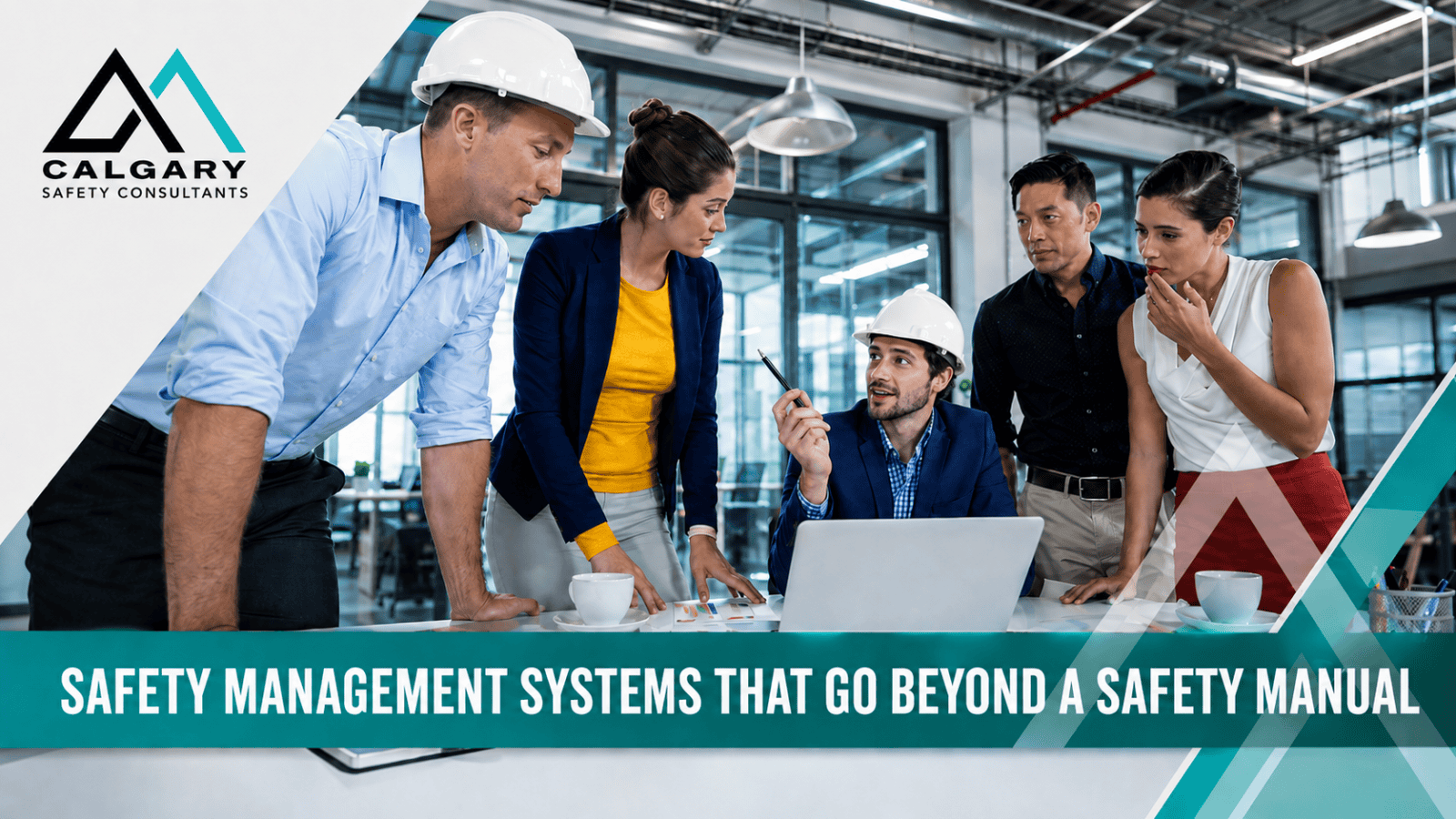
A safety manual is important, but it is only one part of a working safety management systems.
Many employers have policies, forms, procedures, and training records in place, but the system behind those documents may still be weak. Supervisors may not know what to verify. Corrective actions may stay open. Safety meetings may not lead to follow-up. Managers may not have a clear way to review safety performance.
Calgary Safety Consultants helps employers build and improve practical safety management systems that connect documentation to daily operations, leadership, supervision, worker communication, hazard control, inspections, corrective actions, and management review.
We support employers in Calgary and across Alberta, British Columbia, and Saskatchewan with practical safety management system and leadership support.
When a Safety Manual Is Not Enough
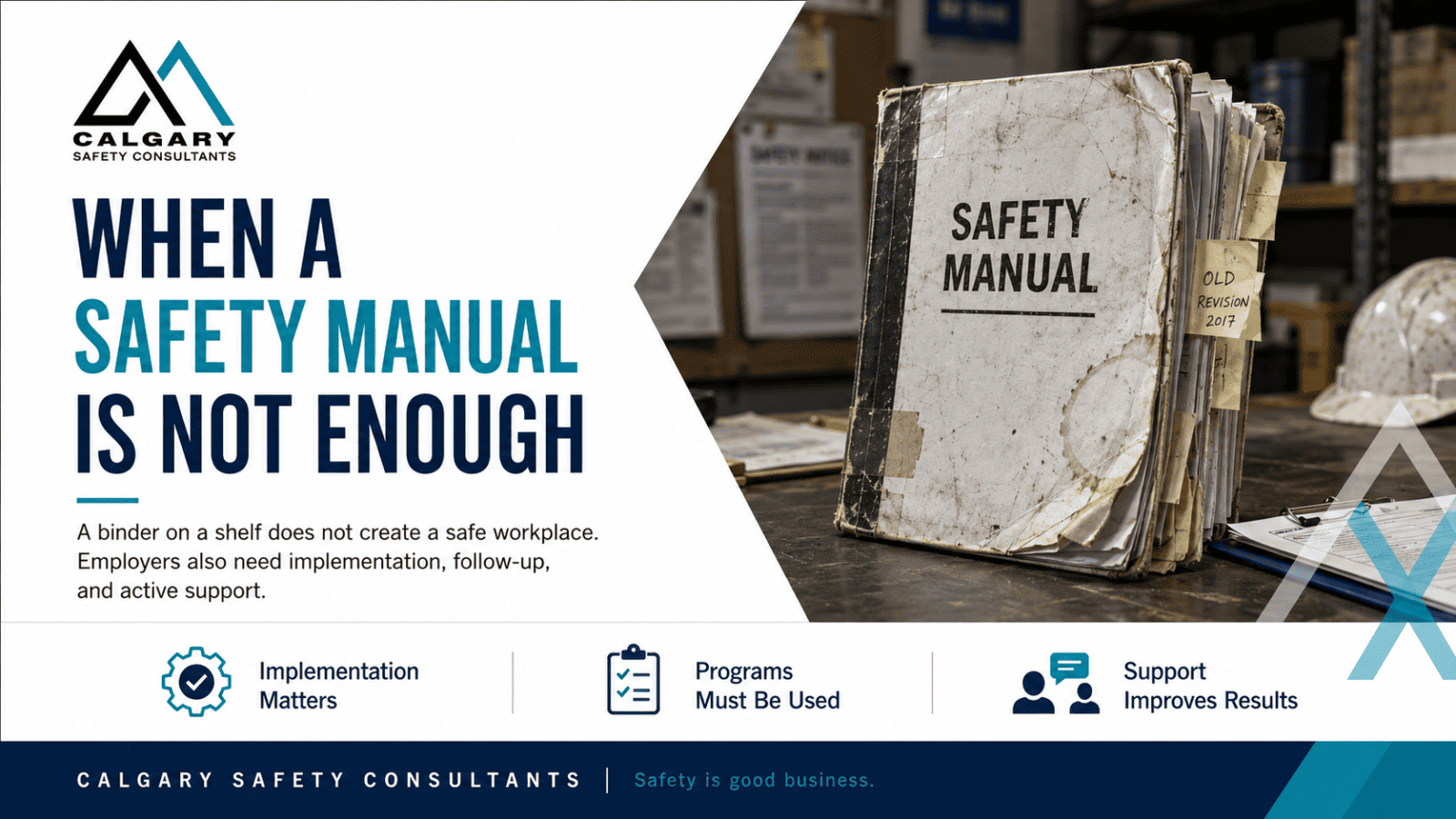
A safety manual can explain what the company expects, but it does not automatically make the safety program work.
The system works when people know what to do with the manual.
Owners and senior managers need to understand what they are responsible for. Supervisors need clear routines for planning work, reviewing hazards, checking controls, speaking with workers, completing inspections, and following up on problems. Workers need a practical way to report hazards, ask questions, and understand expectations.
If those pieces are missing, the safety program may become a paperwork system instead of a management system.
That can create problems during daily operations, client reviews, COR or SECOR preparation, regulatory inspections, incident reviews, and audit preparation.
A stronger safety management system helps the employer move from having safety documents to actually managing safety.
What are Safety Management Systems?
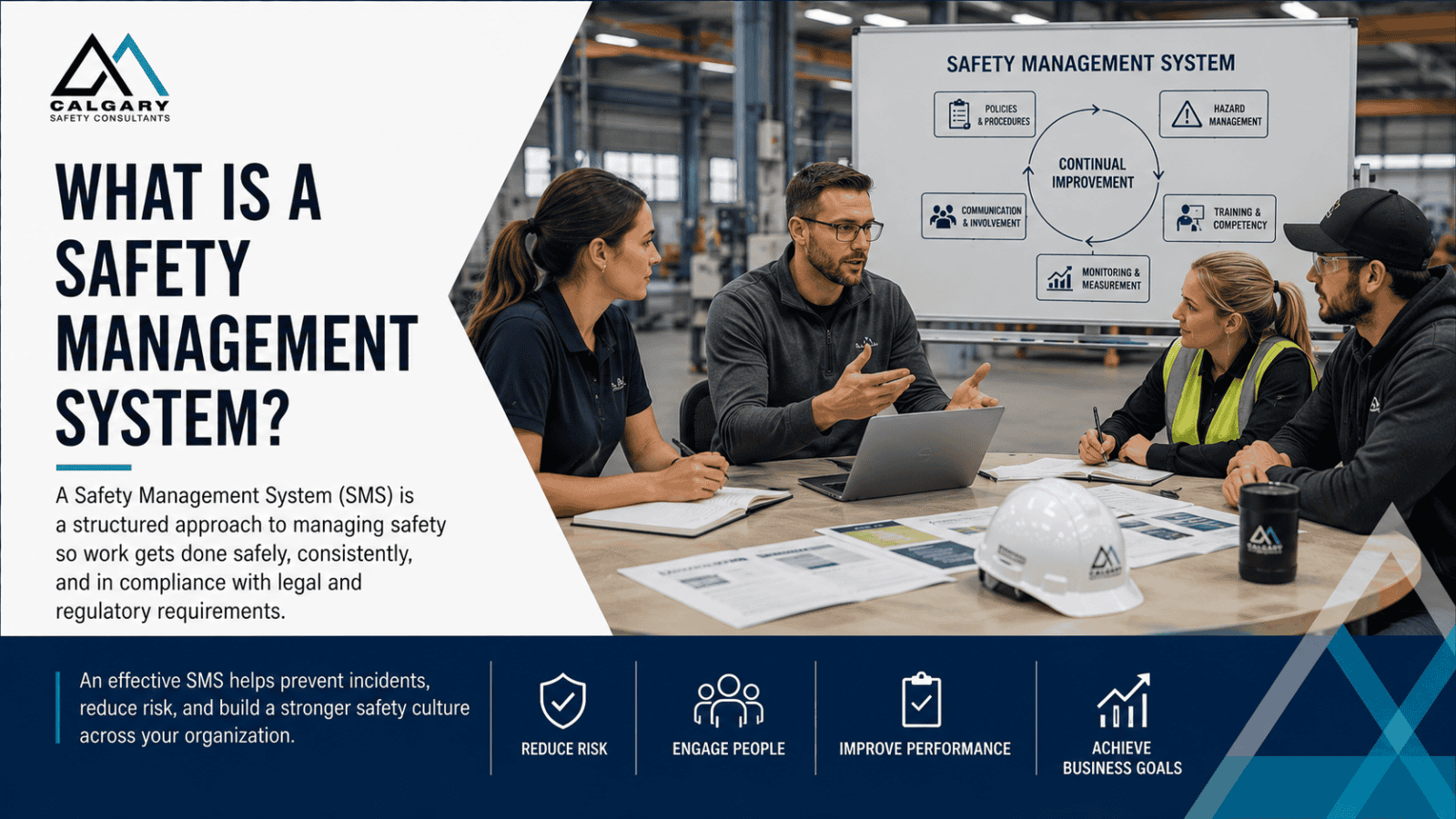
A safety management system is the organized way an employer plans, manages, monitors, and improves workplace health and safety.
It may include policies, procedures, roles and responsibilities, hazard assessments, inspections, training, incident reporting, corrective actions, emergency planning, communication, records, worker participation, supervisor follow-up, and management review.
The purpose is to make safety easier to manage.
A practical system helps leaders make decisions, gives supervisors clear expectations, helps workers understand how to report hazards or concerns, and creates records that show the employer is actively managing risk.
This does not mean the system needs to be complicated. In many workplaces, the most useful improvements are simple and repeatable.
For example, supervisors may need a better inspection routine. Management may need a simple way to review open corrective actions. Workers may need clearer reporting expectations. Safety meetings may need better follow-up. Training records may need to be reviewed more consistently.
The goal is to build a system that works with the business, not against it.
Why Leadership Matters
Safety management systems only work when leaders use it.
If managers do not review safety performance, supervisors do not follow up on hazards, and workers do not see action after reporting concerns, the system loses credibility.
Forms may still be completed, but the program can become reactive, inconsistent, and harder to defend during an audit, inspection, client review, or incident investigation.
Good safety leadership does not need to be complicated. It needs to be consistent.
Leaders set expectations, allocate resources, verify that controls are working, respond to problems, support supervisors, and make sure corrective actions are completed.
Supervisors play a key role because they are closest to the work. They help plan tasks, review hazards, answer worker questions, correct unsafe conditions, document issues, and follow up when something needs attention.
When leadership is consistent, safety becomes easier to manage. Workers understand expectations. Supervisors know what to do. Management has better visibility into risk, performance, claims exposure, audit readiness, and due diligence.
How Calgary Safety Consultants Helps
Calgary Safety Consultants helps employers build or improve safety management systems that are practical, clear, and connected to the work being performed.
Our support may include:
- Reviewing your current safety manual, policies, procedures, forms, and records.
- Reviewing how your safety program is being used in daily operations.
- Clarifying owner, manager, supervisor, worker, contractor, and safety representative responsibilities.
- Improving supervisor safety leadership routines.
- Reviewing hazard assessments, inspections, training records, incident reports, corrective actions, and meeting records.
- Helping create simpler processes for communication, hazard reporting, inspections, and follow-up.
- Supporting management review of safety performance.
- Helping identify gaps that affect COR, SECOR, ISO 45001 alignment, client requirements, regulatory expectations, and internal due diligence.
- Developing practical recommendations so the improvement path is clear.
- Helping supervisors understand what needs to be reviewed, documented, communicated, and followed up on.
The service can be focused or broad depending on what your business needs.
Some employers need a full safety management system review. Others need help with supervisor accountability, corrective action tracking, management review, communication, or implementation after a safety manual has been created.
The goal is to help your company build a safety system that is easier to understand, easier to use, and easier to maintain.
Related Pages
To better understand the role of external OH&S support, read our related page:
You may also find these pages helpful:
Here’s some helpful links for government services:
Alberta Health and Safety Program
Official Government of Alberta health and safety program page.
WorkSafeBC Developing a Health and Safety Program
Official WorkSafeBC guidance page for developing a workplace health and safety program.
Saskatchewan Safety in the Workplace
Official Government of Saskatchewan workplace safety information page.
Frequently Asked Questions
What is a safety management system?
A safety management system is the organized way an employer manages workplace health and safety. It connects policies, responsibilities, hazard assessments, inspections, training, incident reporting, corrective actions, emergency planning, communication, records, and management review into one working process.
How is a safety management system different from a safety manual?
A safety manual is the written documentation. A safety management system is how the employer uses that documentation to manage safety in real operations. The system includes leadership, supervision, worker participation, communication, inspections, corrective actions, training, and review.
When does an employer need safety management system support?
Support may be needed when the safety program exists on paper but is not being used consistently. Common signs include unclear supervisor responsibilities, weak follow-up, outdated hazard assessments, incomplete inspections, disorganized training records, open corrective actions, or safety meetings that do not lead to measurable action.
Why is leadership important in workplace safety?
Leadership matters because workers respond to what leaders consistently do, not just what policies say. Managers and supervisors set expectations, verify controls, respond to hazards, support reporting, and make sure corrective actions are completed.
Can this help with COR or SECOR?
Yes. A stronger safety management system can support COR or SECOR readiness by improving documentation, responsibilities, inspections, hazard assessments, corrective actions, training records, communication, and management involvement.
Can this help with ISO 45001 alignment?
Yes. Calgary Safety Consultants can help employers understand and improve management system elements that support ISO 45001 alignment, including leadership, planning, worker participation, operational control, performance evaluation, corrective action, and continual improvement.
Do you provide supervisor leadership support?
Yes. We can support supervisors and managers with practical OH&S leadership guidance focused on real workplace responsibilities, hazard control, communication, inspections, documentation, incident response, and follow-up.