Opens in a new tab

Working Alone Training

Working alone training helps workers, supervisors, check-in contacts, dispatchers and employers plan lone work, keep regular contact and get help to a worker quickly when something goes wrong.

Working alone isn’t only remote work in the bush. It’s the technician on a night call-out, the home care worker on a visit, the clerk closing the store and the operator doing rounds at an empty plant. When an ordinary slip, fall or medical event happens and nobody can see or hear the worker, the wait for help is what makes it serious. Workers need to know how to plan the job, check in and stop when conditions change. Supervisors and check-in contacts need to know exactly what to do when a check-in is missed.

Calgary Safety Consultants delivers lone worker training online, live virtually and onsite for employers across Alberta, British Columbia and Saskatchewan. Group sessions can use your own working-alone procedure, check-in schedule, communication equipment and workplace examples.

Use the contact form or call 1-888-231-0358 to discuss group size, delivery format and timing, or enrol individual learners in the online course today.

Serving employers across Calgary, Alberta, British Columbia, Saskatchewan, and Canada.

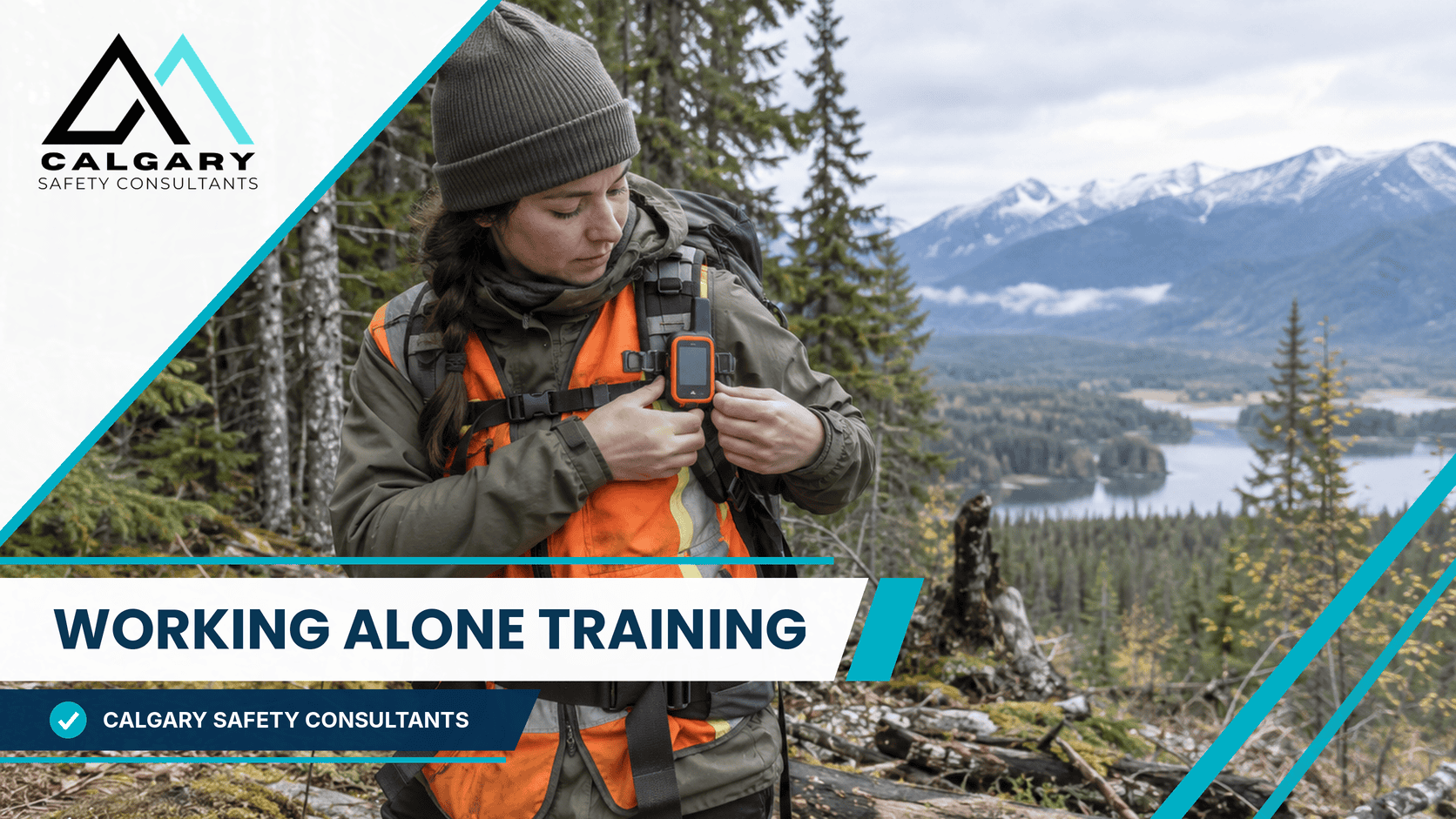
Working alone training for a lone field worker checking in on a satellite communicator at a remote site

Group training

Plan Group Working Alone Training

Most lone-worker plans fail in the same few places: a check-in schedule nobody keeps on a busy day, a phone with no signal at the work site, a contact person who isn’t sure when to escalate, or a missed check-in that sits unanswered for an hour. Group working alone training gives workers, supervisors and check-in contacts one shared plan, so the procedure on paper matches what happens in the field.

The training connects lone-work hazard assessment, deciding whether work may be done alone, communication equipment, check-in plans, missed check-in response, personal security and stop-work decisions. Examples can be drawn from oil and gas, construction, utilities, health care and home care, retail, agriculture, property management, transportation and after-hours facility work.

Group sessions can be built around your working-alone procedure, check-in intervals, communication equipment and recent incidents or near misses. Use the contact form to discuss participants, delivery and timing. Individual learners can enrol in the online course and start today.

Delivery options

Online, Virtual and Onsite Working Alone Training

Choose the format that fits your team, your schedule and how much of the training you want built around your own lone-work procedures.

Online Working Alone Training

Our self-paced online working alone training has 16 narrated video lessons in four modules, written lesson notes, a three-question knowledge check after every lesson, a downloadable Student Reference Guide and a Certificate of Completion. It takes about 3.5 to 4 hours (estimated), and learners can stop and return at any time. Buying 10 or more seats of this course in one order saves 10%.

Virtual Instructor-Led Working Alone Training

An instructor leads your group through the course content by video conference, with discussion, polls and practical exercises. Participants plan a lone-work task, set a check-in schedule and walk through a missed check-in on realistic scenarios, and the session can use your own procedure and equipment. Virtual delivery suits teams spread across several sites. Fill out the contact form below.

Classroom and Onsite Working Alone Training

An instructor delivers the training at your workplace or a meeting room you choose. Onsite sessions can include a practice run of your check-in and missed check-in procedure, using the phones, radios or satellite devices your people carry, so participants practise the way the work is really done. Onsite delivery suits supervisor groups and employers rolling out a new working-alone procedure. Fill out the contact form below.

Live virtual and onsite sessions are scheduled for workplace groups. Session length, exercises, materials and certificate arrangements are confirmed in your training proposal before booking.

Why it matters

Why Working Alone Training Matters

Working-alone rules differ across Canada’s 14 OHS jurisdictions, but the core expectation is the same: assess the hazards of lone work and make sure a worker can get help when it’s needed. In Alberta, Part 28 of the Alberta OHS Code treats working alone as a hazard that must be assessed and controlled, while British Columbia sets out procedures for checking a worker’s well-being in sections 4.20.1 to 4.23 of the BC OHS Regulation. Federally regulated employers follow the Canada Labour Code, as explained in the federal guidance on employees who work alone. Good working alone training helps people meet those expectations in practice, not just on paper. Depending on the format, the training can include:

  • online, live virtual or onsite delivery
  • lone-work hazard assessment practice
  • check-in plans and missed check-in drills
  • your own procedure, equipment and intervals
  • guidance for check-in contacts and dispatchers
  • certificate arrangements confirmed in the proposal

Weak lone-worker plans show up as delayed emergency response, more serious injuries, workers’ compensation claims and repeat audit findings. Strong ones show up as workers who keep their check-in times, contacts who act on a missed call and supervisors who can show an auditor that the plan is tested and reviewed. For employers working toward or maintaining a Certificate of Recognition (COR), training records and a tested working-alone procedure support the evidence an auditor looks for.

The training pays close attention to the time between an incident and help arriving, because that delay can turn a sprained ankle into hypothermia or a treatable medical event into a fatality. Participants learn to set check-in intervals by risk, choose communication that works where they are, and stop the work when conditions change or contact is lost.

Training does not qualify anyone for high-risk work such as confined space entry, fall rescue or energized electrical work, and it does not replace site-specific orientation or the employer’s own procedures. It gives participants a structured way to plan lone work, keep contact and respond when something goes wrong.

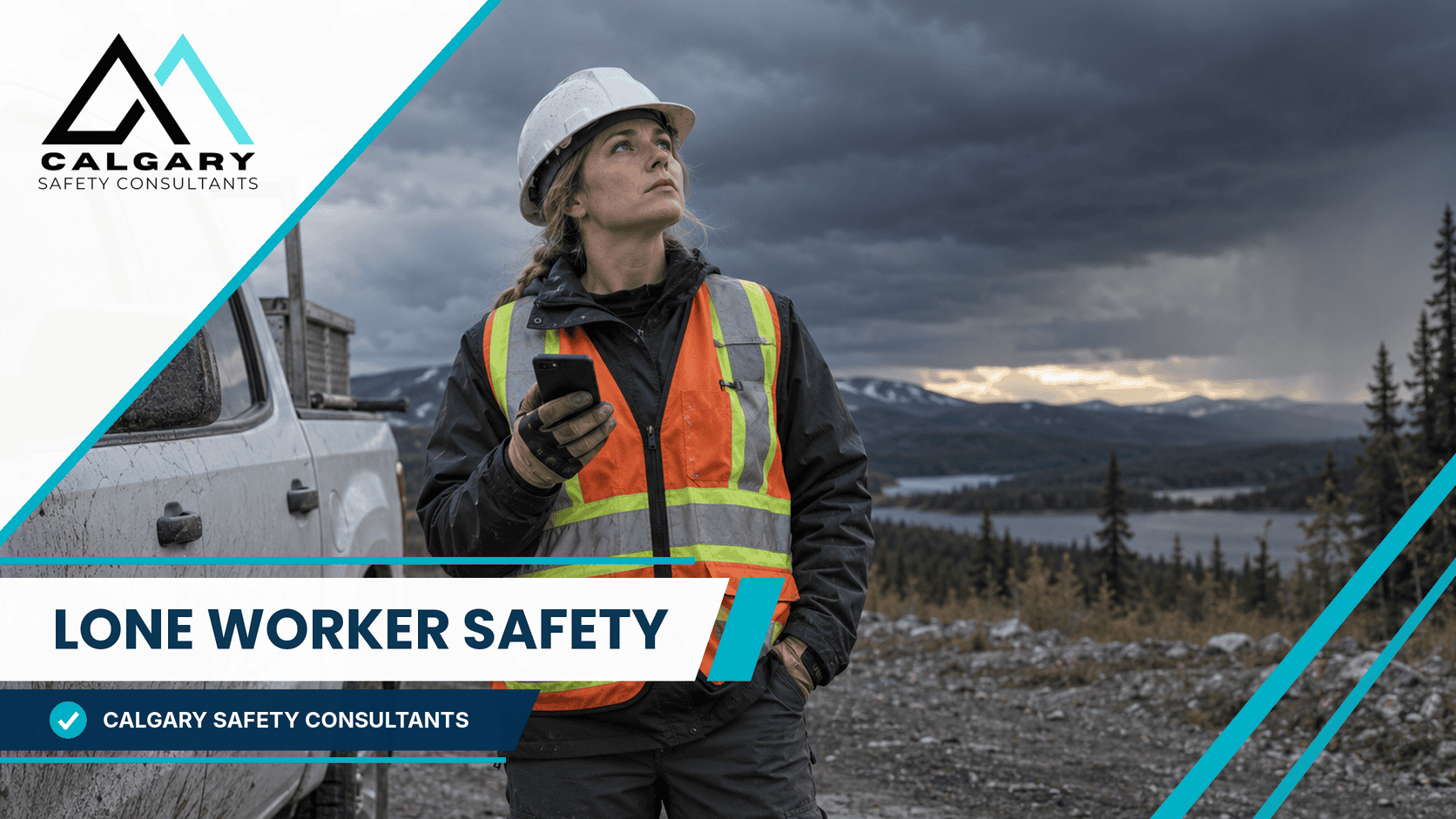
Lone worker safety example of a field worker checking conditions and her phone before working alone at a remote site
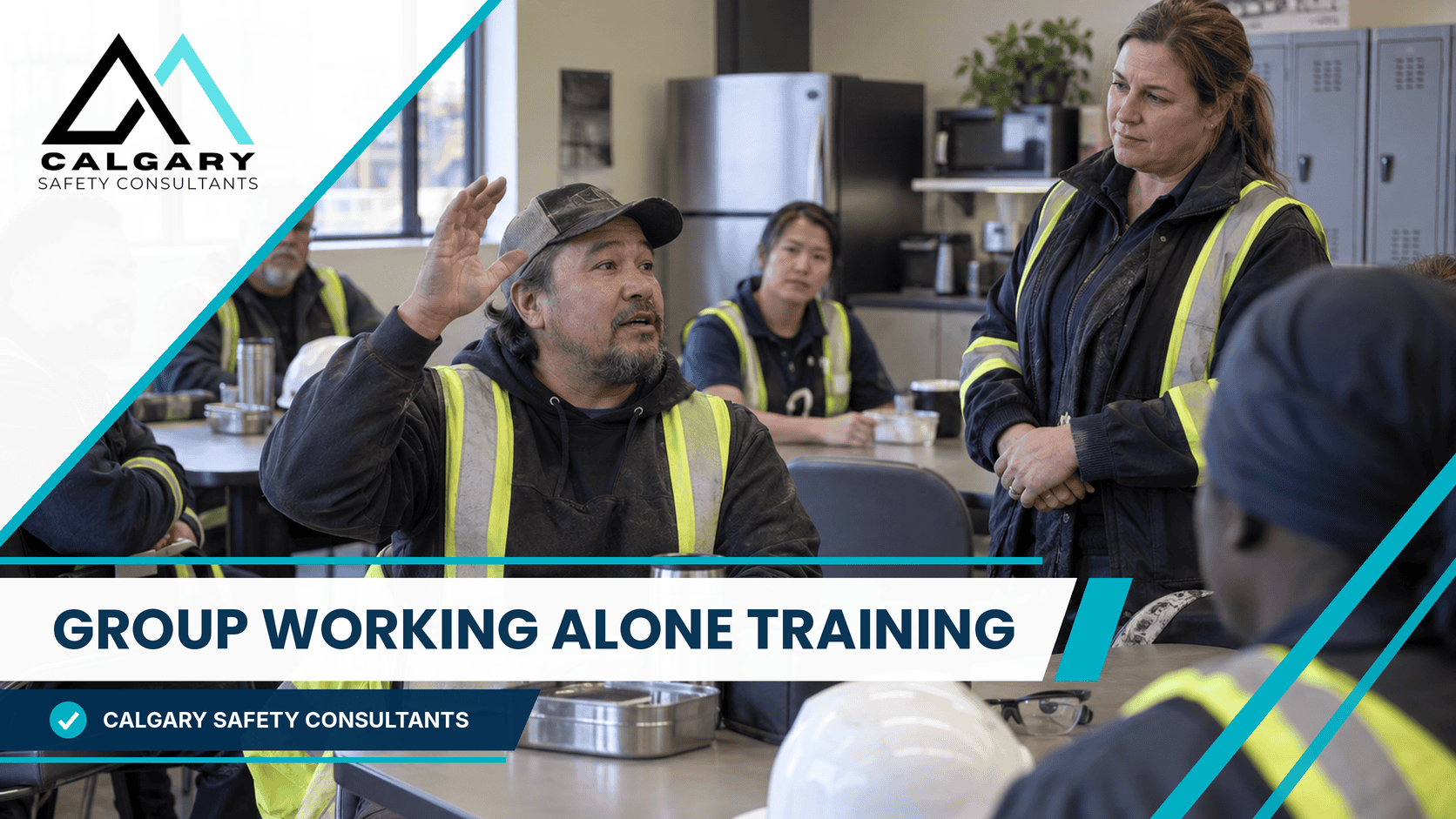
Group working alone training session with a supervisor and crew discussing lone worker procedures

Course content

What Does Working Alone Training Cover?

The training follows four modules. In group sessions, the depth of each module is adjusted to the audience:

  • what working alone means and how to spot it
  • why delayed help changes the risk
  • duties of employers, supervisors and workers
  • working-alone rules across 14 jurisdictions
  • lone-work hazards and the 12 CSC Energy Sources
  • assessing risk and deciding whether work may be done alone
  • communication methods and equipment
  • check-in plans, monitoring and missed check-ins
  • violence, personal security and home visits
  • remote, vehicle, after-hours and stop-work decisions

The online working alone course has 16 lessons, each with a narrated video, written lesson notes and a three-question knowledge check that requires 100% to continue. There’s no separate final exam. Live virtual and onsite sessions cover the same outcomes with more discussion, group exercises and time on your own procedure.

Participants practise building a check-in plan with a set interval, a named contact, a backup method and a clear escalation time, rather than a loose promise to “call if there’s a problem.” They learn what a good check-in sounds like and what to do, step by step, when one is missed.

We do not replace the employer’s accountability. The employer remains responsible for its hazard assessments, working-alone procedures and worker training. Calgary Safety Consultants provides the training, practical tools and guidance within the agreed scope.

Check-in contacts and dispatchers

Lone Worker Training for Check-In Contacts and Dispatchers

A working-alone procedure is only as strong as the person on the other end of the check-in. Office staff, dispatchers, security staff, supervisors and monitoring providers are often the first to notice that something is wrong, yet they’re rarely trained for that role.

Group sessions can include a focused block for the people who receive check-ins. They learn how to:

  • confirm each worker’s location, task, check-in times and expected finish before the shift starts
  • recognize a late, missed or unusual check-in and start the response on time
  • follow the escalation steps in your procedure, from the first callback to sending help or calling emergency services
  • keep monitoring active through breaks, shift changes and handovers
  • record check-ins and responses so the plan can be reviewed and improved

Practising a missed check-in before a real one happens shows whether the contact list is current, the equipment works and everyone knows who makes the call.

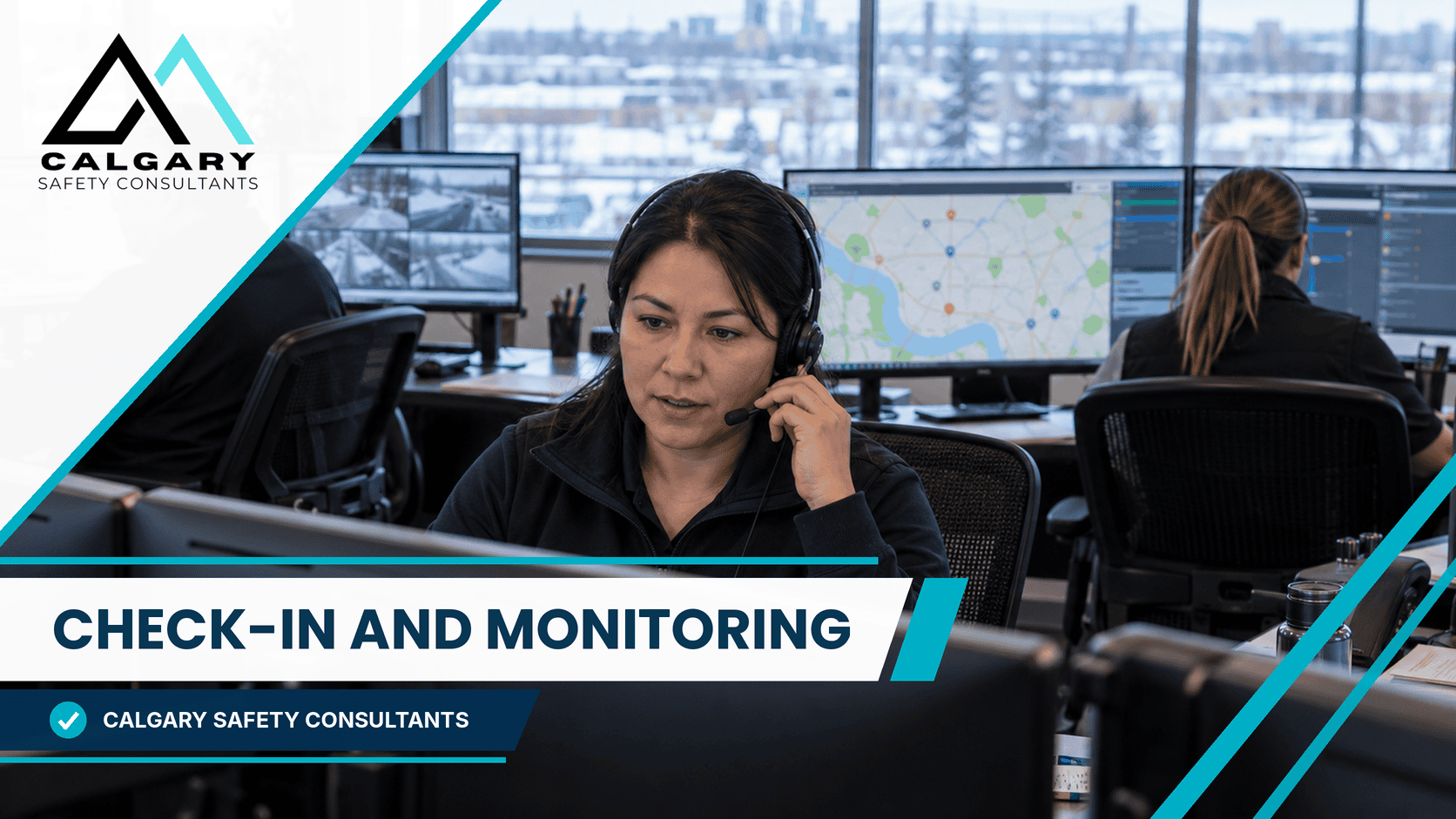
Check-in and monitoring training for a dispatcher tracking lone workers from a monitoring desk

Beyond training

Need Help With Your Working-Alone Procedure?

Training works best when there’s a clear procedure behind it. If your lone-worker hazard assessment is out of date, your check-in system has gaps, or an audit has flagged working alone, our hazard assessments, JHAs and workplace inspections consulting service can help you assess lone work, write or review your working-alone procedure and set up a check-in and response process that fits your operation.

Many employers combine the two. We review the procedure first, then deliver working alone safety training built around it, so workers and check-in contacts learn the plan they’ll actually use.

How group training works

How We Plan Your Working Alone Training

Tell us about your team

We confirm the participants, number of people, locations, industry and the lone work your people do, including who receives check-ins.

Choose the format

We recommend online, live virtual, onsite or a blend, and agree on the session length, exercises and materials.

Receive a defined proposal

You review the scope, timing, preparation, certificate arrangements and price before anything is booked.

Deliver and follow up

We deliver the training, share attendance records and, where agreed, review your working-alone procedure or a sample of check-in records afterward.

Common questions

Frequently Asked Questions About Working Alone Training

Clear answers about participants, delivery formats, course length, certificates, check-in procedures and group training.

What is working alone training?

Working alone training teaches workers, supervisors and employers how to recognize lone work, assess its hazards, decide whether a task may be done alone and put controls in place so help arrives quickly when something goes wrong. It covers communication equipment, check-in plans, missed check-in response, personal security, remote and after-hours work, and stop-work decisions.

Who needs lone worker training?

Workers who work alone or in isolation, supervisors who assign or approve lone work, check-in contacts and dispatchers who monitor workers, and the managers, owners and joint health and safety committee members who build and review the working-alone program. Anyone with a role in the check-in and response procedure needs to know their part before a real emergency.

Is the training available online, virtually and onsite?

Yes. Individual learners can take the self-paced online course at any time. Workplace groups can book live virtual training by video conference or onsite training at their workplace or another location. The right format depends on the number of participants, locations and how much customization you want.

How long is working alone training?

The online course has 16 lessons and takes about 3.5 to 4 hours, estimated from just over 3 hours of video plus the knowledge checks. Live virtual and onsite session length depends on the audience, exercises and customization, and is confirmed in the training proposal.

Can the training use our working-alone procedure and check-in system?

Yes. Virtual and onsite sessions can be built around your working-alone procedure, check-in intervals, communication equipment, contact list and recent incidents or near misses, so participants practise the plan they will use after training. The online course teaches a method that works with most employer procedures.

Is this working alone training valid across Canada?

The training teaches principles that apply in every Canadian jurisdiction and shows how working-alone rules differ across federal, provincial and territorial workplaces. It is not approved by a regulator, and it does not replace the workplace-specific training employers must provide.

Do participants receive a certificate?

Online learners receive a Certificate of Completion after finishing all 16 lessons and their knowledge checks. Certificate arrangements for virtual and onsite sessions are confirmed in the proposal. A certificate records completion of awareness-level training, not qualification for high-risk work.

How much does working alone training cost?

The online course is priced per learner, plus GST, and employers can buy enrolments for several workers on the course page. A 10% group discount applies to 10 or more seats of this course in one order, and group buyers complete our Group Training Student Information form after purchase so we can set up each learner’s account. Pricing for live virtual and onsite training depends on group size, location and customization, and is provided in a defined proposal.

What happens after a group training enquiry?

We confirm the audience, number of participants, preferred format, locations, current working-alone procedure and scheduling needs. Calgary Safety Consultants then recommends a suitable approach and provides a proposal, so you can review the scope, timing and preparation before booking.

Book your training

Request Group Working Alone Training

Give your workers, supervisors and check-in contacts one practical plan for working alone safely. After you enquire, we confirm the participants, delivery format, workplace examples and scheduling needs, then provide a defined training proposal.

Training a team?

Group enrolment for online courses

Enrol your crew, supervisors or safety committee in any of our online courses. Buy your enrolments online, then complete our Group Training Student Information form so we can set up an individual account for each worker. Each worker completes the training online and receives a certificate of completion. Training 10 or more workers on the same course? A 10% group discount is applied automatically at checkout. For instructor-led training or a custom group arrangement, use the form below to request a group quote.

Contact Us

Need help with a safety manual, COR audit preparation, OHS order, hazard assessment, training, or ongoing safety support? Complete the form below or book a 30-minute consultation. We will review your situation, identify the next practical step, and explain how Calgary Safety Consultants can help.
CSC Website Contact Form

Tell us what safety issue you’re facing, and we’ll respond with the next practical steps

Prefer to talk it through first? Pick a time that suits you.

Book a free 30-minute call →

What happens next

Your inquiry is important to us, and every request is read personally. We aim to reply within 2 to 4 hours during business hours, or by the next business day if you reach us after hours or on a weekend. Our reply usually includes a few times for a free 30-minute call.