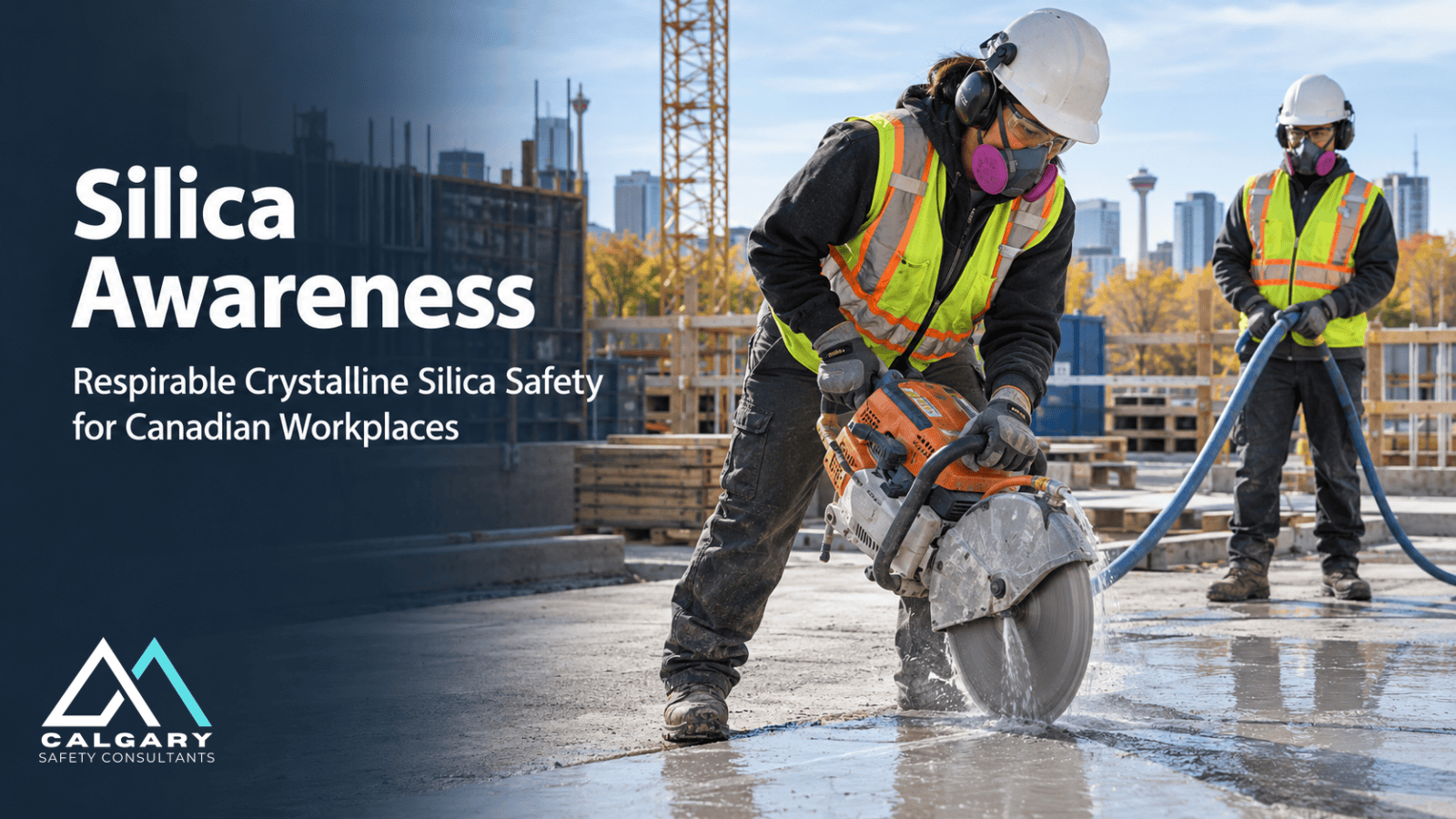
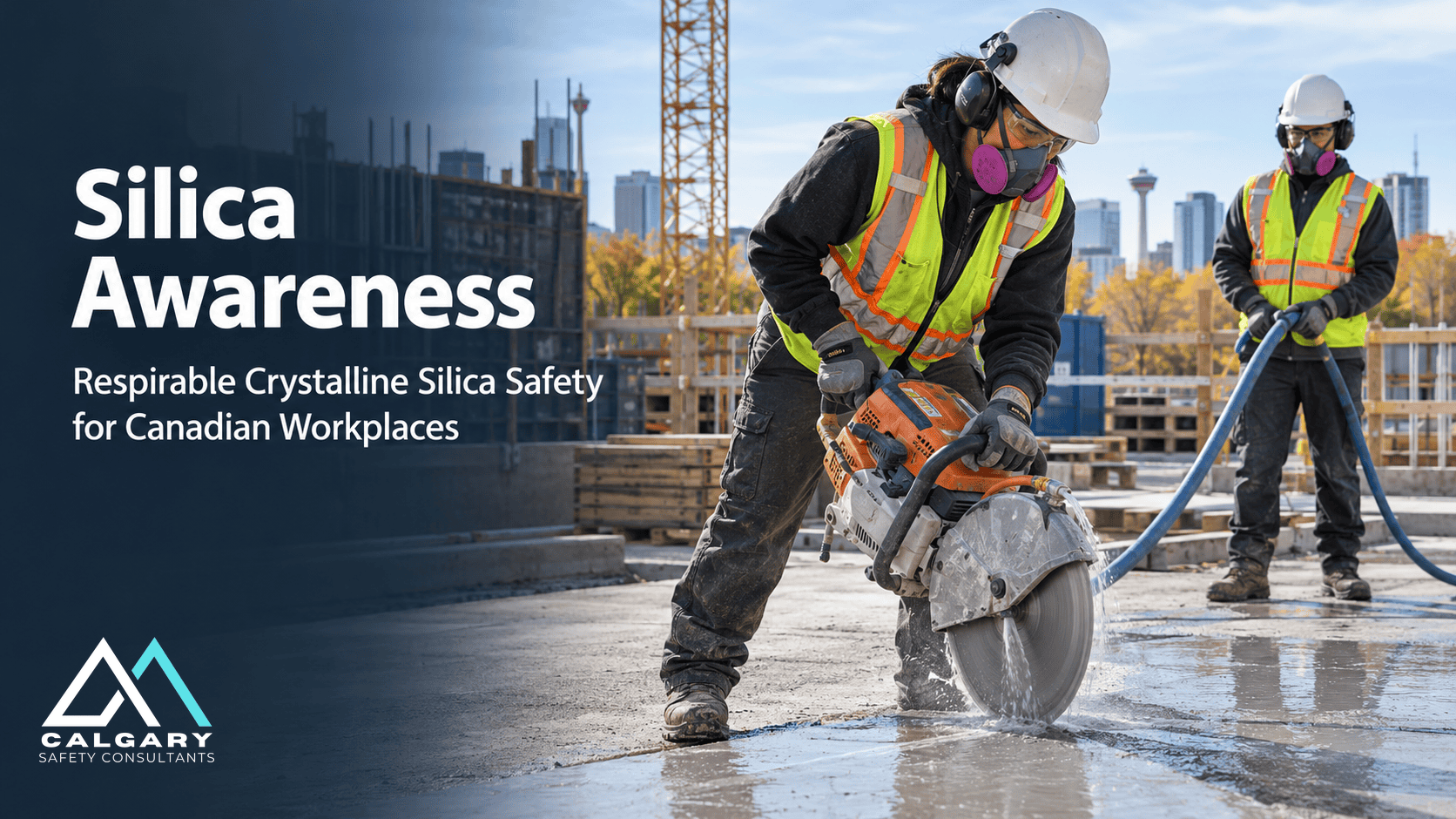
Silica Awareness
Once you have registered and enrolled, scroll to the Course Content section at the end of this page to begin your lessons.
Our online silica awareness training helps workers and supervisors recognize respirable crystalline silica, understand what it does to the lungs, and use the controls that keep silica dust out of the air you breathe. Six short video lessons cover the materials and tasks that release silica dust, silicosis and other silica diseases, Canadian silica rules and exposure limits, exposure assessment, dust control at the source, respirators, health monitoring and speaking up when controls break down.
Training a team? For online group training, buy your enrolments here, then complete our Group Training Student Information form so we can set up each learner’s account.
Learn more about how our online safety training works.
Silica is in concrete, brick, stone, tile, sand and engineered stone, so silica dust shows up on construction sites, in quarries and mines, in oil and gas, on farms, in manufacturing plants and in countertop shops. The dust that does the most harm is usually invisible, and silica disease can take years to appear. Good silica awareness means crews know when a task needs controls before the first cut, which protects people, reduces claims and keeps work moving without costly stops.
This course is awareness-level training. It isn’t a certification, it doesn’t make anyone competent or qualified for silica work, and it doesn’t replace your employer’s exposure control plan, procedures and training or the OH&S law where you work.
Silica Awareness Training at a Glance
Price: $24.99 CAD plus GST per learner
Delivery: 100% online and self-paced
Course format: 6 narrated video lessons in three modules, with a knowledge check after every lesson and a 5-question final exam
Course length (estimated): about 1 hour 15 minutes, including about 1 hour of lesson video
Includes: A downloadable 32-page Student Reference Guide with a card for every teaching slide, lesson summaries, Canada-wide reference tables, official sources and 5 worksheets and checklists
Certificate: Certificate of Completion and Training Record
Coverage: Workplaces across Canada, with examples from federal, provincial and territorial rules
What Does This Silica Awareness Training Cover?
This silica awareness training moves from the hazard, to the rules, to the controls that protect you on the job.
You’ll learn how to:
- Explain what respirable crystalline silica is and why the size of the dust matters.
- Name common materials that contain silica, including engineered stone, and check a product’s safety data sheet.
- Recognize the tasks that release silica dust, including clean-up.
- Explain how silica damages the lungs and the diseases it causes, including silicosis and lung cancer.
- Describe who sets the silica rules in Canada, how exposure limits work and why a limit isn’t a safe target.
- Describe the duties of employers, supervisors and workers for silica.
- Explain how silica exposure is assessed, how air sampling works and what an exposure control plan covers.
- Apply the hierarchy of controls, with water, extraction and good housekeeping first.
- Use a respirator correctly as the last line of defence, take part in health monitoring and keep your own work history.
- Speak up, report and use your right to refuse when silica controls aren’t in place.
Lessons use short workplace examples and decision points from across Canada, such as a concrete cutting crew working in Alberta and British Columbia, a countertop installer in a home kitchen, a foundry reviewing air sampling results and a miner being fitted for a respirator.
Silica Rules in Canadian Workplaces
Every Canadian jurisdiction regulates workplace exposure to silica. Each province and territory has its own occupational health and safety law, and federally regulated work falls under the Canada Labour Code, Part II, and the Canada Occupational Health and Safety Regulations. Some jurisdictions have rules written specifically for silica, while others rely on general rules for hazardous substances and the employer’s general duty to protect workers.
Exposure limits for respirable crystalline silica differ across Canada. Many jurisdictions, including Alberta, British Columbia, New Brunswick, Prince Edward Island and federally regulated workplaces, use 0.025 mg/m³ averaged over an 8-hour shift, while others use higher values. An exposure limit is a legal maximum, not a safe target, and some jurisdictions require exposure to be kept as low as reasonably achievable.
The Student Reference Guide’s reference tables summarize where the rules come from, the exposure limits verified from official sources on November 9, 2026, examples of other requirements and the silica health facts used in the course. Rules and limits change, so check the current official text that applies where you work.
Who Should Take This Silica Awareness Training?
This course is built for workers and supervisors in any Canadian industry where silica dust can be created or disturbed.
It’s suitable for:
- Construction workers, labourers and trades who cut, drill, grind or demolish concrete, masonry, tile or stone
- Countertop fabricators and installers who work with engineered stone or natural stone
- Mining, quarry, aggregate and tunnelling workers
- Oil and gas workers who handle frac sand or work around it
- Manufacturing, foundry, precast and abrasive blasting workers
- Agricultural and utility workers who disturb dry soil, sand or concrete
- Supervisors, foremen and lead hands who plan and check dusty work
- Joint health and safety committee members and safety representatives
Employers often pair this silica awareness training with our Hazard Assessment and Control and WHMIS Training for Canadian Workplaces courses.
Silica Awareness Training Course Features
Our online silica awareness training keeps the focus on what workers and supervisors need to recognize and do on the job.
Course features include:
- 100% online and self-paced
- 6 narrated video lessons in three modules, about 10 minutes each
- Workplace examples and decision points from construction, mining, oil and gas, manufacturing, agriculture and stone fabrication
- Plain-English explanations of exposure limits, exposure assessment and the hierarchy of controls
- A three-question knowledge check after each lesson, with feedback after each answer
- A 5-question final exam
- A downloadable Student Reference Guide with Canada-wide reference tables
- A Certificate of Completion and Training Record
The Student Reference Guide includes 5 worksheets and checklists you can fill in:
- Silica Materials and Tasks Check
- Pre-Task Dust Control Check
- Sampling Day Notes
- Respirator Pre-Use Check
- My Silica Work History
The worksheets are practical aids written in our own words. They don’t replace your employer’s exposure control plan or forms. For help building a silica program for your workplace, see our workplace safety training page or book a consultation with our team.
Silica Awareness Training Modules
Three modules follow the path from understanding the hazard to controlling it. Each lesson is one narrated video with a knowledge check.
Module One: Understanding Silica Hazards
Module One explains what respirable crystalline silica is, which materials contain it and which tasks release it, then how silica dust damages the lungs, the diseases it causes, the warning signs and who is most at risk.
Lessons:
- Lesson One: What Silica Is and Where It’s Found
- Lesson Two: How Silica Affects Your Health
Lesson One: What Silica Is and Where It’s Found. Handling these materials whole is usually not the problem. The hazard starts when they’re cut, ground, drilled, crushed or blasted. Part 1 explains what respirable silica dust is. Part 2 covers the materials that contain silica, and Part 3 covers the tasks that release it, so you can spot the hazard before you start.
Lesson Two: How Silica Affects Your Health. Part 1 follows respirable dust into the lungs and shows how scarring develops. Part 2 names the diseases silica causes and the warning signs to watch for. Part 3 looks at who is most at risk in Canada and why exposure early in a career matters so much. The goal is simple: keep the dust out of your lungs.
Module Two: Silica, the Law and Exposure Assessment
Module Two covers who sets the silica rules in Canada, how exposure limits work, the duties of employers, supervisors and workers, and how exposure is assessed, measured and managed through an exposure control plan.
Lessons:
- Lesson Three: Silica Rules in Canada
- Lesson Four: Assessing Silica Exposure
Lesson Three: Silica Rules in Canada. Part 1 explains who sets the rules and how they change when you work in another jurisdiction. Part 2 explains how exposure limits work and why a limit isn’t a safe target. Part 3 sets out the duties of employers, supervisors and workers. Your employer’s procedures fill in the details for your job.
Lesson Four: Assessing Silica Exposure. Part 1 shows how an assessment starts with the task. Part 2 explains how air sampling measures exposure and how you can help it give a true result. Part 3 covers the exposure control plan and why it has to match the work in front of you.
Module Three: Controlling Silica Exposure
Module Three focuses on protection: the hierarchy of controls, water and dust extraction, work practices and housekeeping, then respirators as the last line of defence, health monitoring and what to do when controls break down.
Lessons:
- Lesson Five: Controlling Silica Dust at the Source
- Lesson Six: Respirators, Health Monitoring and Speaking Up
Lesson Five: Controlling Silica Dust at the Source. Part 1 applies the hierarchy of controls to silica, from eliminating the task down to respirators. Part 2 covers water and dust extraction, the workhorses of silica control, and how to check them before you start. Part 3 covers the work practices and housekeeping that support them.
Lesson Six: Respirators, Health Monitoring and Speaking Up. Part 1 covers respirator selection, fit testing and care. Part 2 explains health monitoring and why your own silica work history matters. Part 3 covers what to do when controls break down, including your right to refuse dangerous work. Together, these close the loop on protecting you.
Complete Your Online Silica Awareness Training
Enrol on this page, then work through the lessons in order. After each video, complete the lesson’s three-question knowledge check. You need all three answers correct (100%) to move on, with feedback after each answer and unlimited retries.
After Lesson 6, complete the 5-question final exam, with questions in random order. You need 4 correct answers (80%) to pass, and you can retake it as often as you need. Once you’ve completed all 6 lessons, their knowledge checks and the final exam, you can download your Certificate of Completion and Training Record.
Frequently Asked Questions About Silica Awareness Training
What is silica awareness training?
Silica awareness training teaches workers and supervisors to recognize respirable crystalline silica, understand its health effects and use the controls that keep silica dust out of the air they breathe. This course covers materials, tasks, health effects, Canadian rules, exposure assessment, dust control, respirators and speaking up.
Who needs silica awareness training?
Anyone who cuts, drills, grinds, breaks, blasts or cleans up concrete, masonry, stone, tile, sand or engineered stone, and the supervisors who plan and check that work. That includes construction, mining, oil and gas, manufacturing, agriculture and countertop fabrication.
Does this course cover my province or territory?
The course is designed for workplaces across Canada. It explains how provincial, territorial and federal rules apply and uses verified examples from several jurisdictions. Your employer’s procedures and the current law where you work set the specific requirements.
Does this course make me competent or certified for silica work?
No. It’s awareness-level training. It doesn’t certify anyone or make anyone competent or qualified for silica work, and it doesn’t replace your employer’s exposure control plan, site-specific training, respirator fit testing or supervision.
How long does the online silica awareness training take?
We estimate about 1 hour 15 minutes: about 1 hour of lesson video, plus the knowledge checks and final exam. You can stop and return at any time.
Do I receive a certificate?
Yes. You receive a Certificate of Completion and Training Record after you complete all 6 lessons, their knowledge checks and the 5-question final exam (4 of 5 correct, 80%, with unlimited retakes).
Can employers purchase training for a whole team?
Yes. Employers can buy online training for two or more learners on this page. After placing your order, complete our Group Training Student Information form so we can set up each learner’s account.
Does the course include respirator fit testing?
No. The course explains why fit testing matters and how to use and care for a respirator, but fit testing must be done in person under your employer’s respiratory protection program.
Additional Silica Resources
These official sources sit behind this silica awareness training. Always read the current versions.
Federal exposure limits
Issued by: Justice Laws Website, Government of Canada
Exposure limits for federally regulated workplaces.
Canada Occupational Health and Safety Regulations, s. 10.19
British Columbia
Issued by: WorkSafeBC
Exposure control plans, monitoring and the rules for designated substances like silica.
OHS Regulation Part 5, Chemical and Biological Substances
Alberta
Issued by: Government of Alberta
How the silica limit is adjusted for extended work schedules.
OHS Director approval, silica OEL adjustment
Ontario
Issued by: Ontario Ministry of Labour, Immigration, Training and Skills Development
Legal requirements for silica on construction projects.
Silica on construction projects, legal requirements
New Brunswick
Issued by: WorkSafeNB
Exposure limits, determining exposure and the Silica Control Tool.
Respirable Silica
Related courses: Hazard Assessment and Control for Canadian Workplaces, WHMIS Training for Canadian Workplaces and Supervisor Safety Essentials.