Customized Safety Manuals Built for Your Workplace
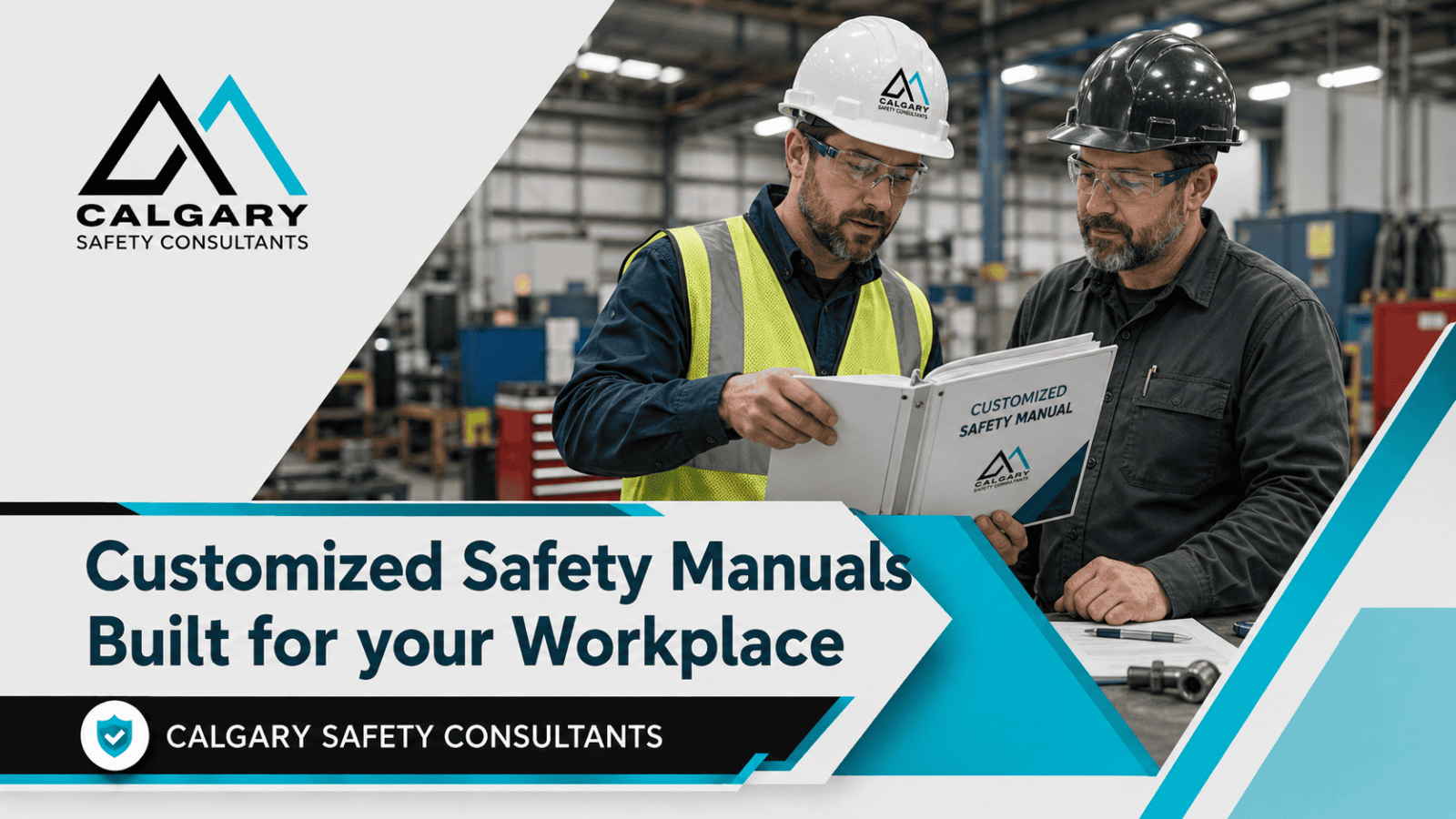
A safety manual should not be a generic binder that sits on a shelf.
It should explain how your company manages real hazards, assigns safety responsibilities, documents work activities, responds to incidents, prepares for emergencies, and keeps workers, supervisors, and managers aligned.
Calgary Safety Consultants develops customized safety manuals for employers in Calgary and across Alberta, British Columbia, and Saskatchewan. Each manual is built around your company’s work activities, industry, workforce, equipment, client requirements, and operational risks.
Whether you need a new safety manual, an update to an outdated manual, or documentation for a client, audit, COR, SECOR, or contractor prequalification process, we help you create a manual that is clear, practical, and usable in the field.
Why a Customized Safety Manual Matters
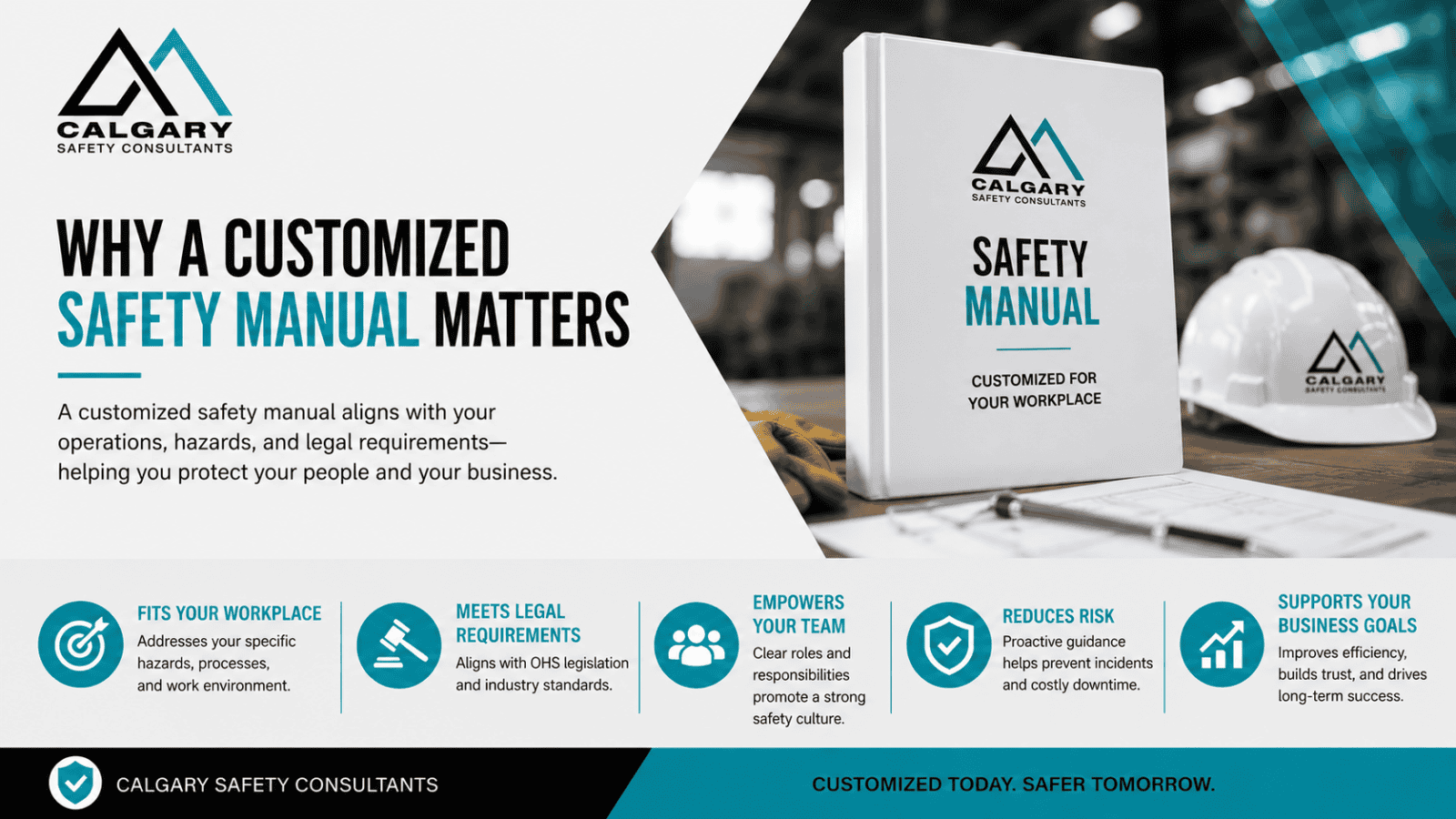
A generic safety manual may look complete, but it often fails when workers, supervisors, auditors, clients, or regulators need to use it.
If the manual does not match the work being performed, it can create confusion. Supervisors may not know which forms to use. Workers may not understand expectations. Office staff may struggle to provide the right documentation during prequalification. Management may believe the company has a safety system in place, while the actual field process looks completely different.
That gap creates risk.
A customized safety manual helps close that gap by connecting written procedures to the way your company actually operates.
The goal is not to create more paperwork. The goal is to create safety documentation your team can understand, use, maintain, and explain.
A Customized Safety Manual Should Match the Work
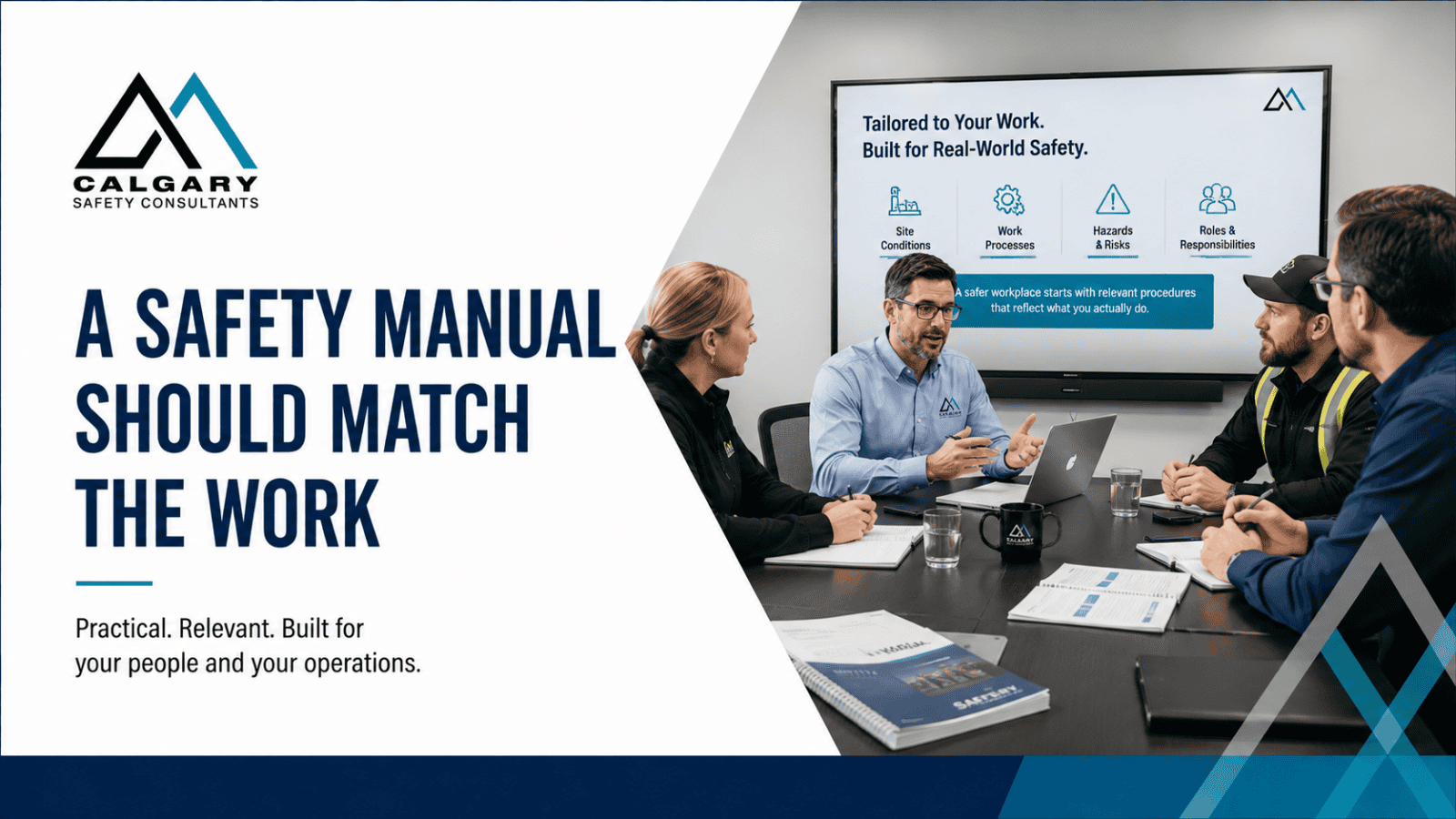
A useful safety manual should be built around the employer’s actual operations.
That means the manual should reflect the work your people perform, the hazards they face, the equipment they use, the locations they work in, the clients they work for, and the level of documentation your business needs to maintain.
For example, a construction contractor may need a manual that supports site-specific hazard assessments, subcontractor coordination, inspections, emergency response, worker orientation, and COR or SECOR preparation.
A maintenance or service company may need stronger procedures for mobile work, client sites, vehicle use, tools and equipment, incident reporting, training records, and supervisor follow-up.
A growing business may already have policies and forms, but they may be outdated, duplicated, inconsistent, or difficult for supervisors to use.
A strong manual should help the business operate with more control. It should make responsibilities clearer, forms easier to use, records easier to maintain, and safety expectations easier to communicate.
What a Practical Customized Safety Manual Can Support
A well-built safety manual can support more than basic compliance.
It can help employers organize safety expectations, improve documentation, and provide a clearer foundation for training, supervision, audits, client reviews, and day-to-day operations.
A customized manual can support:
- Client and contractor prequalification.
- COR and SECOR readiness.
- Audit preparation.
- Regulatory compliance.
- Hazard assessment and control.
- Worker orientation and training expectations.
- Supervisor accountability.
- Incident and near-miss reporting.
- Emergency response planning.
- Workplace inspections.
- Corrective action tracking.
- Consistency between office documentation and field operations.
- Stronger due diligence if the company needs to show what was in place, communicated, followed, and reviewed.
When the manual is practical, it becomes easier for the employer to explain how the safety program works. That matters during audits, client prequalification, incident reviews, inspections, and internal safety program reviews.
How Calgary Safety Consultants Helps
Calgary Safety Consultants helps employers build or update safety manuals that reflect real workplace conditions.
We start by learning about your business, the work being performed, your workforce, client requirements, current documentation, risk areas, and any deadlines related to COR, SECOR, audits, prequalification, or compliance concerns.
We can review your existing safety manual, policies, safe work practices, forms, training records, hazard assessments, inspection documents, incident reporting process, emergency response information, and corrective action tracking.
From there, we identify what is missing, outdated, too generic, duplicated, unclear, or not aligned with your actual work.
We then help develop or update the manual so it better reflects your company’s operations.
Depending on your needs, this may include:
- Health and safety policy content.
- Roles and responsibilities.
- Hazard assessment and control processes.
- Safe work practices or safe job procedures.
- Worker orientation expectations.
- Training and competency requirements.
- Inspection processes.
- Incident and near-miss reporting.
- Emergency response planning.
- Corrective action tracking.
- Contractor or subcontractor safety requirements.
- PPE expectations.
- Workplace violence and harassment prevention content.
- Forms and documentation tools.
- COR, SECOR, audit, or prequalification support.
After the manual is built or updated, we can also help with implementation. This may include helping supervisors understand what forms to use, how to explain expectations to workers, how to maintain records, and how to keep the manual current as work changes.
A safety manual should be a working document, not a one-time project.
Related Pages
To better understand the role of external OH&S support, read our related page:
You may also find these pages helpful:
Here’s some helpful links for government services:
Alberta Health and Safety Program
Official Government of Alberta health and safety program page.
WorkSafeBC Developing a Health and Safety Program
Official WorkSafeBC guidance page for developing a workplace health and safety program.
Saskatchewan Safety in the Workplace
Official Government of Saskatchewan workplace safety information page.
Frequently Asked Questions
What is a customized safety manual?
A customized safety manual is a company-specific safety document built around your actual work, hazards, workforce, equipment, locations, client requirements, and documentation needs. It is different from a generic template because it reflects how your company operates and what your team needs to manage safety properly.
Why should we avoid a generic safety manual?
A generic safety manual may include broad policies, but it often fails to match real field work. That can create confusion, weak documentation, audit issues, and client concerns. A manual that does not reflect your business is harder to implement and harder to defend during audits, inspections, incident reviews, or prequalification.
Can Calgary Safety Consultants update our existing safety manual?
Yes. If your current manual is outdated, too generic, too long, missing important sections, or disconnected from field operations, Calgary Safety Consultants can review it and update the sections that need improvement. In some cases, a focused update is enough. In other cases, rebuilding the manual may be more practical.
Can a customized safety manual help with client prequalification?
Yes. Many client and contractor prequalification systems ask for safety policies, procedures, forms, training expectations, inspection records, hazard assessment processes, and evidence of a working safety system. A customized safety manual helps organize that documentation and can make the prequalification process easier to manage.
Can a safety manual help with COR or SECOR?
Yes. A customized safety manual can support COR or SECOR readiness by organizing policies, responsibilities, procedures, forms, and safety program expectations. The manual is only one part of the process, but it gives the safety system a clearer foundation for implementation, documentation, and audit preparation.
Do you create Customized Safety Manual for small businesses?
Yes. Small and mid-sized businesses often need safety manuals for bidding, contractor approval, growth, basic compliance, or client requirements. The manual should match the size and risk level of the company instead of being overloaded with unnecessary content.
Can you help us implement the Customized Safety Manual?
Yes. Implementation support can include guidance on forms, supervisor expectations, worker orientation, inspections, hazard assessments, corrective actions, training records, and ongoing manual maintenance. The goal is to help the manual become part of how work is managed, not just a document that gets filed away.