
TDG Training in Canada
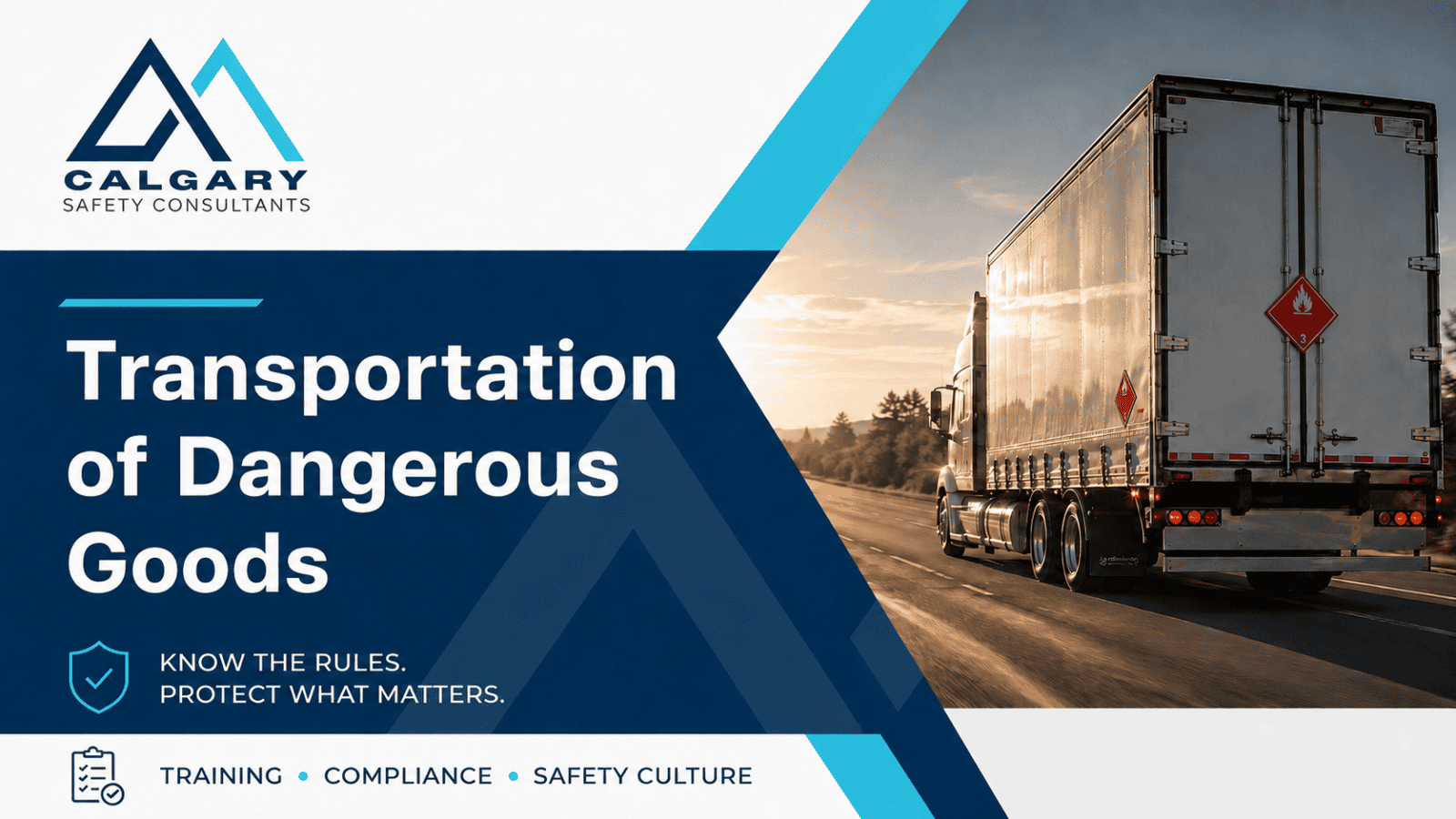
If your employees handle, offer for transport, ship, receive, load, unload, or transport dangerous goods, they need to understand their responsibilities under Canada’s Transportation of Dangerous Goods requirements.
Calgary Safety Consultants provides practical Transportation of Dangerous Goods Training for Canadian workers and employers, with flexible delivery options including Online TDG Training, Virtual Instructor-Led TDG Training, and Classroom TDG Training.
Whether you need to train one employee or an entire workforce, we can help you choose a training format that works for your operations, your employees, and your schedule.
Calgary Safety Consultants provides Transportation of Dangerous Goods Training for individuals and organizations that handle, ship, receive, or transport dangerous goods. Our TDG training is available through self-paced online learning, live virtual instructor-led sessions, and in-person classroom training. Whether you need TDG training for one new employee or an entire workforce, training can be selected based on your employees’ responsibilities, location, schedule, and operational requirements.
Choose Your Transportation of Dangerous Goods Training Option
Online Transportation of Dangerous Goods Training
Complete your Transportation of Dangerous Goods training online at your own pace from virtually anywhere in Canada.
Our online TDG course is ideal for individual workers, new employees, remote workers, smaller organizations, or employers who need training available on demand.
Participants work through structured TDG training modules covering the information they need to understand when handling or transporting dangerous goods by road.
Online training gives employers a convenient way to provide consistent training without coordinating classroom schedules or employee travel.
Virtual Instructor-Led TDG Training
Get the interaction of a classroom without requiring everyone to be in the same location.
Our Virtual TDG Training is delivered live by an instructor using Microsoft Teams or another agreed virtual platform.
Participants can ask questions, discuss workplace situations, and work through transportation scenarios with the instructor.
Virtual TDG training is particularly effective for organizations with employees working from multiple offices, job sites, branches, or communities.
It combines the convenience of remote training with the opportunity to interact directly with an experienced health and safety professional.
Classroom Transportation of Dangerous Goods Training
Bring Transportation of Dangerous Goods training directly to your workplace.
Our Classroom TDG Training provides instructor-led Transportation of Dangerous Goods training for groups of employees who benefit from face-to-face discussion, practical examples, and workplace-specific questions.
Classroom training can be particularly valuable when employees routinely ship, receive, load, unload, or transport dangerous goods and the employer wants the training discussion connected to actual workplace activities.
Training can be arranged for workplaces in Calgary, Okotoks, Edmonton, and other Alberta locations, with additional locations available by arrangement.
What Is Transportation of Dangerous Goods Training?
TDG stands for Transportation of Dangerous Goods.
Canada’s Transportation of Dangerous Goods system establishes requirements for safely handling, offering for transport, and transporting products and substances that can pose risks to people, property, or the environment during transportation.
Dangerous goods can include products that are explosive, flammable, toxic, corrosive, infectious, oxidizing, radioactive, or otherwise hazardous during transportation.
TDG training helps workers recognize these hazards and understand the procedures that apply when dangerous goods are prepared for shipment or transported.
The objective isn’t simply to memorize regulations.
Workers need to understand what the requirements mean when they are performing their jobs.
Who Needs Transportation of Dangerous Goods Training in Canada?
Under Part 6 of the Transportation of Dangerous Goods Regulations, a person who handles, offers for transport, or transports dangerous goods must generally be adequately trained and hold a valid training certificate, or perform those activities in the presence and under the direct supervision of someone who is adequately trained and holds a valid certificate.
TDG training may therefore apply to much more than commercial drivers.
Workers who prepare shipments, complete shipping documents, select containers, apply dangerous goods safety marks, load vehicles, unload deliveries, receive dangerous goods, or otherwise participate in the transportation process may require appropriate training.
The training provided should relate to the duties the worker actually performs.
TDG Training for Drivers, Shippers and Workers
Transportation of Dangerous Goods responsibilities can apply throughout the transportation process.
- Consider a typical shipment.
- Someone must identify the product.
- Someone may classify the dangerous goods.
- Someone prepares the shipment.
- Someone selects or verifies the means of containment.
- Someone prepares the shipping document.
- Someone applies or verifies the required safety marks.
- Someone loads the shipment.
- Someone transports it.
- Someone receives and unloads it.
An error at any stage can affect everyone who handles the shipment afterward.
Effective TDG training helps employees understand their role in that process and recognize when something doesn’t look right.
What Does Our Transportation of Dangerous Goods Training Cover?
Depending on the training format and the duties being performed, our Transportation of Dangerous Goods training addresses important TDG concepts including:
- Canada’s Transportation of Dangerous Goods regulatory framework and worker responsibilities.
- Responsibilities of consignors, carriers, drivers, handlers, employers, and other parties involved in transportation.
- Classification of dangerous goods.
- Canada’s nine classes of dangerous goods.
- UN numbers and proper shipping names.
- Packing groups.
- Schedules 1, 2, and 3 of the TDG Regulations.
- Shipping document requirements.
- Dangerous goods labels and placards.
- Other dangerous goods safety marks.
- Means of containment.
- Loading and securing dangerous goods.
- Limited quantities and applicable special cases.
- Emergency Response Assistance Plans.
- Releases and anticipated releases of dangerous goods.
- Dangerous goods incident reporting.
- CANUTEC and emergency information.
- Safety and security considerations.
- TDG training certificates and employer responsibilities.
- Transportation of dangerous goods by road.
- Important considerations for Canada-U.S. road transportation.
The level of training required should reflect the employee’s duties and the dangerous goods they may encounter.
The Nine Classes of Dangerous Goods
Canada’s TDG system separates dangerous goods into nine primary hazard classes.
These classes address explosives, gases, flammable liquids, flammable solids and related substances, oxidizing substances and organic peroxides, toxic and infectious substances, radioactive materials, corrosive substances, and miscellaneous dangerous products, substances, or organisms.
Understanding these classifications is important because the classification of a dangerous good affects many other transportation requirements.
Classification can influence the shipping description, safety marks, documentation, packaging requirements, handling precautions, and emergency response considerations associated with the shipment.
Practical Transportation of Dangerous Goods Training
TDG compliance isn’t achieved simply because an employee passed a quiz.
Workers need to recognize how TDG requirements affect the decisions they make at work.
For example, what should a worker do if the UN number on a shipping document doesn’t match the package?
When is a placard required rather than a label?
Where can a worker find a special provision that applies to a dangerous good?
What information should be checked before a shipment is accepted?
What happens if a container is damaged or leaking?
What does a driver need to know before leaving the workplace with dangerous goods?
What should workers do following a release or anticipated release?
Practical TDG training helps employees understand both the requirement and why it matters.
That connection is important because mistakes involving dangerous goods can result in worker exposure, transportation incidents, emergency response situations, shipment delays, enforcement action, operational disruption, and unnecessary risk to the public.
Transportation of Dangerous Goods Training Certificates
People frequently refer to completing their “TDG certification.”
Under the Transportation of Dangerous Goods Regulations, the formal document is called a training certificate.
The employer is responsible for issuing a TDG training certificate when the employer has reasonable grounds to believe that the employee has been adequately trained and will perform duties to which the training relates.
For transportation by road vehicle, railway vehicle, or vessel, a TDG training certificate expires 36 months after it is issued.
Employers must also maintain appropriate records of employee training and copies of training certificates as required by the TDG Regulations.
Training should therefore be viewed as part of the employer’s overall TDG compliance process rather than simply purchasing a certificate.
TDG Training for Employers
Employers have an important responsibility when employees work with dangerous goods.
A general TDG course provides regulatory knowledge, but employees may also need workplace-specific instruction covering the products, procedures, equipment, hazards, and transportation activities associated with their actual jobs.
For example, an employee transporting cylinders may need workplace instruction that is different from an employee preparing drums of flammable liquids for shipment.
A strong training program connects TDG knowledge to actual workplace responsibilities.
This approach can improve compliance while reducing errors that lead to rejected shipments, documentation problems, transportation delays, spills, damaged products, enforcement issues, or emergency situations.
TDG Training for Alberta Workplaces
Calgary Safety Consultants provides Transportation of Dangerous Goods training for employers throughout Alberta.
We work with organizations in Calgary, Okotoks, Edmonton, Red Deer, Lethbridge, Grande Prairie, Fort McMurray, and other Alberta communities.
Virtual TDG training also allows organizations to bring employees together from different branches or locations without requiring unnecessary travel.
Our online training option extends that flexibility even further, allowing individual employees to complete TDG training when and where it’s convenient.
For employers operating across multiple provinces, virtual and online TDG training can help provide a more consistent approach across the organization.
Group and Corporate TDG Training
Need to train several employees?
We can provide TDG training for individual departments, work crews, supervisors, drivers, shipping and receiving personnel, or larger employee groups.
Virtual and classroom sessions can also provide an opportunity to discuss the dangerous goods situations employees actually encounter at work.
For employers with specialized operations, contact Calgary Safety Consultants to discuss your workforce, the dangerous goods involved, your employee responsibilities, and the most suitable training approach.
Why Choose Calgary Safety Consultants?
Calgary Safety Consultants provides occupational health and safety training with an emphasis on practical workplace application.
We don’t believe effective safety training should consist of reading regulations to employees and expecting them to remember them.
Workers need to understand what the rules mean, where to find information, what they are responsible for, and what they should do when something doesn’t look right.
Our TDG training is designed around that principle.
Whether training is delivered online, virtually, or in the classroom, the objective is to provide employees with information they can understand and apply when they return to work.
Frequently Asked Questions about TDG Training
What does TDG stand for?
TDG stands for Transportation of Dangerous Goods. The Transportation of Dangerous Goods Act and Regulations establish requirements governing the handling, offering for transport, and transportation of dangerous goods in Canada.
Who needs TDG training?
People who handle, offer for transport, or transport dangerous goods generally need to be adequately trained and hold an appropriate training certificate unless they are performing those duties in the presence and under the direct supervision of a properly trained person holding a valid certificate.
The specific training required depends on the duties the individual performs.
Is TDG training only for truck drivers?
No. TDG requirements can apply to drivers, shipping and receiving employees, warehouse workers, supervisors, people preparing documentation, employees loading and unloading dangerous goods, and other workers involved in handling or offering dangerous goods for transport.
Can I take TDG training online?
Yes. Calgary Safety Consultants offers online TDG training that allows participants to complete the course remotely and at their own pace.
Employers should still ensure that employees receive any additional workplace-specific instruction required for their duties.
Do you offer live virtual TDG training?
Yes. Virtual instructor-led TDG training can be provided for groups using Microsoft Teams or another agreed virtual platform. This is particularly useful for organizations with workers at several locations.
Do you provide classroom TDG training?
Yes. Instructor-led classroom TDG training can be delivered for employer groups and can be arranged at client workplaces depending on location and training requirements.
How long is a TDG training certificate valid?
A TDG training certificate for transportation by road vehicle, railway vehicle, or vessel expires 36 months after the date it is issued. Different requirements apply to transportation by aircraft.
Is TDG the same as WHMIS?
No. WHMIS and TDG are separate regulatory systems.
WHMIS primarily addresses hazardous products used, handled, or stored in the workplace.
TDG addresses dangerous goods while they are being handled for transportation, offered for transport, or transported.
Depending on the work being performed, employees may require both WHMIS and TDG training.
Is TDG training required in Alberta?
TDG requirements apply to the transportation of dangerous goods in Alberta.
Employers should determine whether employees perform activities regulated under applicable federal or provincial dangerous goods transportation requirements and ensure the workers receive training appropriate to their duties.
What's the difference between online, virtual, and classroom TDG training?
Online TDG training is self-paced and can be completed independently.
Virtual TDG training is delivered live by an instructor while participants attend remotely.
Classroom TDG training is delivered face-to-face and is often well suited to employer groups who want greater discussion of workplace-specific transportation activities.
Each option has advantages. The best approach depends on the number of workers being trained, their responsibilities, their locations, and the amount of interaction the employer wants included.
Should I choose online, virtual, or classroom TDG training?
Online TDG training is the best option for most workers and employers because it is self-paced, consistent, cost-effective, and easy to document. Virtual TDG training is useful when a team wants live instruction or group discussion. Classroom TDG training is best when a workplace needs in-person support applying TDG requirements to specific hazardous products, procedures, PPE, SDS access systems, storage areas, or emergency-response expectations.