On this page
- What a Formal Hazard Assessment Is
- Why a Formal Hazard Assessment Matters
- Who's Involved
- When a Formal Hazard Assessment Is Needed
- The Legal Duty to Assess Hazards Across Canada
- Comparison of Hazard Assessment Requirements Across Canada
- The Types of Hazard Assessment and How They Fit Together
- Which Assessment to Use When
- Start With a Hazard Inventory
- The JHA at the Centre of the System
- Involve Workers, and Show That You Did
- Document It So It Can Be Used
- Connect It to the Rest of Your System
- Set the Review Cycle
- A Practical Workplace Example
- Common Mistakes to Avoid
- What an Auditor Expects to See
- The Bottom Line
- Download the Worksheet and Checklist
- Frequently Asked Questions
- Related Guides and Articles
- How Calgary Safety Consultants Can Help
- Sources
What a Formal Hazard Assessment Is
A formal hazard assessment is a planned, systematic look at the work you do, carried out ahead of time, that identifies the hazards, rates the risk and sets the controls. Alberta's OHS starter kit describes it as a documented approach to preventing work-related injury and illness, and a foundation of any health and safety system. It says the systematic way to find and fix problems is "through a formal hazard assessment."
"Formal" means planned, covering the whole operation, written down, dated and approved. Once done, it becomes the reference point for your procedures, training, inspections and emergency plans.
The territorial Hazard Assessment Code of Practice for the Northwest Territories and Nunavut draws the line clearly. Formal hazard assessments "include all the tasks of all the positions within an organization." Site-specific or field-level hazard assessments are "more focused and are directed towards a certain worksite at that moment." Both matter, but they do different jobs, and confusing them is one of the most common gaps we see.
Most employers do the bulk of their formal assessment as a set of job hazard analyses, one for each job or position. That's why the JHA sits at the centre of this guide. Our step-by-step guide on how to complete a job hazard analysis walks through the JHA form itself. This guide looks at the whole system around it.
Why a Formal Hazard Assessment Matters
Every control starts with someone recognizing a hazard. If a hazard never makes it onto the assessment, it rarely gets a procedure, guard or inspection item. The formal assessment is where that recognition happens on purpose, instead of after someone gets hurt.
The stakes are real. According to the 2026 Report on Work Fatality and Injury Rates in Canada, provincial and territorial workers' compensation boards accepted 267,199 lost-time injury claims in 2024, and 381 injury fatalities and 661 occupational disease fatalities were reported, with Yukon's data not yet included. Those are only the claims boards accepted, and many serious incidents trace back to hazards that were never assessed, or assessed once and never revisited.
It also shows regulators, clients and auditors that you manage hazards deliberately. It's the backbone of due diligence.
Who's Involved
A formal hazard assessment isn't a desk exercise for the safety coordinator. It needs the people who know the work. Alberta's guide to participation in health and safety for small businesses puts it simply: "The OHS Code states that an employer must involve affected workers in hazard assessment." Most other jurisdictions build worker participation into their program rules too.
- Owners and senior leaders provide the time, approve the results and should know the highest-rated hazards.
- Supervisors and leads usually lead or co-lead each assessment, because they understand how the work is really done and they'll enforce the controls.
- Workers who do the job describe the steps and near misses, and test whether the controls are workable.
- The joint committee or representative takes part in, or reviews, the assessment. In Alberta, participating in the employer's hazard assessment is one of the committee's listed duties. See our guides on how to set up a JHSC and the role of a health and safety representative.
- Specialists, such as an engineer or industrial hygienist, help with technical hazards.
Whoever leads the process should be trained for it. Energy Safety Canada's 2023 COR audit protocol asks whether training has been provided for the employees designated to lead formal hazard assessments, and whether affected employees take part in developing and reviewing them.
When a Formal Hazard Assessment Is Needed
Alberta's OHS Code gives the clearest timing rules in the country, and they make a sensible benchmark wherever you work. The employer must assess a work site and identify existing and potential hazards before work begins, prepare a report of the results, and record the date the assessment is prepared or revised. The assessment must be repeated:
- at reasonably practicable intervals, to prevent unsafe or unhealthy conditions from developing, even when nothing obvious has changed
- when a new work process is introduced
- when a work process or operation changes
- before construction of significant additions or alterations to a work site
In practice, you need a formal assessment when you start up, take on new work or a new position, buy or modify equipment, change a process, open or renovate a site, and after an incident shows a hazard was missed. Alberta's hazard assessment and control handbook gives a step-by-step approach to formal hazard assessment that employers can adapt to their own work.
The Legal Duty to Assess Hazards Across Canada
Here's something that surprises many employers: very few Canadian laws use the phrase "formal hazard assessment." Alberta and Yukon require hazard assessments directly. Most other jurisdictions require hazards to be identified and controlled as part of a written health and safety program, with general duties to make workers aware of hazards. Federally regulated employers need a hazard prevention program. The summaries below are current as of October 2026; check the official text before relying on a specific rule.
Alberta
OHS Code Part 2 sets the rules described above: assess before work begins, prepare a dated report and repeat it on the listed triggers (section 7), involve affected workers in the assessment and in controlling the hazards (section 8), and eliminate hazards or, if that isn't reasonably practicable, control them with engineering controls, then administrative controls, then PPE (section 9). The OHS Act also requires hazard and control information to be readily available to the committee or representative, workers and any prime contractor.
British Columbia
Section 21 of the Workers Compensation Act requires employers to remedy hazardous conditions, make workers aware of all known or reasonably foreseeable hazards, and set up programs under the regulations. Under Part 3 of the OHS Regulation, a formal program (20 or more workers with a moderate or high hazard workplace, or 50 or more workers) must include regular inspection of premises, equipment, work methods and work practices. Smaller employers hold monthly meetings, and section 3.5 requires every employer to inspect regularly.
B.C. has no general hazard assessment section, but Part 4 of the OHS Regulation requires hazards to be identified before a worker is assigned to work alone, a risk assessment wherever violence may be present, and identification and assessment of musculoskeletal injury risks. WorkSafeBC's guidance on managing risk sets out the steps: identify hazards and assess the risk, control it, communicate, and monitor and update the controls.
Saskatchewan and Manitoba
Saskatchewan. Section 3-11 of the OHS Regulations, 2020 requires an occupational health and safety program at the places of employment listed in Table 7 that have 10 or more workers. It must identify existing and potential risks and the measures to control them, include a worker participation strategy, and be reviewed at least every three years and when circumstances change.
WorkSafe Saskatchewan's hazard identification pillar defines a JHA as systematically evaluating "a job, task, process or procedure to identify hazards", starting with an inventory of occupations and their tasks.
Manitoba. Section 7.4 of the Workplace Safety and Health Act requires a written safety and health program where 20 or more workers are regularly employed. It must identify existing and potential dangers and the measures to control them, set a procedure for worker participation, and be reviewed every three years, or sooner if conditions change. SAFE Work Manitoba lists performing a job hazard analysis as one of the main ways to identify hazards.
Ontario and Quebec
Ontario. The OHSA has no general hazard assessment section. The province's guide to the Act explains the duties that do the same work: instruct, inform and supervise workers, tell them about any hazard in the work, take every reasonable precaution, and, where more than five workers are regularly employed, keep a written policy, reviewed yearly, and a program to carry it out. The ministry's supervisor workbook teaches RACE: Recognize, Assess, Control and Evaluate.
Quebec. Section 51 of the Act respecting occupational health and safety requires employers to use methods and techniques to identify, control and eliminate risks. Establishments with at least 20 workers need a prevention program (section 58) that starts with identifying and analyzing risks, including chemical, biological, physical, ergonomic and psychosocial risks (section 59). Establishments that don't need a program prepare an action plan instead (section 61.1), which also identifies risks and sets priority measures (section 61.2).
Atlantic Provinces
Nova Scotia. WCB Nova Scotia confirms that businesses with 5 to 19 workers must have an OH&S policy, and those with 20 or more a policy and program, and it recommends job hazard analysis: select the task, break it into steps, observe an experienced worker, identify hazards, control them and write the safe procedure.
New Brunswick. Section 8.1 of the OHS Act requires employers with 20 or more employees to establish a written health and safety program, in consultation with the committee or representative, including a hazard identification system that starts with an evaluation of the workplace. The program must be reviewed at least once a year, and every employer must inspect monthly. WorkSafeNB's OHS Guide on hazard identification sets out the JHA steps and the hierarchy of control.
Prince Edward Island. Section 23 of the OHS Act requires a written program, reviewed at least annually, where 20 or more workers are regularly employed. It must include a hazard identification system with an evaluation of the workplace to identify potential hazards, plus follow-up and control of identified hazards. Section 12 requires every employer to make workers and supervisors familiar with workplace hazards.
Newfoundland and Labrador. The OHS Act requires a written program where 20 or more workers are employed (section 36.1) and a policy where there are fewer (section 36.2), and employers must make workers and supervisors familiar with the hazards they may meet. WorkplaceNL lists hazard recognition, evaluation and control as a core program element, with programs reviewed every three years or when changes occur.
Territories
Yukon. The Workers' Safety and Compensation Board's hazard assessment resources confirm that Yukon law requires employers to conduct hazard assessments and to eliminate hazards or, if they can't be eliminated, control them. The board publishes separate templates for a formal hazard assessment and for a site-specific, or field-level, hazard assessment, which mirrors the system described in this guide.
Northwest Territories and Nunavut. Section 21 of the Northwest Territories OHS Regulations requires a written program where 20 or more workers work at a site, identifying hazards "through a hazard recognition program", with controls, a worker participation strategy and a review at least every three years. Nunavut's regulations are understood to follow a similar model; check the current Nunavut regulations. The WSCC code, which applies in both territories, expects a formal assessment to be redone at least annually even where operations change very little.
Federally Regulated Workplaces
Most federally regulated employers, such as banks, interprovincial trucking, telecommunications and airline ground operations, follow Part XIX of the Canada Occupational Health and Safety Regulations. The hazard prevention program must include a hazard identification and assessment methodology that keeps a record of the hazards, the assessment itself, preventive measures, training and an evaluation at least every three years or when hazard conditions change. Evaluation reports are kept for six years. Marine, on-board aviation and a few other sectors have their own, similar regulations.
The order of preventive measures is slightly different from most provinces: elimination (including by engineering controls), then reduction or isolation, then personal protective equipment, then administrative procedures. The federal hazard prevention program guide adds that the program is developed in consultation and with the participation of the policy committee, workplace committee or representative, and lists task safety analysis and workplace inspections among the ways to identify hazards.
Comparison of Hazard Assessment Requirements Across Canada
If you work in more than one province, build one hazard assessment system to the strictest rules that apply, usually Alberta's timing and worker participation rules, and note any local differences. Our guide to OHS legislation in Canada links to each jurisdiction's laws, and our article on what makes a hazard assessment compliant in Canada looks at the Western provinces in more depth.
| Jurisdiction | Main rules | What the law requires | Written and reviewed |
|---|---|---|---|
| Alberta | OHS Code Part 2, ss. 7 to 9; OHS Act | Hazard assessment of the work site before work begins; affected workers involved; elimination, then engineering, administrative, PPE | Dated report; repeat at intervals and on new or changed work and site alterations |
| British Columbia | Workers Compensation Act s. 21; OHS Regulation Parts 3 and 4 | Remedy hazards and inform workers; inspections of work methods and practices; specific risk assessments (working alone, violence, MSI) | Formal program at 20+ workers with moderate or high hazard, or 50+ |
| Saskatchewan | OHS Regulations, 2020 s. 3-11 | Program identifies existing and potential risks and controls; worker participation strategy | Table 7 workplaces with 10+ workers; review at least every 3 years |
| Manitoba | Workplace Safety and Health Act s. 7.4 | Program identifies existing and potential dangers and controls; worker participation | Written at 20+ workers; review every 3 years or on change |
| Ontario | OHSA s. 25(2) | Inform workers of hazards; every reasonable precaution; no general assessment section | Written policy reviewed yearly and a program where more than 5 workers |
| Quebec | Act respecting occupational health and safety ss. 51, 58 to 61.2 | Identify, control and eliminate risks; program identifies and analyzes risks, including psychosocial | Prevention program at 20+ workers; action plan otherwise |
| Nova Scotia | OHS Act | Policy and program with hazard identification and control | Policy at 5+ workers; policy and program at 20+ |
| New Brunswick | OHS Act ss. 8.1, 9 | Hazard identification system starting with an evaluation of the workplace; monthly inspections | Written program at 20+; reviewed at least yearly |
| Prince Edward Island | OHS Act ss. 12, 23 | Hazard identification system with workplace evaluation; follow-up and control | Written program at 20+; reviewed at least yearly |
| Newfoundland and Labrador | OHS Act ss. 5, 36.1, 36.2 | Make workers familiar with hazards (s. 5). WorkplaceNL lists hazard recognition, evaluation and control as a program element | Written program at 20+; policy under 20 |
| Yukon | Workers' Safety and Compensation Act; Workplace Health and Safety Regulations Part 1 | Hazard assessments required; eliminate or control hazards | See the Act and regulations |
| Northwest Territories and Nunavut | NWT OHS Regulations s. 21; check Nunavut's regulations | Hazard recognition program, controls, worker participation strategy | Written at 20+ workers; review at least every 3 years |
| Federal | Canada Labour Code Part II; COHSR Part XIX | Hazard identification and assessment methodology with a record of hazards; set order of preventive measures | Federally regulated employers (no size threshold); evaluate at least every 3 years |
Summary only. Each law has definitions, thresholds and exceptions not shown here, and many specific hazards (noise, chemicals, confined spaces, working alone) carry their own assessment rules. Check the current legislation for your jurisdiction.
The Types of Hazard Assessment and How They Fit Together
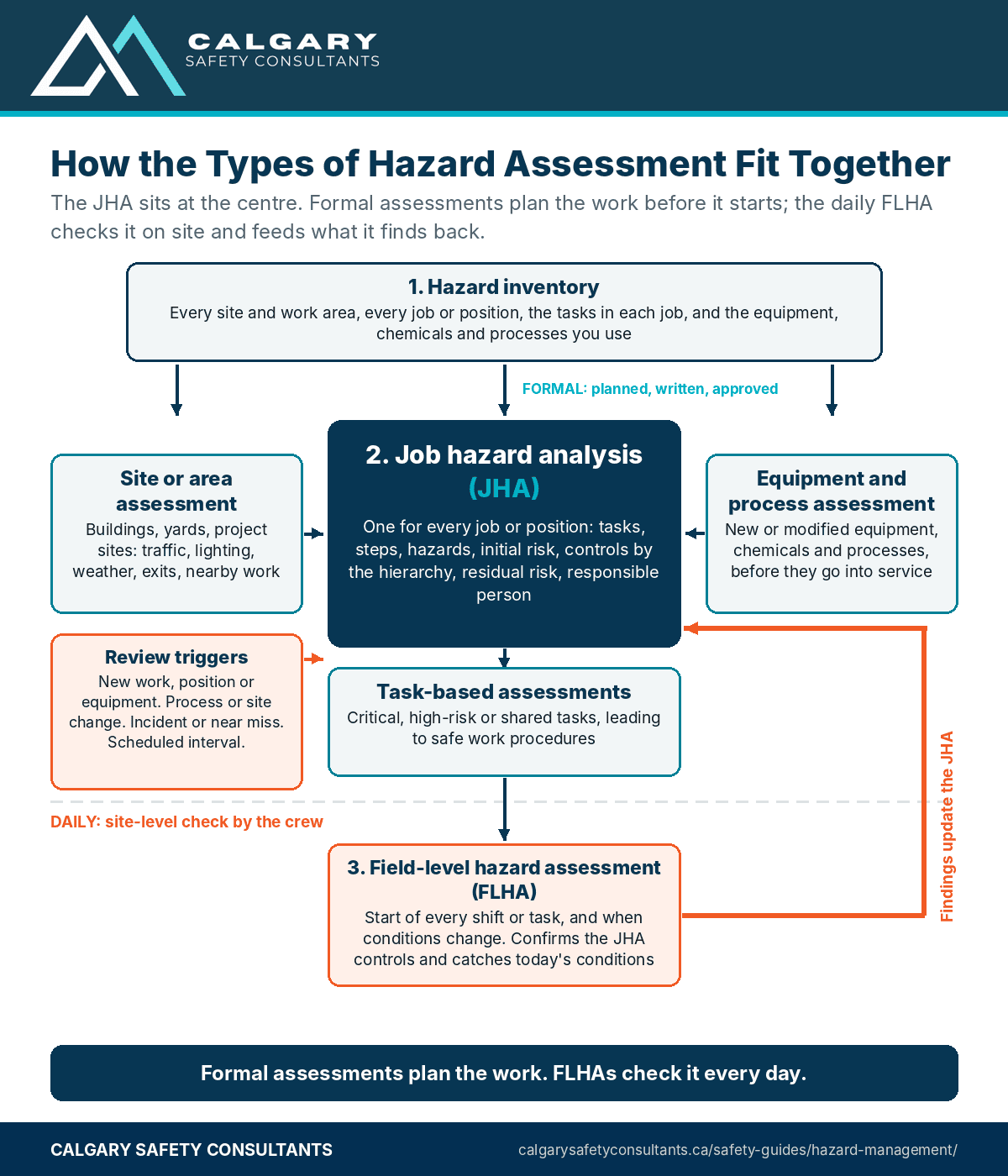
Think of formal hazard assessment as a family of related assessments rather than a single document. Each type looks at the work from a different angle, and together they cover everything a worker could run into. The job hazard analysis sits in the middle, because jobs are where people, places, equipment and tasks meet.
Site or Area Hazard Assessments
A site or area assessment looks at the workplace itself and the hazards everyone there shares: traffic routes, lighting, floors and stairs, weather, noise, exits, nearby operations and utilities. Complete one for each permanent location and each new project site before work begins. It's the natural home for hazards that don't belong to any one job. For project work, it often feeds a site-specific safety plan.
Job or Position-Based Assessments (the JHA)
The JHA, sometimes called a job safety analysis, assesses one job or position, such as a service technician, equipment operator, labourer or office administrator, and every task that person does. It's the assessment most Canadian employers and COR audits rely on, because it maps cleanly to your org chart. Every worker can be handed the JHA for their job at orientation, and every supervisor knows which JHAs cover their crew.
Task-Based Assessments
Some tasks deserve their own assessment, often called a task hazard analysis or critical task assessment. These are high-risk or infrequent tasks, or tasks several jobs share, such as confined space entry, lifting with a crane, energy isolation or hot work. The task assessment usually leads straight to a written safe work procedure. Our sister guide, How to Write a Safe Work Procedure, explains that next step.
Equipment and Process Assessments
New or modified equipment, chemicals and processes bring hazards of their own: stored energy, pinch points, noise, dust, heat, pressure and maintenance tasks nobody has done before. Assess them before they go into service, using the manufacturer's manual and safety data sheets, and update every JHA that uses them. Daily pre-use inspections then confirm the equipment is still in safe condition.
Assessments Triggered by Change
Change is where hazards slip through. A new client site, a different product, a short crew or a new contractor can make an existing assessment wrong, and so can an incident that reveals a hazard nobody listed. Treat each of these as a trigger to reassess the affected site, job, task or equipment before the work continues. Our article on how a small change can create a major new hazard has some telling examples.
Where the FLHA Fits
The field-level hazard assessment (FLHA) isn't a formal hazard assessment. It's the daily, site-level check completed by the crew at the start of a shift or task, and again when conditions change. It confirms the JHA controls are in place and catches what the formal assessment couldn't predict, such as weather, nearby work or a damaged access route. When an FLHA finds a hazard the JHA doesn't cover, that finding should go back into the formal assessment.
Which Assessment to Use When
Use this to decide what a situation calls for.
| Situation | Assessment to complete |
|---|---|
| Opening a new shop, office or yard, or starting a new project site | Site or area assessment, then check every JHA used there |
| Creating a new position or hiring into a job you haven't assessed | JHA for the job or position |
| A high-risk, infrequent or shared task | Task-based assessment and a safe work procedure |
| Buying, modifying or moving equipment, or introducing a new chemical or process | Equipment or process assessment, and update the JHAs that use it |
| A change in methods, materials, staffing or schedule | Reassess the affected JHAs and tasks before the work continues |
| An incident, near miss or worker concern that reveals a missed hazard | Review the related JHA, task or site assessment |
| The start of every shift or task on site | FLHA, referencing the JHA |
Start With a Hazard Inventory
A formal system starts with a list, not a form. Before you assess anything, inventory what you need to assess: every site or work area, every job or position, the tasks within each job, and the equipment, vehicles, chemicals and processes you use. WorkSafe Saskatchewan's process begins the same way, with an inventory of occupations and then the tasks for each one.
Include the work people forget: maintenance, cleaning, set-up, driving, call-outs, seasonal tasks and work done alone. Then prioritize the jobs and tasks with the highest potential for serious injury, anything new or changed, and anything with a history of incidents. The inventory becomes your master list and tells you when the system is complete: every line has a current, dated assessment.
The JHA at the Centre of the System
Because most of your formal assessment lives in JHAs, the quality of your JHAs largely decides the quality of the whole system. A good JHA follows the same path every time:
- 1. Break the job into tasks, and each task into steps. Watch the work and talk to the people who do it. Three to ten steps per task is usually enough.
- 2. Identify the hazards in each step, including health hazards like noise, dust and fatigue, not only safety hazards.
- 3. Assess the risk with a consistent method. Energy Safety Canada's protocol expects each hazard to be assessed using two or more factors, such as frequency, probability and severity. Our sister guide, How to Assess Risk Using a Risk Matrix, covers rating methods.
- 4. Apply the hierarchy of controls: eliminate, substitute, engineer, then administrative controls and PPE.
- 5. Rate the residual risk with the controls in place, and assign any new control to a named person with a due date.
- 6. Record, approve and communicate the JHA to everyone who does the job.
- 7. Review it on schedule and whenever a trigger occurs.
Keep one JHA per job or position, with critical tasks broken out. Our JHA guide has a template for each step.
Involve Workers, and Show That You Did
Workers know where the real hazards are and which controls get skipped because they don't work. An assessment built without them describes the job as it's written, not as it's done. The UK Health and Safety Executive's risk assessment guidance makes the same point: "Involve your employees as they will usually have good ideas."
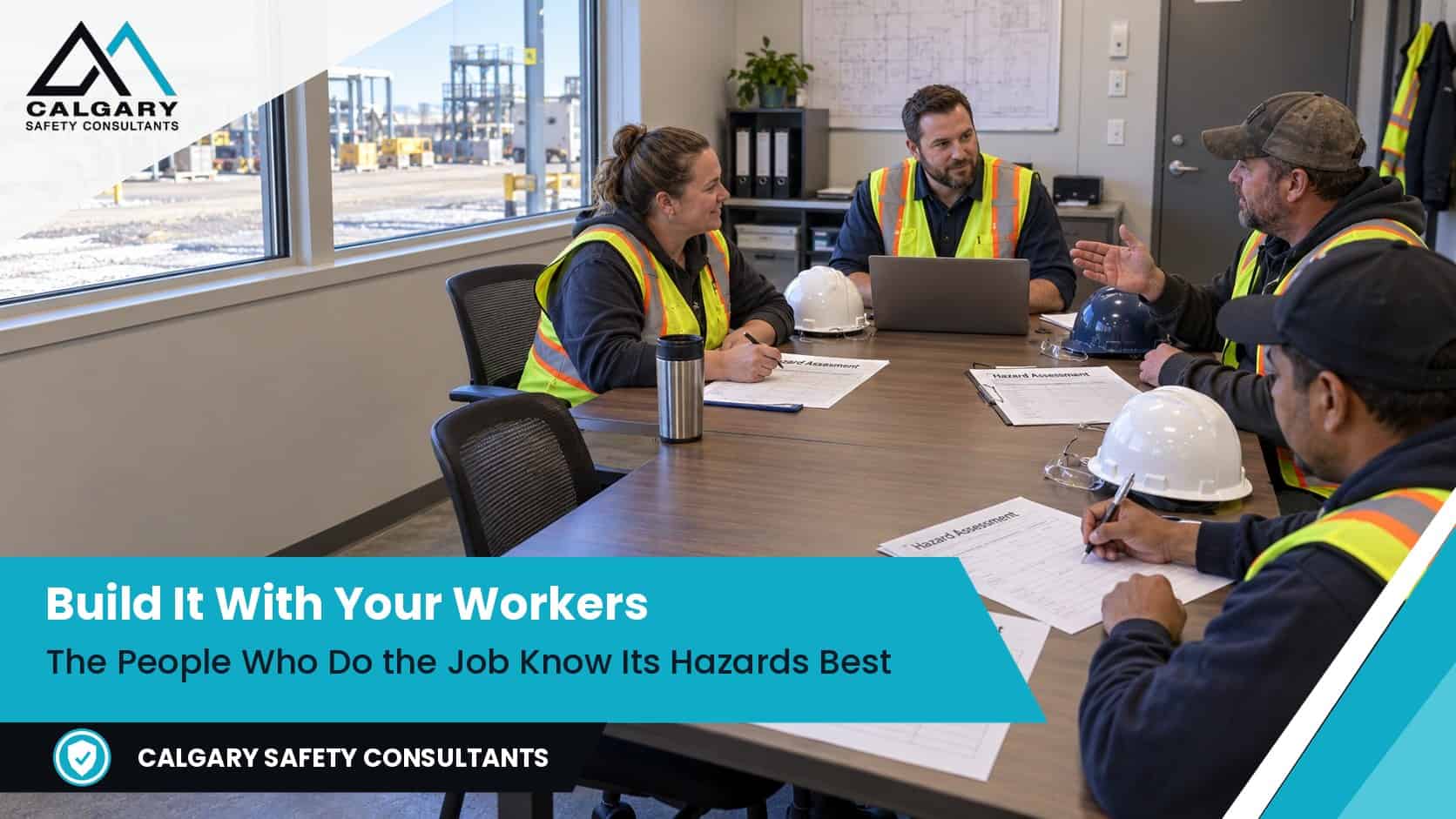
Involvement has to be real and it has to be visible. Walk the job with the workers who do it, ask them to describe each step, and test your proposed controls with them. Then record it: names, dates and signatures on the assessment, committee minutes showing the review, and notes on what changed because of worker input. Our article on proving worker participation explains what that record should look like.
Document It So It Can Be Used
A formal hazard assessment must be written, but writing it isn't the goal. People have to be able to find it and use it. Each assessment should show what it covers (site, job, task or equipment), who completed and approved it, the date it was prepared or revised, the hazards, the risk ratings, the controls and who is responsible for any new ones.
Keep a register that ties the assessments to your hazard inventory, with a version and review date for each. Store current copies where workers can reach them, on paper or on their phones, and keep superseded versions on file. The federal rules require a record of hazards and keep evaluation reports for six years, which is a good benchmark for any employer that wants to show its history.
Connect It to the Rest of Your System
The formal assessment only protects people when it flows into everything else you do. The controls it sets become your safe work procedures, PPE rules and training requirements. The hazards it lists become items on your workplace inspection checklists. The JHA becomes the reference for each crew's FLHA. In the other direction, findings from inspections, FLHAs and incident investigations should send you back to the assessment, and any new control should be tracked like any other corrective action.
That loop makes it part of a health and safety system, not a binder on a shelf.
Set the Review Cycle
Assessments go stale as equipment, crews and controls change. Set two kinds of review in your procedure:
- Triggered reviews before new work, new equipment, materials or processes, significant site changes, and after any incident, near miss, inspection finding or worker concern that suggests the assessment is wrong.
- Scheduled reviews at a set frequency even when nothing seems to have changed. Annually is a common choice and matches the WSCC code's expectation. Program reviews are required at least yearly in New Brunswick and P.E.I., and at least every three years in Saskatchewan, Manitoba, the Northwest Territories and federally.
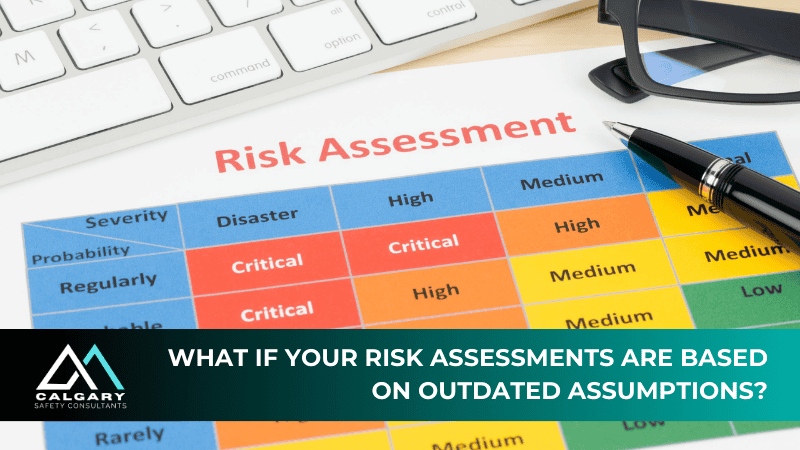
Record each review on the assessment, even when nothing changes, so an auditor or officer can see it happened. Our article on risk assessments based on outdated assumptions shows how quickly an untouched assessment drifts from reality.
Workplace example
A Practical Workplace Example
Situation: Consider an illustrative mechanical and plumbing contractor in Alberta with about 30 workers: service technicians, an installation crew, a warehouse lead and office staff. Its hazard assessments were generic forms bought online, all dated the same day four years earlier. After a technician was burned while draining a commercial boiler, nobody could find an assessment that covered boiler service.
Action: The operations manager and a technician who sat on the joint committee built a hazard inventory: two permanent sites, seven positions, 46 tasks, and the equipment and chemicals used. They completed a site assessment for the shop and warehouse, a JHA for each position with technicians walking through every task, and separate task assessments for boiler draining, confined space entry and soldering in occupied buildings.
Workers who helped build each JHA signed it, the owner approved it, and copies went onto the crew tablets. The company set annual reviews, added change triggers and linked its FLHA form to the JHA numbers.
Result: Within a few months, FLHAs had flagged two hazards the JHAs missed, both added at the next review. At the COR audit the next year, the auditor could trace each position to a current JHA, see who took part and find the review dates.
Common Mistakes to Avoid
- Treating FLHAs as the formal assessment. A stack of daily FLHAs doesn't replace the planned, approved assessment of every job and site.
- No hazard inventory. Without a list of sites, jobs, tasks and equipment, you can't show the system is complete, and gaps go unnoticed.
- Listing hazards without assessing risk. If every hazard looks the same, nobody knows where to focus.
- Jumping straight to PPE and training. Elimination and engineering controls are skipped because they take more thought.
- Workers missing from the process, or involved but with no record that they took part.
- Forgetting non-routine work, such as maintenance, cleaning, call-outs and seasonal tasks.
- Never reviewing. Every assessment carrying the same old date is one of the first things an auditor notices.
- Assessments nobody can find. If workers can't reach the JHA for their job, it can't guide their work or their FLHA.
Audit perspective
What an Auditor Expects to See
In a COR or SECOR audit, hazard assessment is its own element, and auditors check it through documents and interviews (and, in some protocols, observation). Energy Safety Canada's 2023 protocol, Element B, is a good example of what's expected. Auditors look for a written policy or procedure for formal hazard assessments, an inventory or list showing every position or discipline is included, tasks identified for each position, health and safety hazards identified for each task and each hazard assessed using two or more risk factors.
They also check for a procedure to create, review and revise assessments for new operations, modifications, newly found hazards and on a set frequency, and that reviews happen on schedule. In interviews, they'll ask workers whether they took part in developing or reviewing the assessments, and they'll ask senior managers about the highest-rated hazards in the business. Separately, they expect a site-specific hazard identification system, such as FLHAs, completed before work starts each day with the affected workers.
Our guides on the COR audit and COR audit interviews explain how the audit runs. Calgary Safety Consultants helps employers build and review their hazard assessment systems and prepare for COR and SECOR audits; we don't issue certificates. CORs and SECORs are issued through the applicable certifying partner.
The Bottom Line
A formal hazard assessment is the planned, written foundation of your health and safety system. Build it as a system: an inventory of everything you need to assess, site and area assessments, a JHA for every job or position, extra assessments for critical tasks, equipment and change, and FLHAs that test the plan against real conditions every day.
Put the JHA at the centre, build each one with the workers who do the job, choose controls by the hierarchy, and write down who took part and when. Then keep it alive with triggered and scheduled reviews. Do that, and you'll be well placed for an audit and, more importantly, better protecting the people doing the work.
Download the Formal Hazard Assessment Worksheet and Program Checklist
Two free, fillable PDF downloads go with this guide. Both have clickable checkboxes and fill-in fields, so you can complete them on screen or print them for your next assessment or committee meeting.
- Formal Hazard Assessment Worksheet (PDF, 7 pages). How to use it, a guide to choosing the right assessment type, a site and job hazard inventory, a full JHA worksheet with task steps, hazards, initial risk, controls by the hierarchy of controls, residual risk and responsible person, a worker participation and sign-off record, review triggers and a review log.
- Hazard Assessment Program Checklist (PDF, 6 pages). A checklist to confirm your hazard assessment system is complete and audit-ready: coverage of every site and job, worker involvement, documentation, communication, review triggers and records, with a jurisdiction-by-jurisdiction requirements table, an audit evidence list, common mistakes, a gap action plan and sign-off.
Click either button to download the file. Adapt both to your own workplace and to the rules that apply in your province or territory, or under the Canada Labour Code.

About the author
John Duplessis, B.Sc., CRSP
John Duplessis is a Canadian Registered Safety Professional with more than 30 years of occupational health and safety experience in oil and gas, construction, green energy, midstream operations and industrial project work. He is an external auditor with Energy Safety Canada.