Workplace Hazard Assessments | JHAs, and Investigations
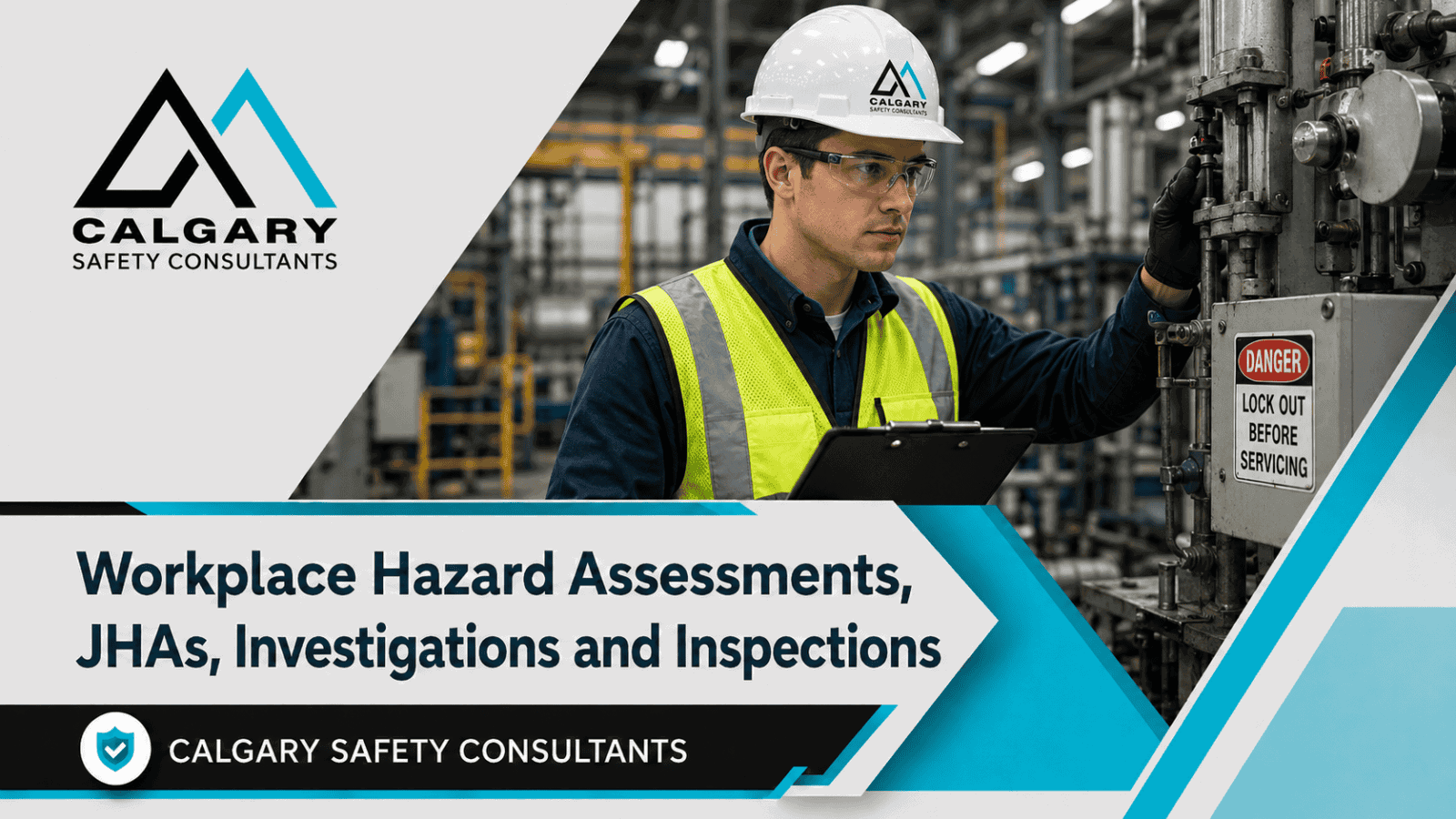
Workplace hazard assessments and inspections change as work changes. New tasks, equipment, workers, worksites, contractors, materials, weather conditions, production demands, and inspection findings can all create risks that may not be reflected in old forms or outdated safety documentation.
Calgary Safety Consultants helps employers develop and improve practical hazard assessments, job hazard analyses, workplace inspections, workplace investigation processes, and corrective action tracking systems.
We help you identify hazards, assess risk, document controls, inspect work areas, investigate incidents or concerns, track corrective actions, and strengthen the safety program behind the paperwork.
We provide practical support for employers in Calgary and across Alberta, British Columbia, and Saskatchewan.
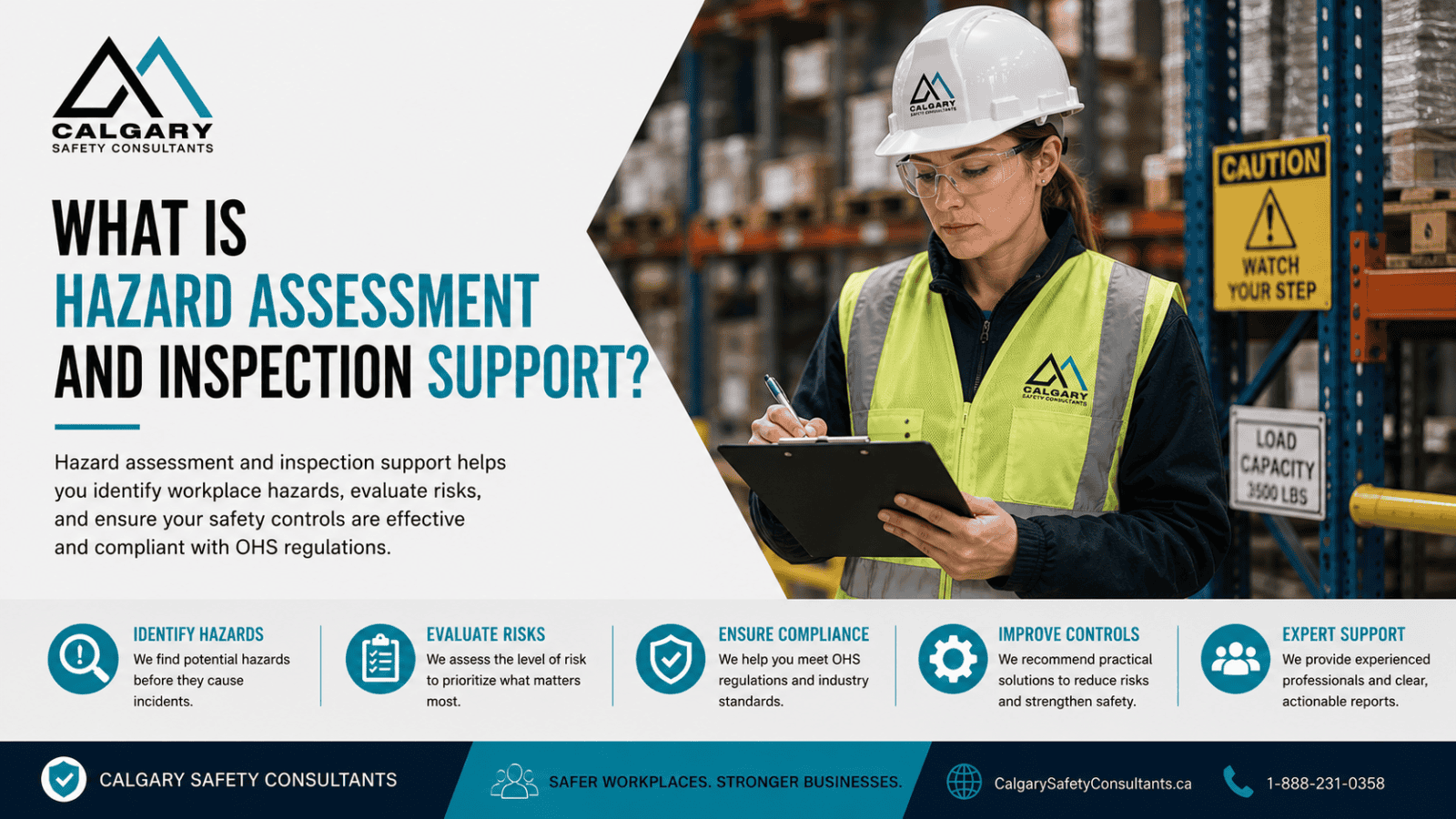
How We Support Workplace Hazard Assessments and Inspections?
Workplace hazard assessment and inspection support helps employers identify workplace hazards, evaluate risk, confirm controls, and document follow-up before problems lead to incidents, audit findings, client concerns, regulatory issues, or repeat deficiencies.
- A hazard assessment identifies what could harm workers and what controls are needed.
- A job hazard analysis, often called a JHA, breaks a specific task into steps so hazards, controls, PPE, training needs, and safe work expectations can be clearly explained.
- A workplace inspection checks whether conditions, equipment, tools, work methods, and controls are acceptable during day-to-day operations.
- A workplace investigation looks at what happened after an incident, near miss, complaint, concern, repeat deficiency, or inspection finding so the employer can identify contributing factors and correct the issue properly.
Together, these processes help employers move from reactive safety management to a practical system for identifying hazards, verifying controls, learning from problems, and preventing repeat issues.
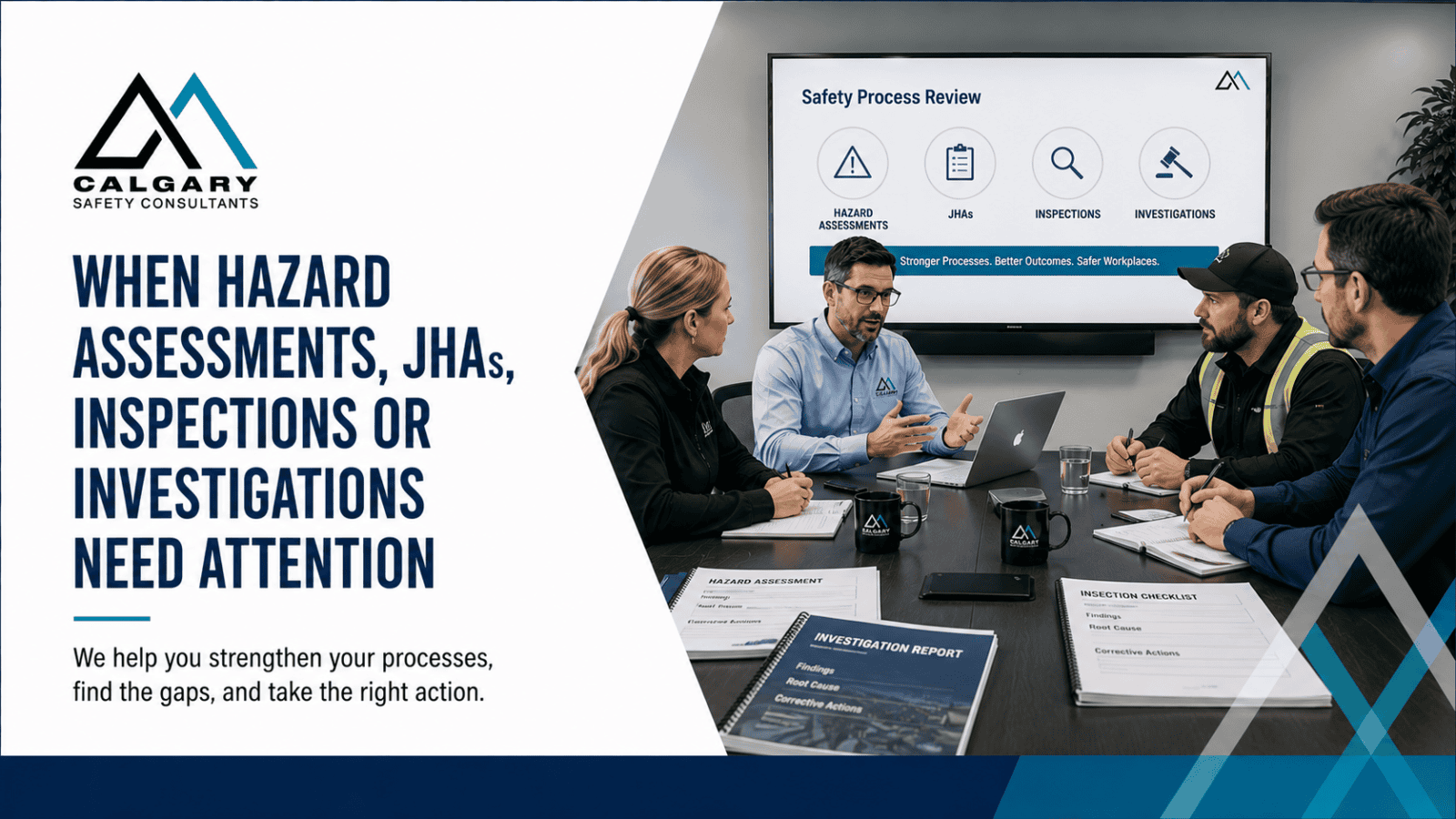
When Hazard Assessments, JHAs, Inspections or Investigations Need Attention
Employers may need support when safety documents no longer reflect how work is actually being performed.
This often happens when equipment changes, workers take on new tasks, work locations shift, contractors are added, production demands increase, or supervisors inherit forms that were copied from another company.
Support may also be needed when hazard assessments are generic, JHAs are incomplete, inspections are inconsistent, investigation notes are unclear, or corrective actions are identified but not tracked to completion.
These gaps can make it harder to show due diligence and can create confusion for supervisors, workers, clients, auditors, and regulators.
You may also need support if your company is preparing for COR, SECOR, a client audit, contractor prequalification, or a regulatory review. In these situations, employers need more than a document. They need a practical process that shows hazards are being identified, controls are being applied, inspections are being completed, concerns are being investigated, and follow-up is happening.
Hazard assessment, inspection, and investigation support can also be helpful after incidents, near misses, repeat deficiencies, unresolved hazards, worker concerns, or inspection findings. When the same issues keep showing up, the system needs to be reviewed, not just the form.
The goal is to help your company identify hazards clearly, document controls properly, inspect work areas consistently, investigate concerns when needed, correct deficiencies, and keep your safety program connected to the real work being performed.
Why These Processes Work Better Together
Hazard assessments, JHAs, workplace inspections, investigations, and corrective actions should not operate as separate paperwork systems.
A hazard assessment identifies what could go wrong and what controls should be in place.
A JHA gives workers and supervisors task-level guidance so the controls are easier to understand and apply.
A workplace inspection checks whether those controls are actually working in the field, shop, yard, office, vehicle, equipment area, or worksite.
A workplace investigation helps the employer understand why an incident, near miss, concern, complaint, or repeat deficiency occurred.
Corrective action tracking helps confirm that the issue was assigned, completed, verified, and closed.
When these processes are disconnected, hazards may be identified but not controlled. Inspections may be completed but not tied back to risk. Investigations may identify concerns but fail to correct the underlying issue. Corrective actions may be written down but never verified.
That creates gaps that can affect worker safety, productivity, claims exposure, audit performance, client confidence, supervisor accountability, and regulatory due diligence.
A stronger system connects hazard assessments, JHAs, inspections, investigations, and corrective actions into one practical risk management process.
- A hazard assessment identifies what could go wrong and what controls should be in place.
- A JHA gives workers and supervisors task-level guidance so the controls are easier to understand and apply.
- A workplace inspection checks whether those controls are actually working in the field, shop, yard, office, vehicle, equipment area, or worksite.
- A workplace investigation helps the employer understand why an incident, near miss, concern, complaint, or repeat deficiency occurred.
- Corrective action tracking helps confirm that the issue was assigned, completed, verified, and closed.
When these processes are disconnected, hazards may be identified but not controlled. Inspections may be completed but not tied back to risk. Investigations may identify concerns but fail to correct the underlying issue. Corrective actions may be written down but never verified.
That creates gaps that can affect worker safety, productivity, claims exposure, audit performance, client confidence, supervisor accountability, and regulatory due diligence.
A stronger system connects hazard assessments, JHAs, inspections, investigations, and corrective actions into one practical risk management process.
How Calgary Safety Consultants Helps
Calgary Safety Consultants helps employers develop, update, and improve hazard assessment, JHA, workplace inspection, workplace investigation, and corrective action processes.
We start by learning about your work activities, locations, equipment, workforce, current safety documentation, inspection process, investigation process, corrective action system, and any COR, SECOR, audit, client, contractor, or regulatory requirements.
We can review your existing hazard assessments, JHAs, inspection forms, corrective action records, incident reports, near miss reports, worker concern records, safe work practices, procedures, training records, and safety manual sections.
From there, we identify what is working, what is missing, what is outdated, and what does not reflect current workplace conditions.
Our support may include:
- Formal hazard assessments.
- Site-specific hazard assessments.
- Job hazard analysis development.
- Workplace inspection forms and checklists.
- Inspection schedules and responsibilities.
- Workplace investigation forms and guidance.
- Incident and near miss investigation support.
- Worker concern and repeat deficiency review.
- Corrective action tracking.
- Review of safe work practices and procedures connected to hazards.
- Training and competency documentation review.
- COR, SECOR, client audit, and contractor prequalification support.
- Implementation guidance for supervisors and workers.
- Program improvement recommendations.
We can help define how hazards, deficiencies, investigation findings, and inspection results will be assigned, tracked, verified, and closed.
This helps prevent findings from being forgotten and gives the company stronger evidence that hazards are being managed, controls are being followed, and corrective actions are being completed.
This service does not replace the employer’s responsibility to manage workplace health and safety. Employers remain responsible for identifying hazards, controlling risks, training workers, supervising work, completing inspections, investigating concerns, correcting deficiencies, and maintaining records.
Our role is to provide practical OH&S consulting support, improve your documentation, and help your team use systems that are easier to understand, maintain, and explain.
Related Pages
To better understand the role of external OH&S support, read our related page:
You may also find these pages helpful:
Here’s some helpful links for government services:
Alberta Health and Safety Program
Official Government of Alberta health and safety program page.
WorkSafeBC Developing a Health and Safety Program
Official WorkSafeBC guidance page for developing a workplace health and safety program.
Saskatchewan Safety in the Workplace
Official Government of Saskatchewan workplace safety information page.
Frequently Asked Questions
What is the difference between a hazard assessment, JHA, workplace inspection, and workplace investigation?
A hazard assessment identifies hazards and controls across workplace activities. A JHA breaks a specific task into steps so hazards and controls can be explained clearly. A workplace inspection checks current conditions, equipment, work methods, and controls. A workplace investigation reviews what happened after an incident, near miss, concern, complaint, or repeat deficiency so the employer can identify contributing factors and corrective actions.
Do employers need both hazard assessments and workplace inspections?
Yes, in most workplaces they serve different but connected purposes. Hazard assessments identify what hazards exist and what controls should be in place. Workplace inspections help verify whether those controls are being followed and whether new hazards or deficiencies have developed.
Can Calgary Safety Consultants update existing hazard assessments or JHAs?
Yes. We can review your existing hazard assessments and JHAs, remove outdated or generic content, improve risk ranking, update controls, and align the documents with current work activities, equipment, locations, and supervisor expectations.
Can you develop workplace inspection forms?
Yes. We can develop inspection forms and checklists for offices, shops, yards, vehicles, equipment, field work, construction sites, mobile work, or other work areas. The goal is to make inspections practical enough for supervisors to use and detailed enough to support follow-up.
Can you help with workplace investigations?
Yes. Calgary Safety Consultants can help employers review incidents, near misses, worker concerns, complaints, repeat deficiencies, or inspection findings from a safety management perspective. The goal is to identify contributing factors, document what happened, recommend practical corrective actions, and help prevent recurrence.
Can this support help with COR or SECOR?
Yes. Hazard assessments, JHAs, inspections, investigations, and corrective action tracking are important parts of a functioning safety program and can support COR or SECOR readiness. These records help show that the employer is identifying hazards, applying controls, completing follow-up, and maintaining an active safety system.
How often should workplace inspections be completed?
Inspection frequency depends on the workplace, hazards, work activities, regulatory expectations, and internal safety program requirements. Many employers complete regular workplace inspections monthly, but higher-risk work areas, changing worksites, equipment, vehicles, or field operations may need more frequent checks. The key is to set a schedule, assign responsibility, document findings, and track corrective actions to completion.
Calgary Safety Consultants supports employers across Alberta, British Columbia, and Saskatchewan. Our work is focused on Canadian workplace safety requirements and practical OH&S support for employers operating in Western Canada.