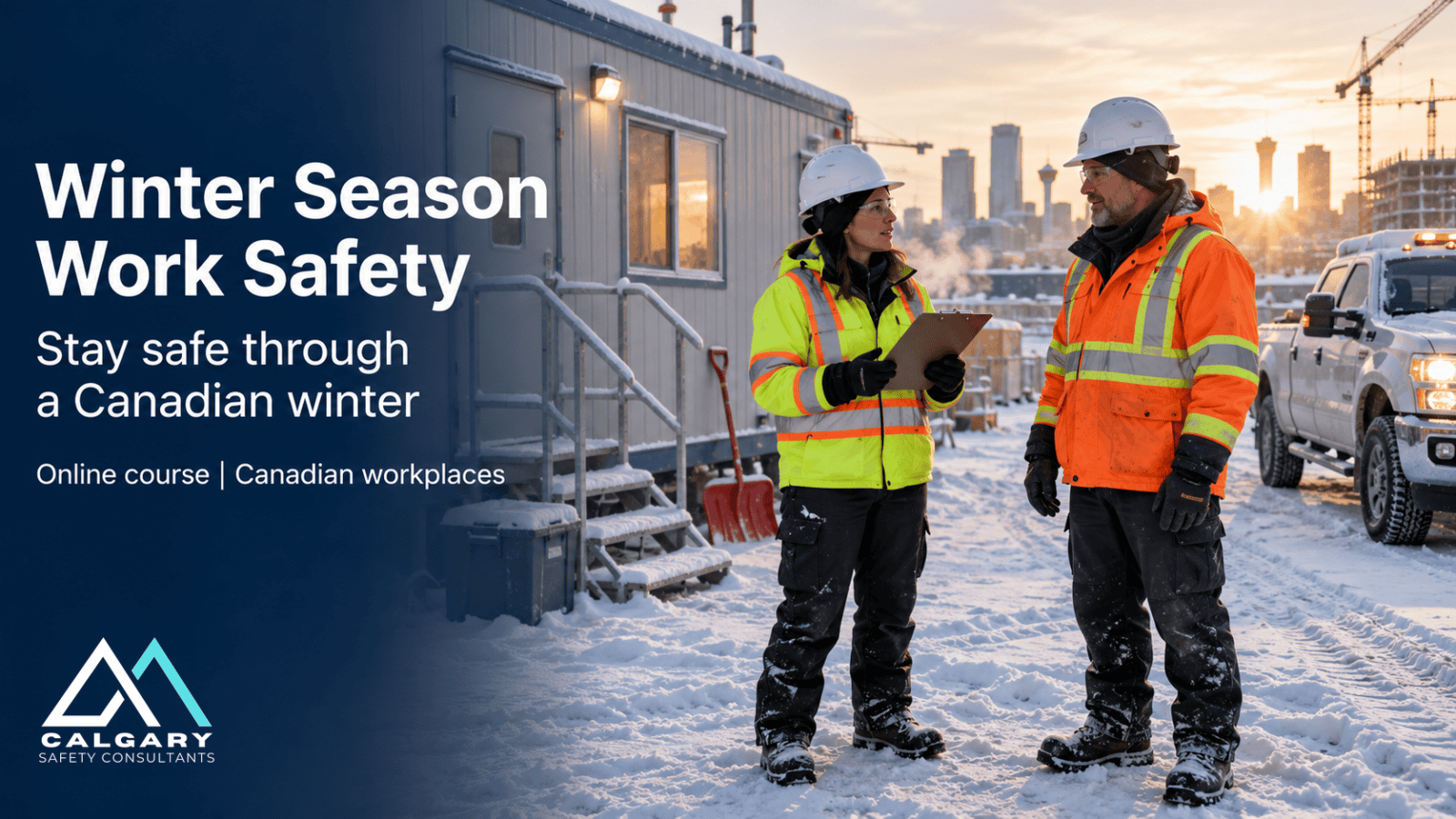
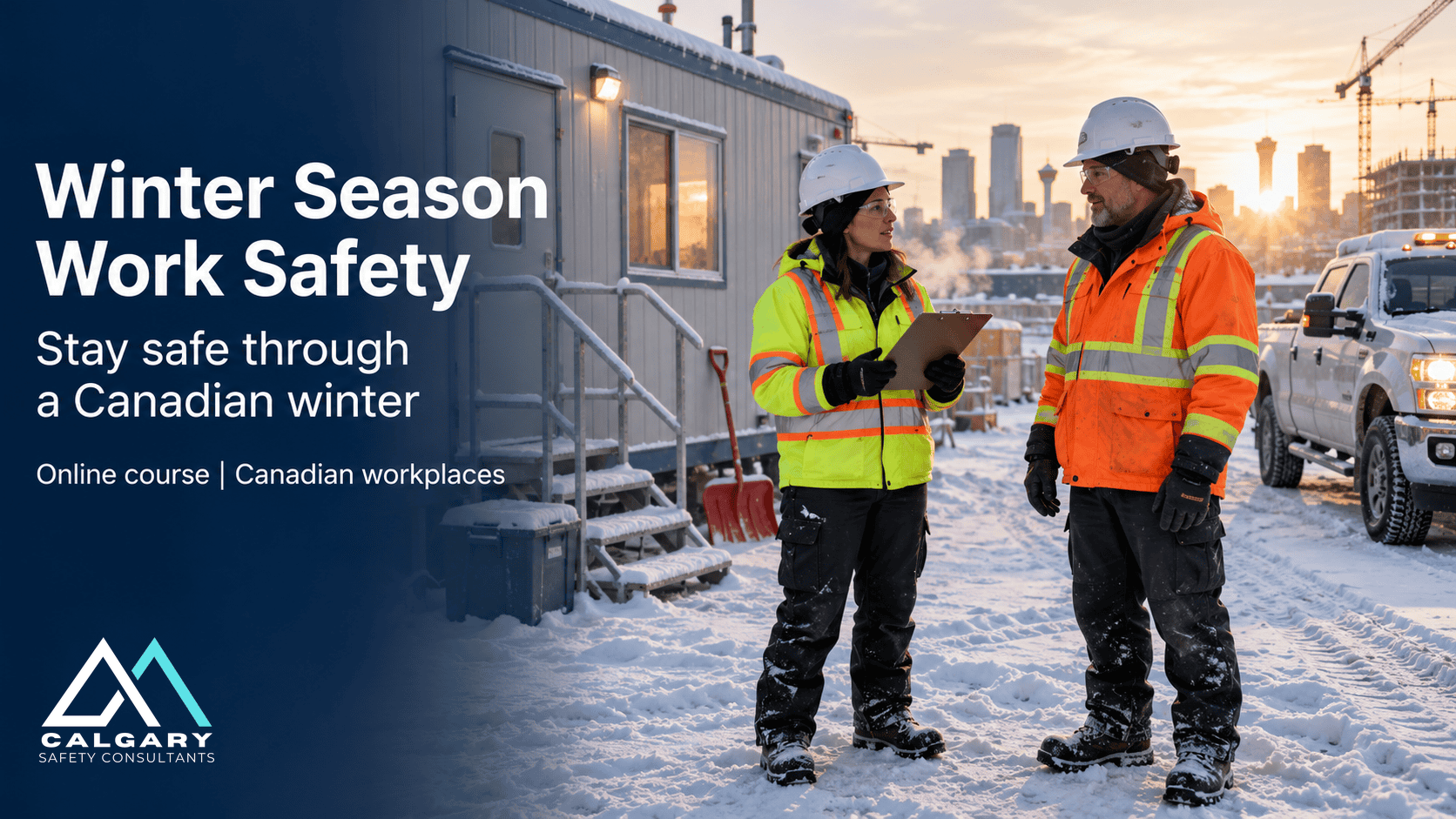
Winter Season Work Safety
This course is free. Sign in or create your free account, select Enroll, then scroll to the Course Content section at the end of this page to begin your lessons.
Table of Contents
Our free online winter safety training helps workers, supervisors and small employers across Canada get through the cold months safely. This self-paced awareness course covers cold stress, frostbite, hypothermia and cold emergencies, slips and falls on ice and snow, safe snow removal, winter driving for work, carbon monoxide from temporary heaters and engines, shorter daylight hours and working alone in the dark, and the holiday season: the rush, the breaks and the stress.
Enrolment is for one person at a time: each learner creates their own free account and enrols on this page. If you know someone who works outdoors, drives for work or clears snow, please share this page with them. If you’d like help building your cold weather plan, winter hazard assessment or working alone procedures, see our workplace safety consulting services.
Learn more about how our online safety training works.
A Free Course We’re Glad to Share
Every winter, the same jobs get harder. Cold slows hands and thinking, ice changes every step, roads turn on short notice, temporary heaters bring carbon monoxide indoors, and darkness arrives before the shift ends. Most winter injuries aren’t mysteries. They come from hazards people already know about but haven’t planned for.
We built this course so any worker or employer in Canada can learn the basics at no cost. It’s practical, plain-spoken and built around real Canadian workplaces, from utility yards in Red Deer to warehouses in Winnipeg and job sites in Regina.
This is awareness-level training. It isn’t a certification, it doesn’t qualify you to give first aid or operate equipment, and it doesn’t replace your employer’s hazard assessment, cold weather plan, procedures or site-specific training.
Online Winter Safety Training Course at a Glance
Price: Free
Delivery: 100% online and self-paced
Course format: 8 narrated video lessons in four modules, with written lesson notes
Video time: about 87 minutes in total, each lesson about 10 to 11 minutes
Knowledge checks: three questions after each lesson (100% to continue, unlimited retries)
Final quiz: five questions, 80% to pass
Course guide: a downloadable Student Reference Guide with jurisdiction tables and seven winter checklists
Certificate: Certificate of Completion
Coverage: all 14 Canadian OH&S jurisdictions
What Does Online Winter Safety Training Cover?
This winter safety training follows a working winter, from the first cold morning to the holiday shutdown. Each lesson pairs the hazard with the everyday controls that prevent harm, and shows what to do when something goes wrong.
You’ll learn how to:
- Identify winter hazards across the 12 CSC Energy Sources, from cold and ice to carbon monoxide and darkness.
- Explain how the body loses heat, how wind chill fits in, and what raises the risk of cold stress.
- Plan the work around the cold, then choose controls and dress in layers that work.
- Recognize frostnip, frostbite, non-freezing cold injuries and hypothermia, and respond safely, including when to call 911.
- Prevent slips and falls on ice and snow with good walkway maintenance, footwear, traction aids and walking technique.
- Clear snow safely by hand, with snow blowers and equipment, and from roofs.
- Plan winter driving for work, prepare the vehicle and kit, and know what to do if you’re stranded.
- Control carbon monoxide from temporary heaters, generators and engines, and respond safely if someone shows symptoms.
- Light the work, stay visible in the dark, and build a working alone plan with check-ins that still work in winter.
- Manage the holiday rush, shutdowns and start-ups, celebrations and seasonal stress, and know where to turn for support.
Every lesson includes written notes, workplace examples, decision points and a knowledge check, so learners practise making sound decisions rather than memorizing rules.
Winter Safety Requirements Across Canada
Canada has 14 OH&S jurisdictions: the federal government, 10 provinces and 3 territories. In every one, employers have a general duty to protect workers and to assess and control hazards, and that includes the hazards winter brings. Some jurisdictions go further. British Columbia’s OHS Regulation, for example, has a specific cold stress section that requires an assessment and a written cold exposure control plan, and several others, including Saskatchewan, Manitoba, New Brunswick and Newfoundland and Labrador, have thermal conditions provisions that apply to cold work.
Winter work also brings in other rules: exposure limits for carbon monoxide, working alone provisions, lighting requirements, fall protection for roof snow clearing, and, on the road, winter tire rules in British Columbia and Quebec. The Student Reference Guide includes jurisdiction reference tables for each of these, checked against official sources in October 2026. Laws change, so always confirm the current official text and your employer’s procedures.
Who Should Take This Winter Safety Course?
This course is built for anyone whose work gets harder or riskier in winter, in any industry and any region of Canada.
It’s suitable for:
- Outdoor workers in construction, utilities, oil and gas, agriculture, municipal services and security
- Drivers, delivery staff, field technicians, home care workers and anyone who drives for work
- Workers who clear snow by hand, with snow blowers or with equipment
- Workers in heated enclosures and buildings under construction where temporary heaters are used
- Anyone who starts or finishes work in the dark or works alone
- Supervisors, small employers and safety coordinators who plan winter work
- Seasonal and temporary workers joining a busy holiday operation
Employers often share the course link with their workers at the start of the season, as part of new worker orientation, or alongside a toolbox talk on cold weather work. Each worker then enrols individually with their own free account.
Online Winter Safety Training Course Features
Our online winter safety training is designed to be practical, realistic and easy to apply to the work you actually do.
Course features include:
- 100% online, self-paced and free
- 8 narrated video lessons, each about 10 to 11 minutes long
- Written lesson notes with learning objectives, workplace examples and decision points
- Real Canadian winter scenarios across many industries and regions
- A three-question knowledge check after each lesson, with feedback after each answer
- A five-question final quiz
- A downloadable Student Reference Guide with lesson summaries, reflection questions, jurisdiction reference tables and seven winter checklists
- A Certificate of Completion
The checklists cover cold weather work planning, cold injury signs and first response, winter walkway and parking lot inspection, the winter vehicle emergency kit, temporary heater and carbon monoxide pre-use checks, a winter working alone check-in plan, and holiday shutdown and start-up.
Online Winter Safety Training Course Modules
The course is organized into four modules. Each lesson is one complete narrated video with written notes and a knowledge check.
Module One: Cold Stress and Cold Injuries
Module One explains how winter cold affects workers: the hazards cold brings across the CSC Energy Sources, how the body loses heat and what raises the risk, the controls and clothing that prevent cold stress, and how to recognize and respond to frostnip, frostbite, hypothermia and other cold emergencies.
Lessons:
- Lesson One: Cold Stress: How Winter Cold Affects Workers
- Lesson Two: Frostbite, Hypothermia and Cold Emergencies
Module Two: Ice, Snow and Winter Roads
Module Two covers ice, snow and winter roads: preventing slips and falls on ice and snow, clearing snow safely by hand, with equipment and from roofs, and planning and driving safely when winter driving is part of the job.
Lessons:
- Lesson Three: Slips and Falls on Ice and Snow
- Lesson Four: Safe Snow Removal
- Lesson Five: Winter Driving for Work
Module Three: Heaters, Darkness and Working Alone
Module Three covers carbon monoxide from temporary heaters, generators and engines, and the extra risk that comes with shorter daylight hours, from lighting and visibility to working alone in the dark with a check-in plan that works.
Lessons:
- Lesson Six: Carbon Monoxide from Temporary Heaters
- Lesson Seven: Shorter Daylight Hours and Working Alone in the Dark
Module Four: The Holiday Season
Module Four covers holiday season safety: the year-end rush, seasonal and temporary workers, holiday shutdowns and start-ups, celebrations, and the stress and fatigue the season can bring, with where to turn for support.
Lessons:
- Lesson Eight: Holiday Season Safety: The Rush, the Breaks and the Stress
Complete Your Online Winter Safety Training
Create your free account, enrol on this page, then work through the lessons in order at your own pace. After each video, complete the lesson’s three-question knowledge check. You need all three answers correct (100%) to move on, and you can retry as many times as you need, with feedback after each answer to help you learn.
After Lesson 8, complete the five-question final quiz, which draws on all four modules. You need four correct answers (80%) to pass, and you can retake it as many times as you need. Once you’ve completed all eight lessons, their knowledge checks and the final quiz, you can download your Certificate of Completion.
The certificate shows that you completed awareness-level online training in winter work safety. It isn’t a professional designation or a first aid certificate, and it doesn’t confirm that any workplace’s cold weather plan meets the law.
Frequently Asked Questions About Online Winter Safety Training
Is the course really free?
Yes. There’s no charge for the course, the Student Reference Guide or the certificate. Create your free account, enrol on this page and start whenever you like.
Does this winter safety training cover every province and territory?
Yes. The course covers all 14 Canadian OH&S jurisdictions: the federal government, the 10 provinces and the 3 territories. It teaches the principles they share, and the Student Reference Guide includes jurisdiction reference tables for cold stress, carbon monoxide limits, working alone, lighting, fall protection, winter tires and the right to refuse unsafe work. Always confirm the current rules with your regulator.
How long does the online winter safety course take?
Most learners finish in about an hour and a half to an hour and three quarters. The eight lesson videos run about 87 minutes in total, and the knowledge checks and final quiz add time depending on your pace. You can stop and return at any time.
Does this course teach first aid for frostbite and hypothermia?
It teaches you to recognize cold injuries and respond safely: get the person out of the cold, call 911 for suspected moderate or severe hypothermia, and avoid things that make an injury worse, such as rubbing frostbitten skin or rewarming it if it could freeze again. It isn’t a first aid course. First aid beyond comfort measures is for trained first aiders.
Does the course cover carbon monoxide from heaters and generators?
Yes. Lesson 6 explains where carbon monoxide comes from on winter sites, why you can’t see or smell it, how ventilation, the right heater for the space and CO monitors protect workers, and what to do if someone shows symptoms. Nobody goes back into a space with carbon monoxide unless they’re trained, equipped and assigned to.
Does it cover working alone in winter?
Yes. Lesson 7 covers shorter daylight hours, lighting and visibility, and how to build a working alone plan with check-ins that still work in cold, dark conditions. Check-in intervals are set by your employer’s hazard assessment, and the Student Reference Guide includes a Winter Working Alone Check-In Plan you can adapt.
Is there a final quiz?
Yes. After Lesson 8 there’s a five-question final quiz. You need four of five correct (80%) to pass, and you can retake it as many times as you need.
Do I receive a certificate?
Yes. You receive a Certificate of Completion after you complete all eight lessons, their knowledge checks and the final quiz. It records completion of awareness-level online training. It isn’t a professional designation or a first aid certificate, and it isn’t approved by any regulator.
Can an employer enrol a group of workers?
No. Enrolment for this course is for one person at a time. Each worker creates their own free account and enrols individually, and we don’t set up group or bulk enrolments for this course. Employers are welcome to share the course link with their workers.
Additional Winter Safety Resources
The resources below help you check conditions and requirements where you work, and get help when you need it. Use the official sources for current information, and our services when your winter program needs more than training.
Wind chill index
Issued by: Environment and Climate Change Canada
How wind chill is calculated and how quickly exposed skin can freeze at different wind chill values. Use it with the forecast when you plan outdoor work.
Wind chill index
Extreme cold warnings
Issued by: Environment and Climate Change Canada
When extreme cold warnings are issued and what they mean for your area.
Extreme cold warnings
Extreme cold
Issued by: Health Canada
Signs of frostbite and hypothermia and how to protect yourself in extreme cold.
Extreme cold
Carbon monoxide symptoms and exposure
Issued by: Health Canada
How carbon monoxide affects the body and the symptoms of exposure.
Carbon monoxide symptoms and exposure
9-8-8 Suicide Crisis Helpline
Issued by: 9-8-8 Suicide Crisis Helpline, funded by the Public Health Agency of Canada
Call or text 9-8-8, 24 hours a day, 7 days a week, anywhere in Canada, if you or someone you know is thinking about suicide.
9-8-8 Suicide Crisis Helpline
Workplace Safety Consulting Services
Issued by: Calgary Safety Consultants
Our consulting support for hazard assessments, safe work procedures, working alone programs and cold weather plans across Western Canada.
Workplace Safety Consulting Services
Related courses: New Worker Safety Essentials (free), Working Alone and Lone Worker Safety for Canadian Workplaces, Hazard Assessment and Control for Canadian Workplaces and FLHA Essentials for Workers.
Winter hazards belong in your inspections and hazard assessments too. Learn more about our workplace inspection and compliance training and hazard assessment and control training.