How to Create a Workplace Violence and Harassment Prevention Plan
How to assess the risks, write a plan that meets your jurisdiction's rules, and handle reports and investigations fairly.
Coming soon
Practical guides to worker health and wellbeing: preventing violence and harassment, musculoskeletal injuries and psychological harm at work. Written for employers, supervisors and safety committees anywhere in Canada.
Prepared by Calgary Safety Consultants, led by John Duplessis, B.Sc., CRSP.
Worker health guides
Every guide in this category explains how a part of protecting worker health is done well, with the legal requirements linked at the point they matter and free downloads you can adapt. Guides marked coming soon open here as they're published.
How to assess the risks, write a plan that meets your jurisdiction's rules, and handle reports and investigations fairly.
Coming soonHow to assess and adjust office and home workstations, from chair and desk height to monitor position and lighting.
Coming soonHow to identify and assess the lifting, repetition, force and posture risks behind musculoskeletal injuries, and control them.
Coming soonHow to identify psychosocial hazards such as workload, harassment and poor support, and build them into your program.
Coming soonHow healthcare and community care employers reduce lifting and transfer injuries with assessments, equipment and training.
Coming soonHow retail and late-night businesses reduce the risk of robbery and violence through layout, cash handling, staffing and training.
Coming soonAbout worker health
Worker health and wellbeing covers the hazards that don't always show up as a single dramatic incident: workplace violence and harassment, musculoskeletal injuries from lifting and repetitive work, and psychological harm from how work is designed and managed.
These hazards are common and costly. Of the 274,022 lost-time claims accepted in Canada in 2023, more than 116,000 were traumatic injuries to muscles, tendons, ligaments and joints, according to figures from the Association of Workers' Compensation Boards of Canada. In British Columbia, WorkSafeBC reports that musculoskeletal injuries make up about 30% of time-loss claims, with more than 88,000 such claims from 2020 to 2024 costing over $2.35 billion.
Exposure is widespread, too. In Statistics Canada's Survey on Working Conditions, 54.3% of workers said they were frequently exposed to ergonomic risk factors, and 16.1% frequently dealt with angry clients, rising to 35.2% in health occupations.
Psychological health is part of the picture. The National Standard of Canada for Psychological Health and Safety in the Workplace is voluntary, but it gives employers a framework for identifying and managing psychosocial hazards such as workload, civility and respect, and support. Harassment and violence prevention, by contrast, is a legal duty in most Canadian jurisdictions.
Protecting worker health pays off: fewer claims and less lost time, better attendance, lower turnover and fewer conflicts draining supervisors' time. It's also a growing focus for regulators, clients and the people you're trying to hire.
Involving workers helps. An Institute for Work & Health review of participatory ergonomics, where workers help identify and solve ergonomic problems, found partial evidence of positive effects on symptoms, injuries, claims and lost days.
How it works
Worker health hazards respond to the same five steps as any other hazard, even when they're harder to see.
Look beyond the obvious: lifting, repetition and awkward postures, aggressive clients and working alone, harassment between co-workers, and workload, fatigue and poor support. Talk to workers, review complaints and injury records, and watch the work as it's done.
Use ergonomic and violence risk assessments to understand how often and how seriously workers are exposed, considering past incidents at your workplace and at similar ones.
Redesign the work first: adjustable workstations, lifting aids, layout changes, staffing, cash handling and check-in procedures. Back these up with policies, training and clear reporting routes.
Make it easy and safe to report harassment, violence and early symptoms of strain. Investigate promptly and fairly, protect confidentiality and support the worker, including access to health care.
Review assessments and plans after incidents and changes, and on the schedule your jurisdiction sets, and track trends in reports, claims and absences.
Other countries take a similar approach. The UK Health and Safety Executive's Management Standards for work-related stress focus on six areas of work design: demands, control, support, relationships, role and change. The US Occupational Safety and Health Administration identifies healthcare, social services and late-night retail among the sectors at higher risk of workplace violence.
What the law expects
Violence and harassment prevention is required across most of Canada, and several jurisdictions also set specific rules for preventing musculoskeletal injuries.
Alberta's OHS Act defines harassment and violence, including domestic and sexual violence, and requires employers to make sure workers aren't subjected to, or taking part in, either at the work site. Employers need a violence and harassment prevention plan, investigation reports kept for at least two years, and a plan review at least every three years, as the province's guidance on workplace harassment and violence explains.
British Columbia's OHS Regulation, Part 4 requires a violence risk assessment, procedures to eliminate or minimize the risk and worker instruction, and sets out a full MSI prevention process, from risk identification and assessment to controls, education and evaluation at least once a year. WorkSafeBC's bullying and harassment policies require a policy statement, reporting and complaint procedures, training and an annual review.
Since May 17, 2024, every provincially regulated workplace in Saskatchewan must have a violence policy and prevention plan and investigate all incidents. Ontario requires workplace violence and harassment policies and programs, with policies reviewed at least once a year. Federally regulated employers follow the Work Place Harassment and Violence Prevention Regulations, which require a joint workplace assessment, a prevention policy, training and a resolution process. In Quebec, the 2021 modernization of OHS law requires prevention programs to identify psychosocial risks.
| Jurisdiction | Violence and harassment | Musculoskeletal injuries |
|---|---|---|
| Alberta | A violence and harassment prevention plan, investigation reports kept for at least two years, and a plan review at least every three years. | The OHS Code covers manual handling assessments, MSI prevention and training. |
| British Columbia | A violence risk assessment and procedures, plus a bullying and harassment policy, procedures, training and an annual review. | A full MSI process: identify, assess, control, educate and evaluate at least once a year, in consultation with workers. |
| Saskatchewan | A violence policy and prevention plan for every provincially regulated workplace since May 2024, and a written harassment policy. | The regulations cover lifting and handling loads and musculoskeletal injuries. |
| Ontario | Written policies reviewed at least once a year, violence and harassment programs, and investigations with written results. | No specific ergonomics regulation. The general duty to protect workers applies. |
| Federal | A joint workplace assessment, a prevention policy reviewed at least every three years, training and a resolution process. | Ergonomic hazards are part of the required hazard prevention program. |
Domestic violence that spills into the workplace is a workplace hazard, too. Alberta's definition of violence includes domestic violence, and Ontario, Quebec and federal rules also address it. Because the details differ, start by confirming which law applies to your workplace. Our OHS Legislation category links the Act, regulations and regulator for all 14 jurisdictions in Canada, and explains how to read them.
From our audits
Most employers we work with have a harassment policy and some ergonomic equipment. The gaps are in how the risks are assessed, reported and followed up.
Each of these is fixable once you see it. The guides on this page show what protecting worker health looks like in practice.
Free downloads
Use these free tools to bring worker health hazards into your everyday safety work, then adapt them to your workplace and the law that applies to you.
From the blog
September 3, 2026
May 25, 2026
March 30, 2026
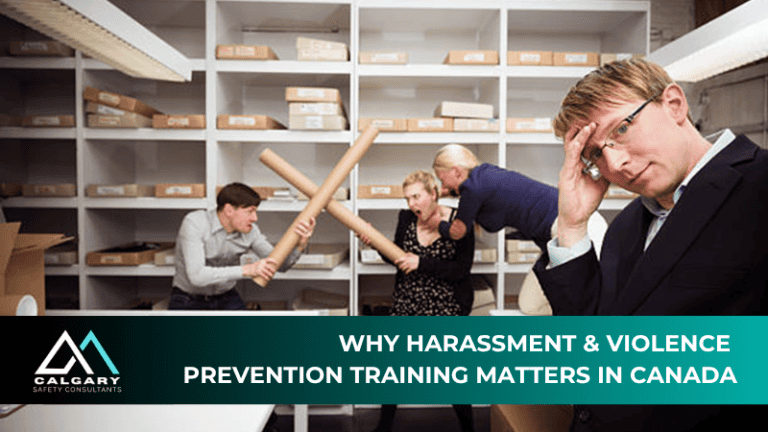
June 9, 2025
When to bring in help
The guides are written so you can act on them yourself. Sometimes it helps to have an experienced safety professional involved, especially after a harassment complaint or a violent incident, when MSI claims are climbing or when you need a prevention plan in place quickly.
Calgary Safety Consultants helps employers protect worker health. We write violence and harassment prevention plans, carry out violence and ergonomic risk assessments, train workers and supervisors through our respectful workplace, office ergonomics and MSI prevention courses, and help bring psychological hazards into your hazard assessments. Our consulting focuses on Alberta, British Columbia and Saskatchewan, and our online training and free downloads are available anywhere in Canada.
We help employers prepare for COR and SECOR audits, but we don't issue certificates. CORs and SECORs are issued through the applicable certifying partner.
Common questions
Answers to the questions employers and supervisors ask most often about violence and harassment, ergonomics and psychological health at work.
In most of Canada, yes. Alberta requires a violence and harassment prevention plan, Saskatchewan has required a violence policy and prevention plan in every provincially regulated workplace since May 2024, Ontario requires written policies and programs, and federally regulated employers need a prevention policy. British Columbia requires violence procedures where there's a risk, and bullying and harassment measures for every employer.
Most plans cover the same core pieces: a policy statement, a risk assessment, measures to eliminate or control the risks, how workers are told about threats, how to report incidents and complaints, how they'll be investigated, how confidentiality is protected, and support for affected workers. Alberta, Saskatchewan and federal rules each list required contents, so check the rules that apply to you.
Definitions differ but share the same idea: unwelcome conduct, comments or actions that a person knows, or ought to know, will cause offence, humiliation or harm. Alberta's definition covers a single incident or repeated incidents, and Ontario's refers to a course of vexatious comment or conduct, including online. Reasonable management action, such as performance discussions, isn't harassment in Alberta or British Columbia.
It can. Domestic violence becomes a workplace hazard when it happens at work or spills over into the workplace, for example when an abusive partner calls, follows or threatens a worker on the job. Alberta's definition of violence includes domestic violence, and Ontario, Quebec and federal rules also address it. Plans should explain how workers can ask for help safely.
A musculoskeletal injury, or MSI, is an injury or disorder of the muscles, tendons, ligaments, joints, nerves, blood vessels or related soft tissue that's caused or made worse by work. Common risk factors include force, repetition, awkward or static postures, contact stress, vibration and cold. Back strains, tendinitis and carpal tunnel syndrome are typical examples.
In several jurisdictions, yes. British Columbia requires employers to identify and assess MSI risks, Alberta's OHS Code requires manual handling hazards to be assessed, and Saskatchewan and Manitoba have musculoskeletal injury rules. Federally regulated employers must cover ergonomic hazards in their hazard prevention program. Ontario has no specific ergonomics regulation, but the general duty to protect workers applies.
Check how the worker sits and works: chair height with feet flat and thighs roughly parallel, lumbar support, the keyboard just below elbow height with the mouse beside it, and the monitor directly in front with the eyes level with the top line of text. Look at reaching, twisting, lighting, glare and breaks. CSA Z412:24 is the current office ergonomics standard.
Psychosocial hazards come from how work is designed, organized and managed, and from the social side of work. Examples include excessive workload, poor support, unclear roles, harassment, violence and exposure to traumatic events. Canada's national standard identifies 13 psychosocial factors, from clear leadership and civility and respect to workload management and psychological support.
No. The National Standard of Canada for Psychological Health and Safety in the Workplace is voluntary, and the Mental Health Commission of Canada describes it as a framework rather than a regulation. Some related duties are binding, though, including harassment and violence prevention rules, Quebec's requirement to identify psychosocial risks, and the federal harassment and violence regulations.
Promptly, fairly and confidentially, by someone impartial and properly trained. Gather the facts from the people involved and any witnesses, keep records and tell both parties the outcome. Ontario requires written results to the worker who complained and the alleged harasser, Alberta requires an investigation report kept for at least two years, and federal rules set out a detailed resolution process.
Start with a risk assessment that looks at the location, the time of day, cash handling and the people workers deal with. Then put controls in place, such as check-in procedures, lighting, barriers, limited cash and a second worker where needed. British Columbia and Alberta have specific rules for late-night retail and working alone, and other jurisdictions have similar requirements.
Very common. In 2023, more than 116,000 of the 274,022 lost-time claims accepted in Canada were traumatic injuries to muscles, tendons, ligaments and joints, based on AWCBC figures. WorkSafeBC reports that musculoskeletal injuries make up about 30% of time-loss claims in British Columbia, and the federal Labour Program gives a similar figure for federally regulated workplaces.
Yes. Harassment, violence, working alone, fatigue and work-related stress can cause serious harm and belong in hazard assessments alongside physical hazards. Quebec now requires prevention programs to identify psychosocial risks, and the federal harassment and violence regulations require employers to assess risk factors. Treat these hazards with the same assess, control and review approach as any other hazard.
Yes. We write violence and harassment prevention plans, carry out violence and ergonomic risk assessments, train workers and supervisors through our respectful workplace, office ergonomics and MSI prevention courses, and help bring psychological hazards into your program. Our consulting focuses on Alberta, British Columbia and Saskatchewan, while our guides, free downloads and online training are available anywhere in Canada. Book a free consultation to talk it through.
Talk to a safety consultant
Whether you need a violence and harassment prevention plan, help with ergonomics or a way to bring psychological hazards into your program, we'll help you work out the next practical step. Complete the form below or book a 30-minute consultation.