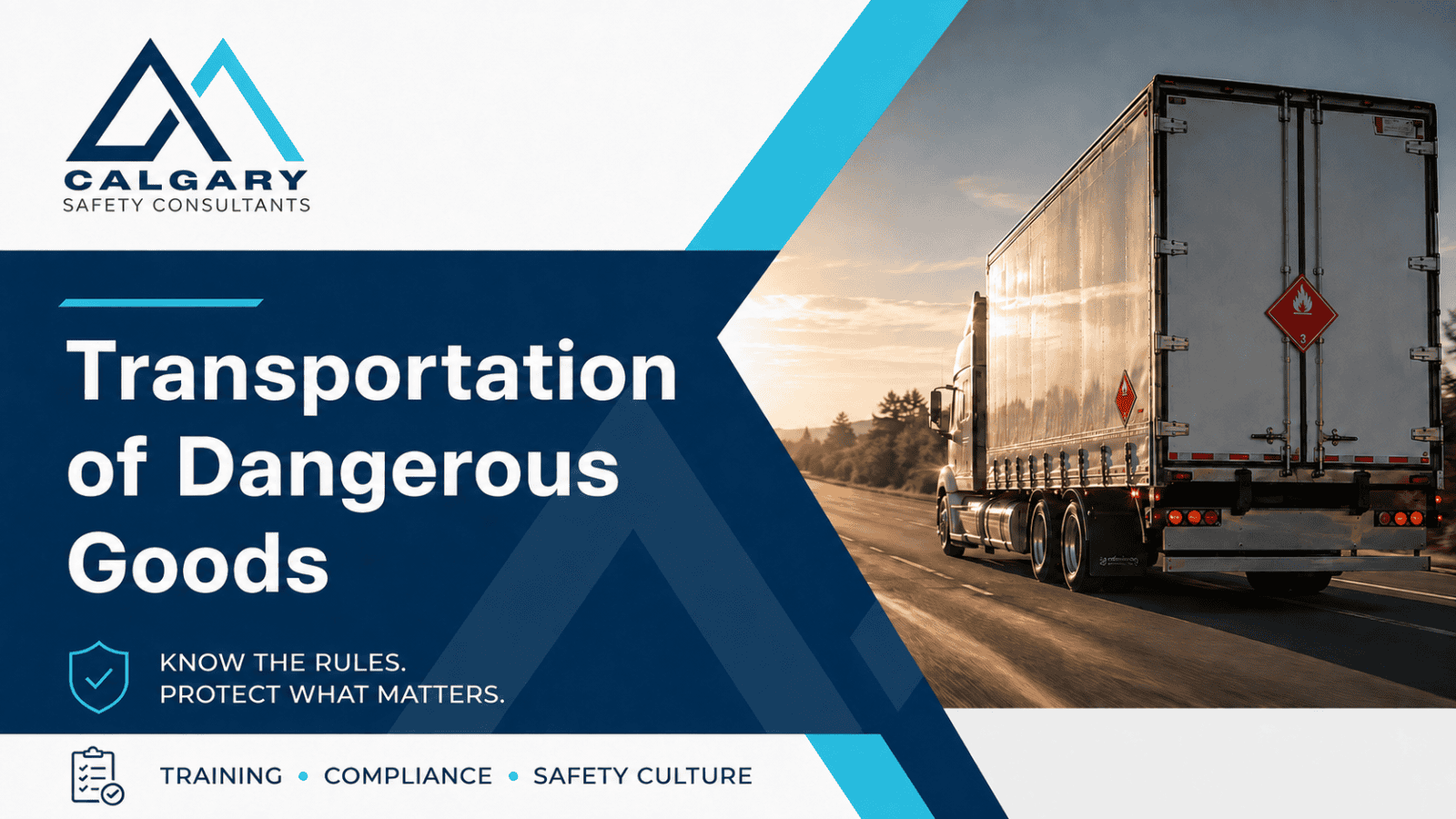
Depending on the training format and the duties being performed, our Transportation of Dangerous Goods training addresses important TDG concepts including:
- Canada’s Transportation of Dangerous Goods regulatory framework and worker responsibilities.
- Responsibilities of consignors, carriers, drivers, handlers, employers, and other parties involved in transportation.
- Classification of dangerous goods.
- Canada’s nine classes of dangerous goods.
- UN numbers and proper shipping names.
- Packing groups.
- Schedules 1, 2, and 3 of the TDG Regulations.
- Shipping document requirements.
- Dangerous goods labels and placards.
- Other dangerous goods safety marks.
- Means of containment.
- Loading and securing dangerous goods.
- Limited quantities and applicable special cases.
- Emergency Response Assistance Plans.
- Releases and anticipated releases of dangerous goods.
- Dangerous goods incident reporting.
- CANUTEC and emergency information.
- Safety and security considerations.
- TDG training certificates and employer responsibilities.
- Transportation of dangerous goods by road.
- Important considerations for Canada-U.S. road transportation.
Adequate training under section 6.2 requires sound knowledge of every listed topic that relates directly to the person’s duties and the dangerous goods they are expected to handle, offer for transport, or transport. Course content, examples, assessment, experience, and workplace instruction should be matched to that scope.
The Nine Classes of Dangerous Goods
Canada’s TDG system separates dangerous goods into nine primary hazard classes.
These classes address explosives, gases, flammable liquids, flammable solids and related substances, oxidizing substances and organic peroxides, toxic and infectious substances, radioactive materials, corrosive substances, and miscellaneous dangerous products, substances, or organisms.
Understanding these classifications is important because the classification of a dangerous good affects many other transportation requirements.
Classification affects the shipping description, safety marks, documentation, means-of-containment requirements, handling precautions, and emergency planning. The consignor is responsible for classification and for making proof of classification available to the Minister on reasonable notice. Classification should normally be completed by, or in consultation with, a person who understands the nature of the goods and the applicable test criteria.
Practical Transportation of Dangerous Goods Training
TDG compliance isn’t achieved simply because an employee passed a quiz.
Workers need to recognize how TDG requirements affect the decisions they make at work.
For example, what should a worker do if the UN number on a shipping document doesn’t match the package?
When is a placard required rather than a label?
Where can a worker find a special provision that applies to a dangerous good?
What information should be checked before a shipment is accepted?
What happens if a container is damaged or leaking?
What does a driver need to know before leaving the workplace with dangerous goods?
What should workers do following a release or anticipated release?
Practical TDG training helps employees understand both the requirement and why it matters.
That connection is important because mistakes involving dangerous goods can result in worker exposure, transportation incidents, emergency response situations, shipment delays, enforcement action, operational disruption, and unnecessary risk to the public.
How to Get a TDG Certificate in Alberta
People often talk about getting their “TDG certification.” Under the Transportation of Dangerous Goods Regulations, the formal document is called a training certificate, and the same federal rules apply in Alberta as in the rest of Canada. Here is how it works in practice:
- Complete training that matches your duties. A course such as our online TDG course can provide general road-transport knowledge. The employer must determine what additional instruction, practice, experience, and evaluation are needed for the products, duties, equipment, and means of containment involved.
- Your employer issues the certificate. When the employer has reasonable grounds to believe you are adequately trained and will perform the related duties, it issues a certificate listing the employer, employee, expiry date, and specific aspects of TDG work and section 6.2 topics covered. The employer and employee sign it. A self-employed person issues their own certificate on the same reasonable-grounds basis.
- Keep it with you. You must be able to show your training certificate to an inspector on request, and the employer keeps a record of your training and a copy of the certificate.
- Renew it before it expires. For road vehicle, railway vehicle or vessel transport, a TDG training certificate expires 36 months after it is issued. For air transport, it expires after 24 months.
The certificate of completion from an online course records course completion. It is not the employer-issued TDG training certificate and is not transferable between employers. A worker employed by more than one employer may require a separate certificate from each.
Road, rail, and vessel certificates expire no later than 36 months after issuance; aircraft certificates expire after 24 months. Earlier training or reassessment may be needed when duties, dangerous goods, regulations, incorporated standards, equipment, or procedures change. Employers and self-employed persons must retain the training record or statement of experience and a copy of the certificate until two years after expiry.
TDG Training for Employers
Employers have an important responsibility when employees work with dangerous goods.
A general TDG course can provide regulatory knowledge, but the employer must be satisfied that the employee has sound knowledge of the requirements that relate directly to the actual duties and dangerous goods. That may require workplace-specific instruction, supervised practice, experience, demonstrations, document exercises, and a suitable assessment.
For example, an employee transporting cylinders may need workplace instruction that is different from an employee preparing drums of flammable liquids for shipment.
A strong training program connects TDG knowledge to actual workplace responsibilities.
This approach can improve compliance while reducing errors that lead to rejected shipments, documentation problems, transportation delays, spills, damaged products, enforcement issues, or emergency situations.
TDG Training for Alberta Workplaces
Calgary Safety Consultants provides Transportation of Dangerous Goods training for employers throughout Alberta.
We work with organizations in Calgary, Okotoks, Edmonton, Red Deer, Lethbridge, Grande Prairie, Fort McMurray, and other Alberta communities.
Virtual TDG training also allows organizations to bring employees together from different branches or locations without requiring unnecessary travel.
Our online training option extends that flexibility even further, allowing individual employees to complete TDG training when and where it’s convenient.
For employers operating across multiple provinces, virtual and online TDG training can help provide a more consistent approach across the organization.
Group and Corporate TDG Training
Need to train several employees?
We can provide TDG training for individual departments, work crews, supervisors, drivers, shipping and receiving personnel, or larger employee groups.
Virtual and classroom sessions can also provide an opportunity to discuss the dangerous goods situations employees actually encounter at work.
For employers with specialized operations, contact Calgary Safety Consultants to discuss your workforce, the dangerous goods involved, your employee responsibilities, and the most suitable training approach.