
Canadian Safety Footwear Guide: OH&S Footwear Implementation
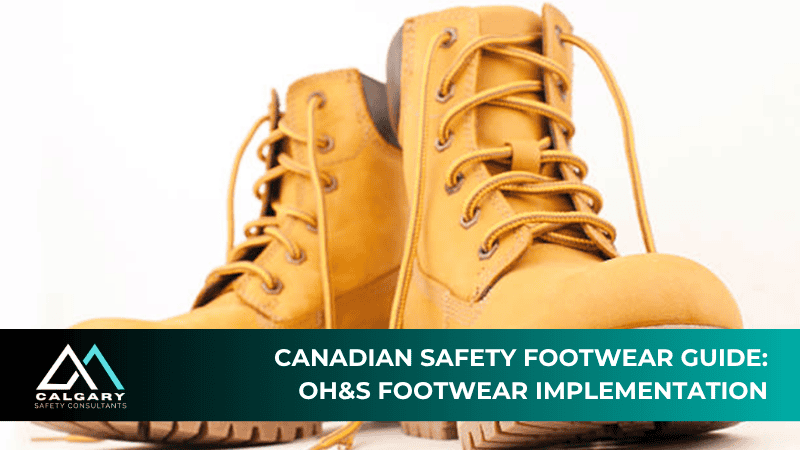
Let’s talk about safety boots.
They’re probably the most underrated piece of PPE out there. You’ve got them on your feet for 8 to 12 hours a day. They go through mud, snow, oil, sparks, concrete, sharp objects—and maybe even a few dropped tools. And yet, most people don’t give them a second thought until their toes get cold, wet, or crushed.
In this blog, we’re breaking down what Canadian workers and employers need to know about safety footwear—without the corporate jargon. We’ll talk requirements, ratings, common mistakes, and how Calgary Safety Consultants can help you stay onside with OH&S laws (and keep your toes attached).
First Things First: Why Safety Boots Matter
Safety boots aren’t about looking tough or ticking boxes. They’re about:
- Preventing crushed toes from falling tools and heavy loads
- Reducing slip and fall incidents on slick surfaces
- Protecting against puncture wounds from nails, rebar, or glass
- Providing electrical hazard resistance
- Reducing fatigue with proper arch and heel support
Here’s the thing: foot injuries don’t just suck for the person who gets hurt—they also slow down work, trigger incident investigations, and might end up on a WCB claim.
The Legal Stuff: What Canadian Law Says
Under Canadian OH&S legislation, employers are legally responsible for providing and ensuring the use of PPE, including safety footwear, when a hazard exists. Each province spells this out slightly differently, but the general requirement is the same: protective footwear must be worn where there’s risk to the feet.
In Alberta, for example, it’s covered under the Occupational Health and Safety Code, Part 18 – Personal Protective Equipment. It clearly states that if workers could be injured by slipping, puncture, electrical contact, or falling objects, the employer must ensure appropriate protective footwear is worn.
Source: https://ohs-pubstore.labour.alberta.ca/ppe
Other provinces follow similar guidelines. For example:
- BC: https://www.worksafebc.com/en/health-safety/tools-machinery-equipment/personal-protective-equipment-ppe/types/safety-footwear
- Ontario: https://www.ontario.ca/laws/regulation/900851#BK97
CSA Approved: The Triangle, the Square, the Letter Code Soup
Here’s where things get technical.
In Canada, most workplaces require CSA-approved safety footwear. You’ll see these labels on your boots, usually on the tongue or inside:
Common CSA Symbols:
- Green Triangle: Grade 1 toe protection and puncture-resistant sole. Required for construction and heavy industrial work.
- Yellow Triangle: Grade 2 toe protection and puncture resistance. Lighter-duty work.
- Blue Square: Grade 1 toe with no puncture resistance. Often for warehouses or indoor work.
- White Square with Ω: Electrical shock protection (EH rating).
- Yellow Square with SD: Static discharge protection.
Full CSA footwear standard here: https://www.csagroup.org/store/product/Z195-14/
Bottom line: The right boot depends on the hazards in your workplace. And yes, boots must be certified. No, your steel-toed hiking boots from 2003 don’t count if the CSA tag is faded or missing.
Common Mistakes We See (All the Time)
Let’s keep it real—there are a few recurring safety boot fails we see out in the field:
- Wearing non-certified boots because they “look similar.”
Visual similarity doesn’t count. If there’s no CSA label, you’re not compliant. - Boots that are worn out or broken down.
If the toe cap is exposed, the sole is peeling, or the heel support is wrecked—it’s not protective anymore. - Wearing indoor boots outdoors.
Construction, oil & gas, or forestry sites? You need rugged, puncture-resistant boots. Period. - No clear policy on what boots are required.
If your team is guessing what’s acceptable, you’ve got a compliance problem waiting to happen.
So… Who Pays for Safety Boots?
Ah, the age-old debate.
According to provincial legislation, employers must provide PPE when it’s required, but there’s a grey area around items considered “personal items” like safety boots. In Alberta, and many other provinces, it often comes down to collective agreements, company policy, or contract terms.
However, if your company requires specific boots, especially with certain CSA ratings, it’s best practice to:
- Reimburse workers (full or partial)
- Offer a boot allowance
- Supply boots directly
It’s not just about generosity—it’s about consistency and control over what’s worn on your worksites.
More on employer responsibility (Alberta): https://www.alberta.ca/employer-responsibilities
Calgary Safety Consultants Tip: Build a Footwear Policy
If your company doesn’t already have a written footwear policy, now’s the time.
Your policy should include:
- Which roles require which CSA ratings
- When boots must be worn
- How workers will be trained on proper footwear
- Who’s responsible for inspecting and replacing damaged boots
- Whether a boot allowance or reimbursement applies
Need help writing it? We do that.
Calgary Safety Consultants Can Help (and We Do It Right)
At Calgary Safety Consultants, we’ve seen the risks of bad footwear policy up close. We’ve helped dozens of Canadian businesses fix it—across construction, energy, warehousing, transport, and more.
Here’s how we can help your team:
- Worksite Hazard Assessments
We evaluate the actual foot hazards on your job sites and recommend CSA-compliant footwear accordingly.
- Custom Footwear Policies
We create clear, enforceable safety boot policies tailored to your worksites, industry, and team.
- Training & Orientation Tools
Need a safety footwear module for new hires? Toolbox talk materials? Supervisor cheat-sheets? We’ve got templates, and we’ll tailor them to your company.
- Program Integration
We’ll embed your footwear standards into your OH&S manual or COR program, so it’s not just a memo—it’s part of your system.
- Ongoing Support
We’re here when you update PPE, bring on new crews, or prep for an audit. Our support doesn’t stop with a binder.
Visit us at: https://calgarysafetyconsultants.ca
We make safety practical, not painful.
Final Word: Safety Starts From the Ground Up
Safety boots are the first line of defense against some of the most common workplace injuries. But just having them isn’t enough. You need the right type, in the right condition, used in the right way—and backed by the right policies.
Canadian employers have a legal duty and a moral one: to protect workers’ feet from injury, fatigue, and long-term damage. With the right approach, you can do more than comply—you can lead.
And if you’re not sure where to start?
Start with us.
And if you need help, we’ve got your back. Contact Calgary Safety Consultants for your complimentary consult to explore tailored OH&S solutions that drive real results.
We don’t just talk safety—we build systems that work.
Frequently Asked Questions
Are safety boots required by law in Canadian workplaces?
Yes. Canadian OH&S laws require protective footwear to be worn in any workplace where there are risks to foot health and safety—such as impacts, punctures, slips, or electrical hazards.
What do CSA labels on safety boots mean?
CSA labels indicate the type and level of protection the boot provides, such as toe impact protection, puncture resistance, and electrical hazard protection. Employers must ensure the correct CSA-rated footwear is used for specific job tasks.
Who is responsible for providing safety boots—employers or workers?
It depends. While employers are required to ensure PPE is used, safety boots are sometimes considered a personal item. That said, if an employer mandates specific CSA ratings, best practice is to supply boots, offer allowances, or reimburse purchases.