On this page
What Is Machine Guarding, and Why Is It Important?
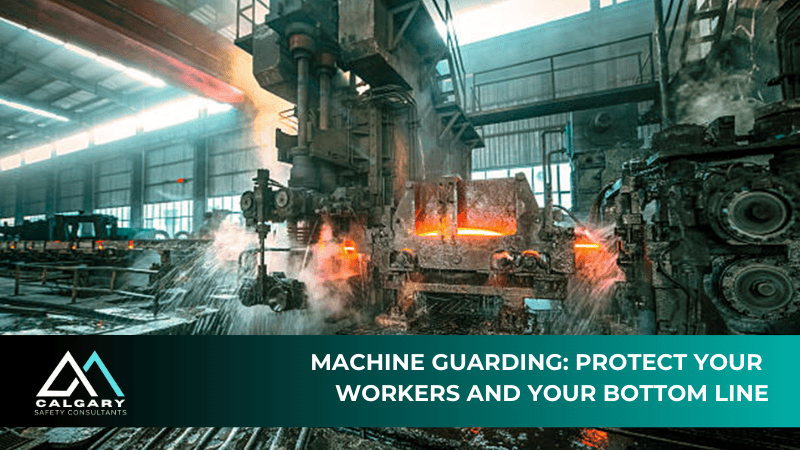
Machine guarding is all about protecting workers from hazardous moving parts. It includes barriers, shields, and devices designed to prevent contact with dangerous areas of a machine.
Common Machine Hazards That Guards Prevent:
✅ Rotating parts – Shafts, gears, and pulleys can pull in clothing or body parts.
✅ Pinch points – Where two machine parts move together, crushing injuries can happen.
✅ Cutting hazards – Blades, saws, and shears can cause severe lacerations.
✅ Flying debris – Chips, sparks, and shrapnel can cause eye injuries and burns.
Without proper guarding, workers face serious risks—sometimes leading to life-altering injuries or even criminal liability for employers.
What Does the Law Say?
If you run a business in Calgary, you need to follow Alberta’s Occupational Health and Safety (OHS) Code. Here’s what you need to know:
📜 Alberta OHS Code, Part 22 (Safeguards) states that:
- Employers must ensure machinery is equipped with appropriate guards and safety devices.
- Guards must not be easily removed or tampered with.
- Employees must be trained on safe operation and maintenance of machines.
Failing to comply can result in hefty fines, stop-work orders, or even prosecution. In 2021, a Calgary company was fined $250,000 after a worker suffered a crushed hand due to an unguarded conveyor system (Government of Alberta, 2021).
How we help
How Calgary Safety Consultants Can Help You Stay Safe & Compliant
At Calgary Safety Consultants, we know OHS regulations inside and out. We help businesses across Calgary ensure their machine guarding is up to code—and that their workers stay safe.
Our Services Include:
🔍 Machine Guarding Assessments – We inspect your workplace, identify risks, and recommend the best safety measures.
📚 Customized Training – We train your employees to recognize hazards and operate machinery safely.
📋 OHS Compliance Audits – We review your workplace policies and ensure you meet Alberta’s safety standards.
🛠 Guarding Solutions – We help implement or improve physical guards, emergency stop devices, and interlocks.
We make safety simple and affordable—so you can focus on running your business with peace of mind.
Workplace example
Real-World Example: A Calgary Business Success Story
One of our recent clients, a Calgary-based metal fabrication shop, was struggling with outdated machine guards and multiple near-misses. They were concerned about a potential OHS inspection and wanted to be proactive.
After a thorough site assessment, we:
✔ Installed custom-designed barriers to protect workers from high-speed grinding wheels.
✔ Trained their employees on lockout/tagout (LOTO) procedures to prevent accidental startups.
✔ Helped them develop a safety policy to meet OHS Code requirements.
The result? A safer workplace, a reduced risk of fines, and increased worker confidence in their safety measures.
Final Thoughts: Don’t Wait for an Accident to Happen!
Machine guarding isn’t just about following the rules—it’s about protecting your employees, your reputation, and your bottom line. Injuries can lead to lost productivity, legal trouble, and devastating consequences for workers and their families.
At Calgary Safety Consultants, we’re here to help you navigate the regulations and keep your business safe.
Book your complimentary consultation today.
Stay safe, stay compliant, and keep your business running smoothly!
Jurisdiction note: This article provides general occupational health and safety information. The legal requirements that apply depend on the workplace location, industry and federal, provincial or territorial jurisdiction. Verify current requirements with the applicable regulator before using the information operationally. Government of Canada overview of occupational health and safety jurisdiction.
References
- Government of Alberta. (2021). Alberta Occupational Health and Safety Code 2021. Retrieved from https://www.alberta.ca/ohs-act-regulation-code.aspx
- Canadian Centre for Occupational Health and Safety. (2023). Machine Safety. Retrieved from https://www.ccohs.ca/
- WorkSafeBC. (2022). Safeguarding Machinery and Equipment. Retrieved from https://www.worksafebc.com/

About the author
John Duplessis, B.Sc., CRSP
John Duplessis is a Canadian Registered Safety Professional with more than 30 years of occupational health and safety experience in oil and gas, construction, green energy, midstream operations, and industrial project work.