On this page
Why Should Calgary Businesses Care?
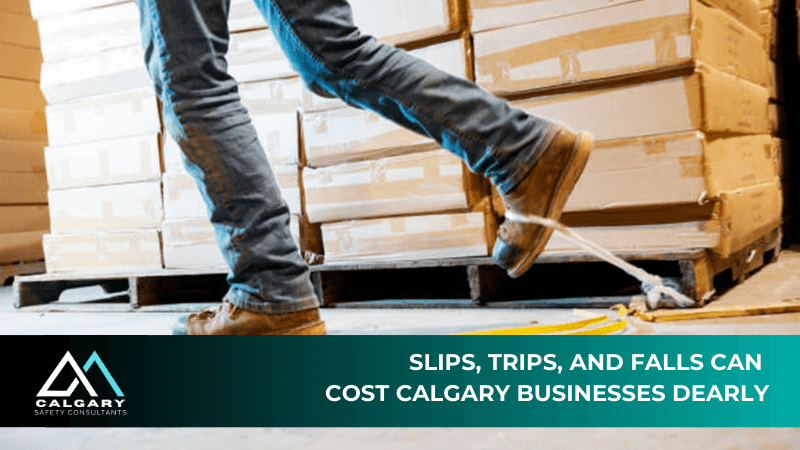
According to the Workers’ Compensation Board of Alberta (WCB-Alberta), slips, trips, and falls are among the leading causes of workplace injuries. They can happen in any industry, from construction sites to office buildings, warehouses, and even retail stores.
Beyond the obvious pain and suffering for employees, these incidents can be incredibly expensive for businesses. A single slip-and-fall injury could mean:
- Lost productivity from injured employees
- Increased WCB premiums
- Potential lawsuits if a customer or visitor is hurt
- Reputation damage—because no one wants to shop or work at an unsafe business
In Alberta, employers are required under the Occupational Health and Safety (OHS) Act to ensure a safe work environment. If an investigation finds that a company failed to take reasonable precautions, fines or penalties could follow.
Common Causes of Slips, Trips, and Falls
So, why do these accidents happen? Often, it’s due to everyday hazards that businesses either overlook or don’t realize are an issue. Here are some of the most common culprits:
- Slippery floors – Wet or oily surfaces from spills, weather, or cleaning
- Uneven walking surfaces – Cracked pavement, torn carpets, or unexpected steps
- Poor lighting – If people can’t see where they’re going, they’re more likely to trip
- Clutter and obstacles – Boxes, cords, or random objects left in walkways
- Improper footwear – Employees wearing shoes that don’t provide good grip
- Lack of handrails – Missing or broken railings on stairs and ramps
Preventing Slips, Trips, and Falls: Practical Steps for Calgary Businesses
The best way to avoid these incidents? Be proactive! Here’s how Calgary businesses can step up their safety game:
- Keep Floors Dry and Clean
- Use absorbent mats near entrances during snowy or rainy days.
- Clean up spills immediately and use “Wet Floor” signs when necessary.
- Schedule regular floor maintenance to prevent wear and tear.
- Improve Lighting
- Ensure all workspaces, hallways, and parking lots are well-lit.
- Replace burnt-out bulbs immediately and consider motion-sensor lights in less-used areas.
- Fix Hazards Before They Cause an Injury
- Repair broken flooring, loose carpets, and uneven sidewalks.
- Secure cords and cables to avoid tripping hazards.
- Install non-slip tape on stairs and ramps.
- Enforce Proper Footwear Policies
- If employees work in slippery areas (like kitchens or warehouses), require non-slip shoes.
- Remind staff that winter in Calgary means grip matters—ice and snow are hazards!
- Provide Training and Awareness
- Teach employees how to recognize hazards and report them.
- Conduct regular safety meetings and refresher training.
- Encourage a culture where everyone is responsible for safety.
- Conduct Regular Inspections
- Walk through the workplace to spot hazards before they cause an accident.
- Use checklists to ensure nothing is missed.
- Get employee feedback—after all, they see potential dangers firsthand.
How we help
How Calgary Safety Consultants Can Help
At Calgary Safety Consultants, we specialize in helping businesses eliminate hazards before they turn into costly problems. Whether you’re running a retail store, a construction site, or a corporate office, we can:
 Perform workplace safety audits to identify and eliminate slip, trip, and fall risks. Develop customized safety plans tailored to your specific business needs. Provide employee training so your team knows how to spot and prevent hazards. Ensure compliance with Alberta’s OHS laws to keep your business out of legal trouble.
A small investment in safety today can save thousands in injury claims, downtime, and legal costs later.
Book your complimentary consultation today.
Stay safe, stay compliant, and keep your business running smoothly!
Jurisdiction note: This article provides general occupational health and safety information. The legal requirements that apply depend on the workplace location, industry and federal, provincial or territorial jurisdiction. Verify current requirements with the applicable regulator before using the information operationally. Government of Canada overview of occupational health and safety jurisdiction.
References
- Workers’ Compensation Board of Alberta (WCB-Alberta) – https://www.wcb.ab.ca
- Alberta Occupational Health and Safety (OHS) Legislation – https://www.alberta.ca/ohs
- Canadian Centre for Occupational Health and Safety (CCOHS) – https://www.ccohs.ca

About the author
John Duplessis, B.Sc., CRSP
John Duplessis is a Canadian Registered Safety Professional with more than 30 years of occupational health and safety experience in oil and gas, construction, green energy, midstream operations, and industrial project work.