Opens in a new tab
Health and safety consulting for employers across Alberta, British Columbia and Saskatchewan

Why Mental Health Should Be a Priority in Your OH&S Program

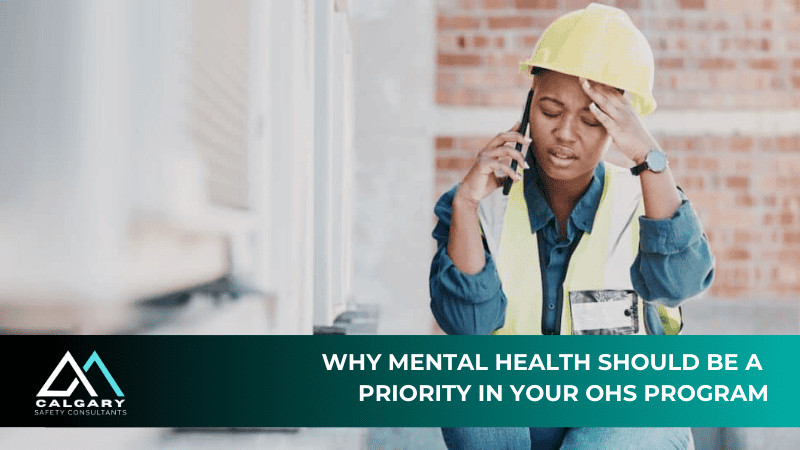
When most Calgary businesses think about occupational health and safety (OHS), the first thing that comes to mind is probably physical safety—hard hats, hazard signs, and proper lifting techniques. But let’s be real: ignoring mental health in your OHS program is like locking the front door but leaving all the windows wide open. Your workplace just isn’t as safe as it should be.

In today’s world, mental health is a massive piece of the safety puzzle. From stress and burnout to anxiety and depression, these issues don’t just impact individuals—they affect your entire team, productivity, and bottom line. So, let’s chat about why mental health deserves a front-row seat in your OHS program and how Calgary Safety Consultants can help you make it happen.

Serving employers across Alberta, British Columbia and Saskatchewan, with online training across Canada.

Why Mental Health Should Be a Priority in Your OH&S Program
On this page
  1. The Link Between Mental Health and Workplace Safety
  2. Making Mental Health Part of Holistic Safety
  3. How Calgary Safety Consultants Can Help
  4. Let’s Make Safety Holistic
  5. Frequently asked questions

Think about it: if someone’s mentally exhausted, stressed out, or overwhelmed, they’re more likely to make mistakes. That could mean overlooking safety protocols, mishandling equipment, or even having a near-miss—or worse. Mental health issues can lead to increased absenteeism, higher turnover, and reduced team morale, creating a ripple effect of problems for your business.

In Calgary’s fast-paced industries, the stakes are even higher. A distracted worker on a job site or a fatigued team member in a high-pressure environment can lead to serious consequences. Addressing mental health isn’t just a feel-good initiative—it’s a practical, proactive move to keep everyone safe and your business running smoothly.

Making Mental Health Part of Holistic Safety

A truly effective OHS program goes beyond PPE and safety training—it looks at the bigger picture, including the psychological and emotional well-being of your team. Here’s how you can start prioritizing mental health in your workplace:

  1. Open the Conversation
    Create a culture where it’s okay to talk about mental health. Start with simple check-ins and encourage employees to speak up if they’re struggling.
  2. Offer Mental Health Training
    Equip your leaders and managers with the tools to recognize signs of mental distress. Programs like Guarding Minds @ Work are fantastic resources for assessing and improving psychological health and safety.
  3. Provide Resources and Support
    Partner with local organizations like Alberta Mental Health Services to offer counseling, workshops, or Employee Assistance Programs (EAPs). Let your team know that help is available.
  4. Manage Workload and Expectations
    Overloading your employees with impossible deadlines or lack of clarity only adds to stress. Evaluate workloads and ensure everyone has what they need to succeed without burning out.
  5. Focus on Work-Life Balance
    Encourage breaks, flexible schedules, and time off when needed. A well-rested and mentally balanced team is a safer team.

How we help

How Calgary Safety Consultants Can Help

At Calgary Safety Consultants, we get it—mental health in the workplace can feel like uncharted territory. That’s where we come in! Here’s how we can help you prioritize mental health as part of your OHS program:

  • Customized Assessments: We’ll work with you to evaluate the current state of mental health in your workplace using trusted tools like Guarding Minds @ Work.
  • Policy Development: Need a mental health policy but don’t know where to start? We’ll help you create one that’s both practical and impactful.
  • Training for Leaders: We provide training sessions to help your managers and supervisors identify signs of mental distress and support their teams effectively.
  • Ongoing Support: From workshops to tailored resources, we’ll be there every step of the way to ensure your workplace remains a safe, supportive space for everyone.

Let’s Make Safety Holistic

You don’t have to overhaul your entire operation overnight to see the benefits of OH&S. Start with simple steps like Incorporating mental health into your OHS program isn’t just about compliance—it’s about creating a workplace where your team feels valued, supported, and safe. That’s not just good for your people; it’s good for business.

Ready to take the first step? Contact Calgary Safety Consultants  and take the first step toward measurable safety success. Book your complimentary consultation today.

John Duplessis

About the author

John Duplessis, B.Sc., CRSP

President and Principal Health & Safety Consultant

John Duplessis is a Canadian Registered Safety Professional with more than 30 years of occupational health and safety experience in oil and gas, construction, green energy, midstream operations, and industrial project work.

Meet our team

Common questions

Frequently Asked Questions

Answers to common questions about this topic.

What are the key components of a mental health-friendly workplace?

Key elements include:

Building a supportive culture with trust and openness.

Providing mental health training and resources for managers and employees.

Encouraging work-life balance to prevent burnout.

Offering accessible mental health benefits, such as counseling and wellness programs.

Linking physical health to mental well-being through activities like yoga and fitness programs.

How does work-life balance tie into mental health?

Work-life balance allows employees to recharge and manage stress effectively, reducing the risk of burnout and mental health issues such as anxiety or depression. Balanced workloads also improve focus, decision-making, and overall workplace safety.

Why is mental health important in workplace safety?

Mental health impacts focus, decision-making, and overall performance. Employees struggling with stress, burnout, or anxiety are more likely to make mistakes, increasing the risk of workplace incidents. Prioritizing mental health creates a safer, more productive environment.

What are the signs that mental health issues are affecting workplace safety?

Common signs include increased absenteeism, reduced productivity, poor concentration, higher rates of mistakes, and conflicts among team members. Supervisors and coworkers may also notice visible stress or emotional distress.

What role does leadership play in supporting mental health in the workplace?

Leadership sets the tone for a safe and supportive work culture. Managers trained in mental health awareness can identify issues early, provide support, and ensure that policies and practices promote well-being.

Talk to a safety consultant

Request OH&S Support

Need help with workplace health and safety? Complete the form below or book a free 30-minute consultation. Tell us a little about your workplace, the issue you are facing, and the type of support you need. Calgary Safety Consultants will review your information, identify the next practical step, and explain how we can help you move forward with clear, practical OH&S support.

Book a Consultation

Put this article into practice

OH&S Online Leadership Training

Give supervisors and managers the practical side of safety leadership: due diligence, hazard management, supervision, inspections, corrective actions and incident prevention.

  • 27 lessons
  • About 8 hours, self-paced
  • Certificate of completion

Contact Us

Need help with a safety manual, COR audit preparation, OHS order, hazard assessment, training, or ongoing safety support? Complete the form below or book a free 30-minute consultation. We will review your situation, identify the next practical step, and explain how Calgary Safety Consultants can help.
CSC Website Contact Form

Tell us what safety issue you’re facing, and we’ll respond with the next practical steps

Prefer to meet online first? Pick a time that suits you.

Book a Free 30-Minute Consultation →

Please join your online consultation on time. We’ll wait online for 10 minutes after the scheduled start; if you can’t make it, please book a new time.

What happens next

Your inquiry is important to us, and every request is read personally. We aim to reply within 2 to 4 hours during business hours, or by the next business day if you reach us after hours or on a weekend. Our reply usually includes a few times for a free 30-minute online consultation.