On this page
You’ve probably seen it (or lived it):
- A guy cuts rebar without eye protection “just this once.”
- Someone removes their hard hat on-site because it’s hot.
- Gloves get tossed aside because they make the work feel “clumsy.”
And suddenly, a preventable injury is a near miss—or worse.
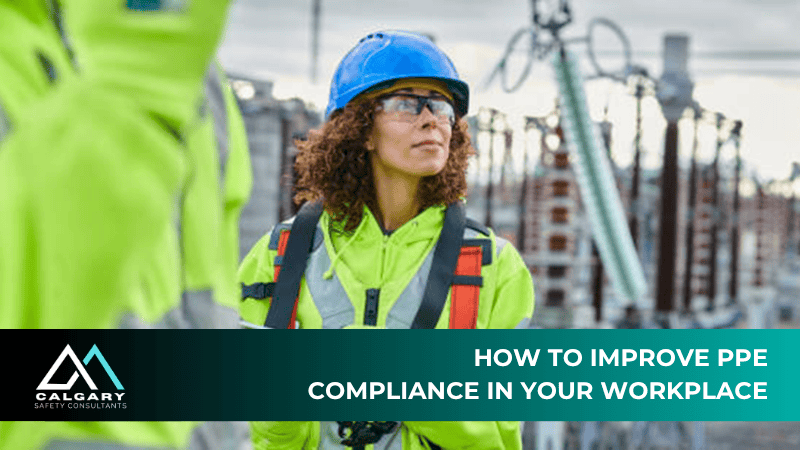
So here’s the big question: How do you improve PPE compliance without turning into a full-time nag?
If you’re running a business or managing a crew in Canada, PPE use isn’t optional. It’s the law. But it’s also a culture thing. Let’s unpack how you can boost buy-in, avoid blowouts, and keep everyone’s fingers, eyes, and futures intact.
Quick answer
Why PPE Compliance Matters (Beyond the Obvious)
Yes, PPE protects people. Yes, it’s legally required. But there’s more going on here.
When workers don’t wear PPE, it signals deeper issues:
- Lack of engagement
- Poor training or unclear expectations
- Low accountability or follow-through
- Cultural habits that normalize shortcuts
That stuff spreads. One person not wearing hearing protection tells others it’s okay to ignore site rules. Before you know it, you’ve got a crew full of noncompliance and a job site full of risk.
Need a refresher on Canadian PPE requirements? Start with Alberta’s OH&S Code, Part 18 – Personal Protective Equipment:
https://www.alberta.ca/ohs-act-regulation-code
Here’s Some Pro Tips
1. Make Sure PPE Is Actually the Right Type (and Fits)
This might seem basic, but you’d be surprised how often people ignore it.
If workers are removing or avoiding PPE, ask why. Common reasons include:
- “It doesn’t fit.”
- “I can’t see properly through it.”
- “It gets in the way of my job.”
- “It’s uncomfortable after five minutes.”
You can’t fix PPE noncompliance until you fix PPE usability. That means:
- Offering multiple sizes
- Adjusting for gender-specific fit
- Checking compatibility between hard hats, goggles, and hearing protection
- Replacing damaged or outdated gear regularly
Pro tip: let workers try on different options and give feedback before rolling out a new style of gloves or respirators.
At Calgary Safety Consultants, we help businesses assess PPE hazards, select the right equipment, and match it to real-world job demands. It’s not just about buying gear—it’s about getting it right.
Book a consultation to review your PPE selection with us.
2. Train More Often Than You Think Is Necessary
One-time PPE training during orientation is not enough.
You need ongoing, scenario-based PPE education that answers questions like:
- When exactly do I wear this?
- What happens if I skip it?
- How do I inspect it before use?
- How do I store and maintain it?
Training also has to be relevant. If you’re showing generic PowerPoints that don’t reflect your team’s actual tasks, people will tune out. Tailor training to each job role and environment.
Calgary Safety Consultants offers online and in-person PPE training that’s updated for Canadian OH&S standards—and built for workers, not regulators.
Explore our PPE training options.
3. Get Supervisors to Set the Tone
Here’s where PPE compliance really lives or dies: frontline leadership.
If supervisors ignore PPE, joke about it, or selectively enforce it, your compliance rate is going to tank. Workers follow behaviour, not policy.
Make it crystal clear that supervisors are accountable for:
- Wearing PPE properly
- Correcting unsafe behaviour on the spot
- Leading by example—even if it’s just a short walk through the shop
And support them with tools like PPE checklists, pre-job briefs, and compliance scorecards. We can help you build those.
We also coach supervisors on how to have those “tough but fair” conversations that drive accountability without conflict.
4. Make Reporting Easy—And Reward It
If someone’s PPE doesn’t fit, fogs up constantly, or causes discomfort, they need a way to say something without feeling like a complainer.
Set up simple channels to report:
- Ill-fitting or damaged gear
- Situational PPE issues (e.g. overheating, fogging, restriction)
- Unsafe coworkers or patterns of noncompliance
Even a clipboard on the wall or a quick daily safety huddle can surface the issues that lead to bigger ones.
Want to go a step further? Reward good PPE habits. Not with pizza parties or cash, but with real recognition—peer shout-outs, incident-free crew celebrations, or priority on new gear trials.
5. Audit and Spot-Check Consistently
If you don’t inspect it, you don’t control it. It’s that simple.
Build PPE checks into:
- Site inspections
- Supervisor daily walkthroughs
- Monthly safety reports
- Equipment inspections
Track noncompliance trends. Who’s skipping eye protection most often? What zones see the most PPE violations? Use that data to drive your next toolbox talk, your next training refresh, or your next supervisor coaching session.
We help Alberta companies build these systems without drowning in paperwork. Just ask us for a field-ready PPE audit checklist.
6. Tie PPE to the Bigger Picture (and People’s Own Values)
Sometimes, people tune out safety messaging because it’s too generic. “Wear gloves or else” doesn’t cut it.
But when you talk about:
- Hearing loss that shows up in your 40s
- A puncture wound that leads to surgery
- A head knock that costs a week’s wages
…that gets people thinking.
PPE isn’t just about avoiding rules—it’s about protecting your ability to work, earn, play with your kids, hear your friends, and live your life fully.
When Calgary Safety Consultants facilitates PPE workshops, we tie it to real people, real outcomes, and real stories. That’s what moves the needle.
Common Excuses—and How to Counter Them
“It’s just a quick job.”
So are most accidents.
“I’ve done this a hundred times.”
Great. That doesn’t change the risk.
“This gear slows me down.”
Injuries slow you down more. We’ll help you find better gear.
“Nobody else wears it.”
Leadership will be addressing that immediately.
What OH&S Law Says About PPE (Short Version)
According to the Alberta OHS Code and most other provincial regulations in Canada:
- Employers must provide and ensure the use of appropriate PPE.
- PPE must be maintained in good condition.
- Workers must be trained in the correct use of PPE.
- Supervisors must enforce PPE compliance.
You can’t just “offer” PPE. You have to ensure it’s worn.
Read more here:
https://www.alberta.ca/ohs-act-regulation-code
Need help with compliance? We’ll walk you through your requirements based on your specific industry, crew size, and risk exposure.
How we help
How Calgary Safety Consultants Can Help
We work with companies across Alberta to improve PPE compliance—not by preaching rules, but by building smart systems and practical habits.
Here’s what we offer:
- PPE hazard assessments
- Customized PPE training (online and onsite)
- Supervisor coaching for enforcement and engagement
- PPE compliance scorecards and field audits
- Assistance in selecting, trialing, and phasing in new PPE
We don’t sell gear—we sell buy-in. And we’ve helped teams move from “whatever” to “on it” with just a few small but powerful changes.
Final Thought: PPE Isn’t Optional, and Neither Is Culture
The difference between a PPE program and a PPE culture is leadership. A program is rules, posters, and purchases. A culture is people watching out for each other, taking pride in protection, and calling each other in when things get lax.
You can build that culture. We can help you lead it.
If you’re ready to tighten up your PPE compliance, Calgary Safety Consultants is here to guide you! Contact Calgary Safety Consultants for your complimentary consult to explore tailored OH&S solutions that drive real results.
Jurisdiction note: This article provides general occupational health and safety information. The legal requirements that apply depend on the workplace location, industry and federal, provincial or territorial jurisdiction. Verify current requirements with the applicable regulator before using the information operationally. Government of Canada overview of occupational health and safety jurisdiction.
References
- Alberta OH&S Code – PPE Requirements (Part 18)
https://www.alberta.ca/ohs-act-regulation-code - CCOHS – Personal Protective Equipment Overview
https://www.ccohs.ca/oshanswers/prevention/ppe - Canadian Centre for Occupational Health and Safety (CCOHS) – Hearing Protection
https://www.ccohs.ca/oshanswers/prevention/ppe/ear_prot.html - WorkSafeBC PPE Resources
https://www.worksafebc.com/en/health-safety/tools-machinery-equipment/personal-protective-equipment-ppe

About the author
John Duplessis, B.Sc., CRSP
John Duplessis is a Canadian Registered Safety Professional with more than 30 years of occupational health and safety experience in oil and gas, construction, green energy, midstream operations, and industrial project work.