On this page
- The Rising Cost of Workers’ Compensation in Canada
- Why Prevention Is More Effective Than Reaction
- The Proactive Safety Cycle
- Examples of Cost Savings
- Common Gaps That Keep Costs High
- Canadian Legal Requirements: Compliance as the Starting Line
- How Calgary Safety Consultants Can Help
- Practical Steps You Can Start Today
- Beyond Cost Savings: The Bigger Payoff
- Final Thoughts
- Frequently asked questions
In this article, we’ll look at why workers’ comp costs are climbing, how proactive safety programs deliver results, and how Calgary Safety Consultants can help you build a safety strategy that saves you money while protecting your team.
The Rising Cost of Workers’ Compensation in Canada
Workers’ compensation is designed to protect workers and employers alike, but it’s not a cheap system. Across Canada, costs are going up because:
- Medical costs are escalating. From physiotherapy to advanced imaging, treatments are more expensive. Injuries that used to involve a few doctor visits can now require months of rehab and specialist appointments.
- Wage replacement is higher. With inflation and wage growth, every lost-time claim costs more in benefits. A construction worker off for three months today costs significantly more than the same injury ten years ago.
- Claims drag on. Long recoveries and weak return-to-work programs extend costs. Each week off work adds to the tab.
- Administrative costs pile up. Disputed claims, appeals, and lengthy paperwork consume management time and resources.
The Association of Workers’ Compensation Boards of Canada (AWCBC) reported that in 2023, the country’s boards paid out about $9 billion in benefits. That number reflects direct payouts only—it doesn’t include the hidden costs to employers like lost productivity, retraining, and overtime to cover shifts.
For many companies, workers’ compensation costs are among the top five operating expenses, right alongside payroll, rent, and insurance.
Why Prevention Is More Effective Than Reaction
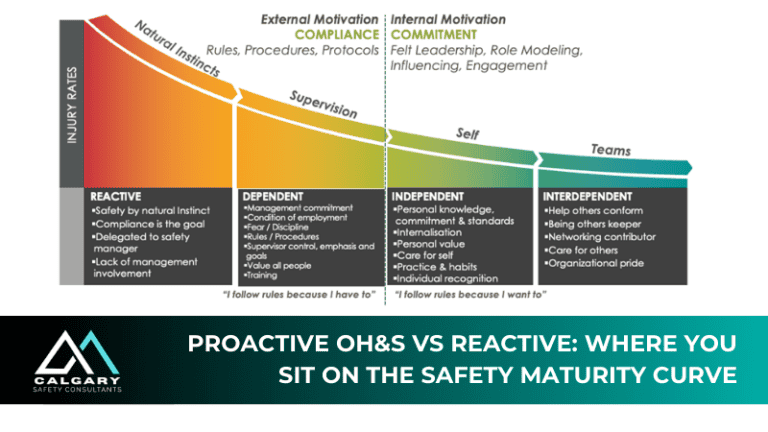
Let’s use an analogy. Imagine your workplace is like a machine running a constant process. Hazards are the inputs, and if you let them pass through unaddressed, the output is injuries, claims, and costs.
If you only “fix” the machine after it spits out a broken part—in this case, an injured worker—you’ll always be behind. But if you change the inputs, fine-tune the process, and monitor the system regularly, you reduce the likelihood of breakdowns.
That’s what proactive safety programs do. They:
- Catch hazards early.
- Prevent injuries before they happen.
- Shorten recovery when injuries do occur.
- Engage workers in building a safety-first culture.
The result? Fewer claims, shorter claims, and lower costs.
The Proactive Safety Cycle
A strong safety program isn’t complicated—it just requires structure and consistency. Think of it as a cycle:
- Hazard Identification
Look for risks in your workplace. Use inspections, worker reports, job hazard assessments, and even near-miss tracking. If you’re not collecting this data, you’re flying blind. - Risk Assessment and Scoring
Not all hazards are equal. A slippery floor is dangerous but not the same as unguarded machinery. Use a risk matrix (likelihood × severity) to prioritize. - Controls and Procedures
Apply the hierarchy of controls: eliminate hazards where possible, substitute safer processes, use engineering controls (guards, ventilation), and back them up with training, administrative policies, and PPE. - Monitoring and Review
Proactive programs include regular inspections, audits, and data collection. Safety isn’t “set it and forget it.” - Continuous Improvement
Use lessons learned to improve policies, training, and procedures. Safety programs should evolve as operations change.
Businesses that follow this cycle don’t just prevent injuries—they reduce costs tied to claims, downtime, and turnover.
Workplace example
Examples of Cost Savings
Here are some examples of how prevention can pay off for Canadian employers.
- Construction Sector: A medium-sized Alberta construction company introduced formal pre-job hazard assessments and mandatory toolbox talks. Over two years, their lost-time claims fell and their WCB premiums dropped.
- Manufacturing: A metal fabrication shop noticed repetitive strain injuries were driving claims. They invested in ergonomic tools and trained supervisors to spot early signs of strain. Within 18 months, repetitive strain claims fell, and workers reported higher job satisfaction.
- Transportation: A trucking company implemented a proactive driver wellness and fatigue management program. Injuries from slips and falls (a common issue around trucks) decreased, and their claims duration dropped. Their premiums stabilized despite industry-wide increases.
Results will vary, but the pattern is the same: prevention pays off.
Common Gaps That Keep Costs High
So why aren’t all businesses doing this already? Some common gaps include:
- Paper-only programs. Companies have safety manuals, but they’re generic and sit on a shelf.
- Inconsistent inspections. Hazards are only reviewed after accidents happen.
- Weak reporting culture. Workers don’t feel safe reporting near misses or hazards, so problems stay hidden.
- Lack of return-to-work planning. Injured workers are left at home longer than necessary, increasing claim costs.
- No tracking of claims data. Without monitoring costs, duration, and trends, businesses don’t see the patterns that lead to change.
Each of these gaps makes claims more likely, more severe, and more expensive.
Canadian Legal Requirements: Compliance as the Starting Line
Employers often forget that compliance is not optional—it’s the floor, not the ceiling.
- Federal level: The Canada Labour Code requires federally regulated employers to implement hazard prevention programs, inspections, and training.
- Provincial level: Provinces like Alberta mandate hazard assessments, written policies, worker training, and clear responsibilities for supervisors and employers.
- Standards and guidelines: Tools like hazard assessment templates and the hierarchy of controls are widely accepted across Canada as best practices.
If your business is only doing the bare minimum to comply, you’re technically meeting the law—but you’re leaving huge savings on the table.
How we help
How Calgary Safety Consultants Can Help
This is where Calgary Safety Consultants comes in. We don’t just help you check compliance boxes—we help you design programs that actively reduce costs and strengthen your safety culture.
Here’s how we do it:
- Program Development: We tailor health and safety programs to your specific operations and hazards.
- Risk Assessments: We identify your top risks and help you prioritize resources.
- Inspections and Audits: We provide proactive reviews and identify gaps before they lead to claims.
- Training: We deliver practical, engaging training for workers and supervisors.
- Return-to-Work Support: We design programs that bring injured workers back safely and sooner, reducing claim duration.
- Claims Data Tracking: We help you analyze claims trends and hidden costs, so you know where to improve.
- Regulatory Guidance: We ensure compliance with Alberta OH&S Code and national standards, so you avoid fines and surprises.
The goal is simple: fewer injuries, fewer claims, lower costs.
Practical Steps You Can Start Today
Even before you overhaul your program, there are steps you can take right now to start reducing costs:
- Audit your safety program. Identify gaps in your policies, procedures, and training.
- Build a risk matrix. Focus your energy on the highest-risk hazards.
- Schedule regular inspections. Assign responsibility and track follow-up.
- Encourage near-miss reporting. Make it non-punitive so workers aren’t afraid to speak up.
- Create a return-to-work policy. Offer modified duties to bring workers back sooner.
- Train supervisors. Make sure they know safety is part of leadership.
- Track claim costs. Don’t just pay premiums—analyze the numbers.
These actions, small as they may seem, can have an outsized impact over time.
Beyond Cost Savings: The Bigger Payoff
It’s easy to focus on the money, but proactive safety brings more than reduced premiums. Companies that embrace prevention also see:
- Higher morale and trust. Workers feel valued and safe.
- Better productivity. Fewer disruptions mean smoother operations.
- Improved retention. Employees are less likely to leave when they feel supported.
- Stronger reputation. Clients, investors, and future employees notice when you take safety seriously.
- Reduced liability. Less exposure to lawsuits and regulatory penalties.
In short, safety is an investment in your people, your business, and your brand.
Final Thoughts
Workers’ compensation costs are a major issue for Canadian businesses, but they don’t have to be an uncontrollable burden. By moving from reactive to proactive, you can prevent injuries, reduce claims, and save money—while building a safer, stronger workplace.
At Calgary Safety Consultants, we help businesses make that shift. Whether it’s building a customized OH&S program, conducting inspections, or developing return-to-work plans, our goal is to turn safety into savings for your company.
If rising costs are weighing on your business, it’s time to stop reacting and start preventing.
Connect with us here and let us help you improve your OH&S practices.
Jurisdiction note: This article provides general occupational health and safety information. The legal requirements that apply depend on the workplace location, industry and federal, provincial or territorial jurisdiction. Verify current requirements with the applicable regulator before using the information operationally. Government of Canada overview of occupational health and safety jurisdiction.
References
- Association of Workers’ Compensation Boards of Canada (AWCBC). “How Rising Medical Costs Are Shaping Canada’s Workers’ Compensation Landscape in 2025.” Available at: https://awcbc.org/knowledge-center/trends/how-rising-medical-costs-are-shaping-canadas-workers-compensation-landscape-in-2025
- Association of Workers’ Compensation Boards of Canada (AWCBC). “The Impact of Rising Medical and Wage Costs on Canada’s Workers’ Compensation System.” Available at: https://awcbc.org/files/others/2-The-Impact-of-Rising-Medical-and-Wage-Costs-on-Canada.pdf
- Canadian Centre for Occupational Health and Safety (CCOHS). “Risk-Based Program Development.” Available at: https://www.ccohs.ca/risk-based-program
- Canadian Centre for Occupational Health and Safety (CCOHS). “OSH Answers: Health and Safety Programs.” Available at: https://www.ccohs.ca/oshanswers/hsprograms/basic.html
- Government of Canada. “Evaluation of the Occupational Health and Safety Program.” Available at: https://www.canada.ca/en/employment-social-development/corporate/reports/evaluations/occupational-health-safety-program.html
- Sherrard Kuzz LLP. “Silence is Not a Winning Strategy: Employers Must Act to Reduce Workers’ Compensation Costs.” Available at: https://www.sherrardkuzz.com/newsblast/silence-is-not-a-winning-strategy-employers-must-act-to-reduce-workers-compensation-costs/
- SafetyCulture. “Canada Occupational Health and Safety Regulations.” Available at: https://safetyculture.com/topics/canada-occupational-health-and-safety-regulations/
Because a safer workplace starts with smarter policy. Let’s build it together.

About the author
John Duplessis, B.Sc., CRSP
John Duplessis is a Canadian Registered Safety Professional with more than 30 years of occupational health and safety experience in oil and gas, construction, green energy, midstream operations, and industrial project work.