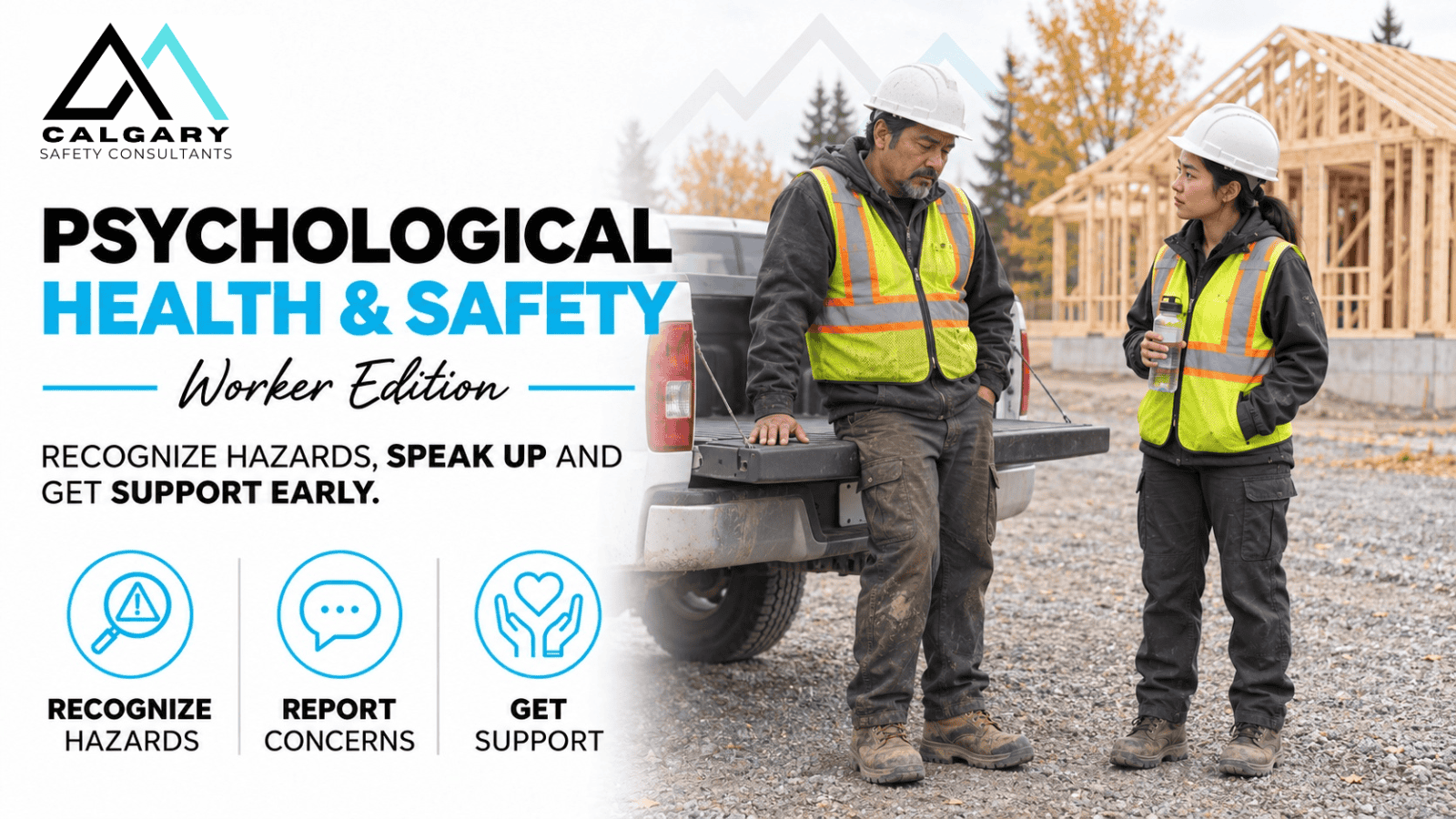
Psychological Health and Safety: Worker Edition
Once you have registered and enrolled, scroll to the Course Content section at the end of this page to begin your lessons.
Our online psychological health and safety training for workers explains how work can affect your mental health and what you can do about it. In six narrated video lessons, you’ll learn to recognize psychosocial hazards, know your rights and duties across Canada, respond to and report harassment and violence, notice strain in yourself and coworkers, and get support early. It’s practical, plain-language training for any Canadian workplace.
Training a team? For online group training, buy your enrolments here, then complete our Group Training Student Information form so we can set up each learner’s account.
Learn more about how our online safety training works.
Psychological harm is real harm. It shows up as errors and near misses, conflict, absence, turnover and incidents. Workplaces where people can speak up, report hazards and look out for each other are safer and more productive. This course gives every worker the same foundation, with examples from real Canadian workplaces.
This course is awareness-level training. It isn’t a certification, it isn’t medical, psychological or legal advice, and it doesn’t replace your employer’s policies or the law that applies to your work. If you or someone else is in immediate danger, call 9-1-1. For crisis support, call or text 9-8-8.
Worker Edition at a Glance
Price: $24.99 CAD plus GST per learner
Delivery: 100% online and self-paced
Course format: 6 narrated video lessons in three modules, with Canadian workplace examples and a knowledge check after every lesson
Course length (estimated): About 1 hour 30 minutes, including about 1 hour 8 minutes of lesson video plus the knowledge checks and final quiz
Assessment: A three-question knowledge check after every lesson (100% to continue) and a six-question final quiz (80% to pass), with unlimited retries
Includes: A downloadable 44-page Student Reference Guide with a card for every teaching slide, lesson summaries, a law-by-jurisdiction reference table, official sources and 3 worksheets
Certificate: Certificate of Completion
Covers: All Canadian provinces and territories, and federally regulated work
Developed by: Calgary Safety Consultants, led by John Duplessis, a Canadian Registered Safety Professional (CRSP)
What Does This Psychological Health and Safety Training Cover?
This psychological health and safety training treats psychological health like any other part of workplace safety: hazards are identified, reported and controlled, and people get support when they need it.
You’ll learn how to:
- Explain the difference between psychological health, psychological safety and mental illness.
- Recognize psychosocial hazards at work, such as workload, conflict, violence, isolation, trauma and fatigue.
- Tell whether provincial, territorial or federal law covers your work, and what the laws have in common.
- Use your rights to know, participate and refuse, and your protection from reprisal.
- Recognize harassment, bullying and violence, respond safely and report it, including as a bystander.
- Notice changes that may signal strain in yourself and coworkers, and start a supportive conversation.
- Know where to get support at work and in the community, including in a crisis.
- Report psychosocial hazards, suggest controls and take part in accommodation and return to work.
What Are Psychosocial Hazards?
Psychosocial hazards are the parts of work, and the way work is organized and managed, that can harm a person’s psychological health. Common examples include excessive or unclear workload, tight deadlines with little control over the work, poor role clarity, lack of support from supervisors or coworkers, poorly managed change, conflict, harassment and bullying, workplace violence, working alone or in isolation, shift work and fatigue, and exposure to traumatic events.
They affect physical safety too. A worker who is exhausted, stressed or distracted is more likely to make an error, miss a hazard or skip a step. At Calgary Safety Consultants, psychosocial hazards sit within the Psychosocial energy source, one of the 12 CSC Energy Sources, so they’re identified, assessed and controlled with the same approach used for Gravity, Motion or Electrical hazards.
This course helps you recognize these hazards in your own work, understand how they can affect you and your coworkers, and report them so they can be fixed. You don’t need to diagnose anyone or have all the answers. You need to notice, speak up and know where to get help.
Psychological Health and Safety Law in Canada
Every province and territory, and the federal government, requires employers to address workplace harassment and violence. Most workers are covered by the law of the province or territory where the work is done. Federally regulated work, such as banks, interprovincial trucking, airlines and telecommunications, falls under Part II of the Canada Labour Code and the Work Place Harassment and Violence Prevention Regulations.
Across Canada, the laws share common elements: definitions of harassment and violence, a written policy, plan or code of practice, violence risk assessment and controls, reporting and investigation with confidentiality, training, and review. Reasonable management action isn’t harassment. Quebec’s laws address psychological harassment and require psychosocial risks to be identified and controlled, and the federal regulations set out a detailed resolution process.
The Student Reference Guide lists the main laws in each jurisdiction, with official sources, checked on November 6, 2026. Laws change, so read the current official text before you rely on a requirement.
Who Should Take This Course?
It’s suitable for:
- Workers in any industry and any province or territory
- New and young workers during orientation
- Lead hands and crew members who want to support their coworkers
- Health and safety committee members and representatives
- Employers who want a common foundation for every worker
Employers, managers and supervisors can take our Psychological Health and Safety: Employer and Supervisor Edition.
Course Features
- 100% online and self-paced
- 6 narrated video lessons in three modules
- Psychosocial hazards managed through the CSC Psychosocial energy source, one of 12 CSC Energy Sources
- Canadian workplace examples, Apply it activities and decision points
- A three-question knowledge check after each lesson, with feedback after each answer
- A six-question final quiz
- A downloadable Student Reference Guide with a law-by-jurisdiction reference table
- A Certificate of Completion
The Student Reference Guide includes 3 worksheets you can fill in and use at work:
- My Support Contacts: Fill this in now, before you need it. Keep it somewhere you can find it quickly.
- Psychosocial Hazard Report Notes: Use these notes to make a hazard report clear and useful. Describe the hazard and its effects, not a diagnosis, and report it through your workplace process.
- Weekly Self-Check: A private check-in with yourself. Notice changes over time, and act early.
Course Modules
Module One: Understanding Psychological Health and Safety
Module One explains what psychological health and safety means at work and the psychosocial hazards you may face on the job.
Lesson One: What Psychological Health and Safety Means at Work. Your mind is part of your health, and work can affect it for better or worse. This lesson sets out what psychological health, psychological safety and mental illness mean, and why the difference matters on the job.
Part 2 explains why psychological harm is treated like any other workplace injury, and how it shows up as errors, conflict, absence and incidents. Part 3 turns to you: the everyday actions that help make your workplace psychologically safe, from respectful communication to looking out for coworkers.
Lesson Two: Psychosocial Hazards at Work. Psychosocial hazards come from how work is designed, organized and managed, from the social side of work, and from what workers are exposed to on the job. They’re managed through the Psychosocial energy source, one of CSC’s twelve energy sources.
Part 2 walks through the common hazards, from workload and role clarity to violence, isolation, trauma and fatigue. Part 3 explains how harm happens, why exposure, duration and combined hazards raise the risk, and why you should report a hazard early, before anyone is hurt.
Module Two: Your Rights and Responsibilities
Module Two covers your rights and duties across Canada, and how to recognize, respond to and report harassment, bullying and violence.
Lesson Three: Your Rights and Duties Across Canada. Canada has fourteen sets of workplace safety rules, and most workers are covered by the law of the province or territory where the work is done. Federally regulated work falls under the Canada Labour Code, and other laws, like human rights and employment standards, can apply at the same time.
Part 2 covers what the laws have in common: harassment definitions, the line between harassment and reasonable management action, and your duties as a worker. Part 3 explains your rights to know, participate and refuse dangerous work, and your protection from reprisal.
Lesson Four: Harassment, Bullying and Violence: Recognize, Respond and Report. Harassment, bullying and violence cause real harm, yet many incidents are never reported. This lesson helps you tell them apart from normal workplace conflict, including when they happen online or follow someone to work from home.
Part 2 covers how to respond safely: putting your safety first, knowing when to call 9-1-1, responding to harassment and acting as a safe bystander. Part 3 explains who to report to, what to include in a report, what to expect from an investigation, and your protection from reprisal.
Module Three: Looking After Yourself and Each Other
Module Three covers recognizing strain in yourself and coworkers, getting support, speaking up about hazards and returning to work well.
Lesson Five: Recognizing Strain in Yourself and Coworkers. Strain usually shows up as changes before it becomes an injury, and coworkers often notice first. This lesson helps you recognize changes in mood, behaviour and performance, and look for patterns rather than a single sign.
Part 2 gives you a quick self-check, practical coping actions, and guidance on when to talk to someone. It also explains why coping helps but doesn’t fix the hazard. Part 3 shows how to start a respectful conversation with a coworker, what to avoid, and how to connect someone to help, including in a crisis.
Lesson Six: Getting Support and Speaking Up. Help is available at work and in the community, and knowing where to go makes it easier to act early. This lesson covers support options, from your supervisor and assistance program to community services, crisis lines and workers’ compensation.
Part 2 explains how to report psychosocial hazards through your usual systems, make your report useful, suggest controls and use your committee or representative. Part 3 covers accommodation and return to work, your role in the process, and how your medical information is kept confidential.
Group and Live Training
Many employers use this psychological health and safety training for every worker and enrol their supervisors, managers and committee members in the Employer and Supervisor Edition, so everyone uses the same language and knows their part. To enrol a team, buy the number of seats you need on this page, then send us each learner’s details with the Group Training Student Information form.
Training a whole team? Our workplace mental health and psychological safety training page compares both editions and explains our live virtual and onsite group training for employers in Alberta, British Columbia and Saskatchewan.
How to Complete the Course
Enrol on this page, then work through the lessons in order. After each video, complete the lesson’s three-question knowledge check. You need all three answers correct (100%) to move on, with feedback after each answer and unlimited retries.
After Lesson Six, complete the six-question final quiz. You need 80% to pass, and you can retake it as often as you need. Once you’ve completed every lesson, knowledge check and the final quiz, you can download your Certificate of Completion.
Frequently Asked Questions
Who is this course for?
It’s for workers in any industry and any Canadian province or territory. It covers psychological health and safety, psychosocial hazards, harassment and violence, recognizing strain and getting support.
Is this course a mental health certification?
No. It’s awareness-level training. It isn’t a certification, it doesn’t train you to diagnose or counsel anyone, and it isn’t medical, psychological or legal advice.
How long does the course take?
We estimate about 1 hour 30 minutes, including the lesson videos, knowledge checks and final quiz. You can stop and return at any time.
Do I receive a certificate?
Yes. You receive a Certificate of Completion after you complete all six lessons, their knowledge checks and the final quiz (80% to pass, with unlimited retakes).
Does the course cover my province or territory?
Yes. It explains how to tell which law covers your work and what the laws across Canada have in common, and the Student Reference Guide lists the main laws in each jurisdiction with official sources.
Can employers purchase training for a whole team?
Yes. Employers can buy online training for two or more learners on this page. After placing your order, complete our Group Training Student Information form with your order number and each learner’s details so we can set up their accounts.
What if I need help right now?
If you or someone else is in immediate danger, call 9-1-1. For crisis support, call or text 9-8-8, the Suicide Crisis Helpline, at any time.
Additional Resources
Read the current law for your jurisdiction on the official government sites listed in the Student Reference Guide. Federal law is at laws-lois.justice.gc.ca.
Need support now? Call or text 9-8-8 for the Suicide Crisis Helpline, call 2-1-1 for community services in most of Canada, or call 9-1-1 in an emergency.
Related courses: Hazard Assessment and Control for Canadian Workplaces and Understanding Canadian OH&S Legislation.