Once you have registered and enrolled for the course. Please proceed to the end of the page to access the course.
Joint Health and Safety Committee Training
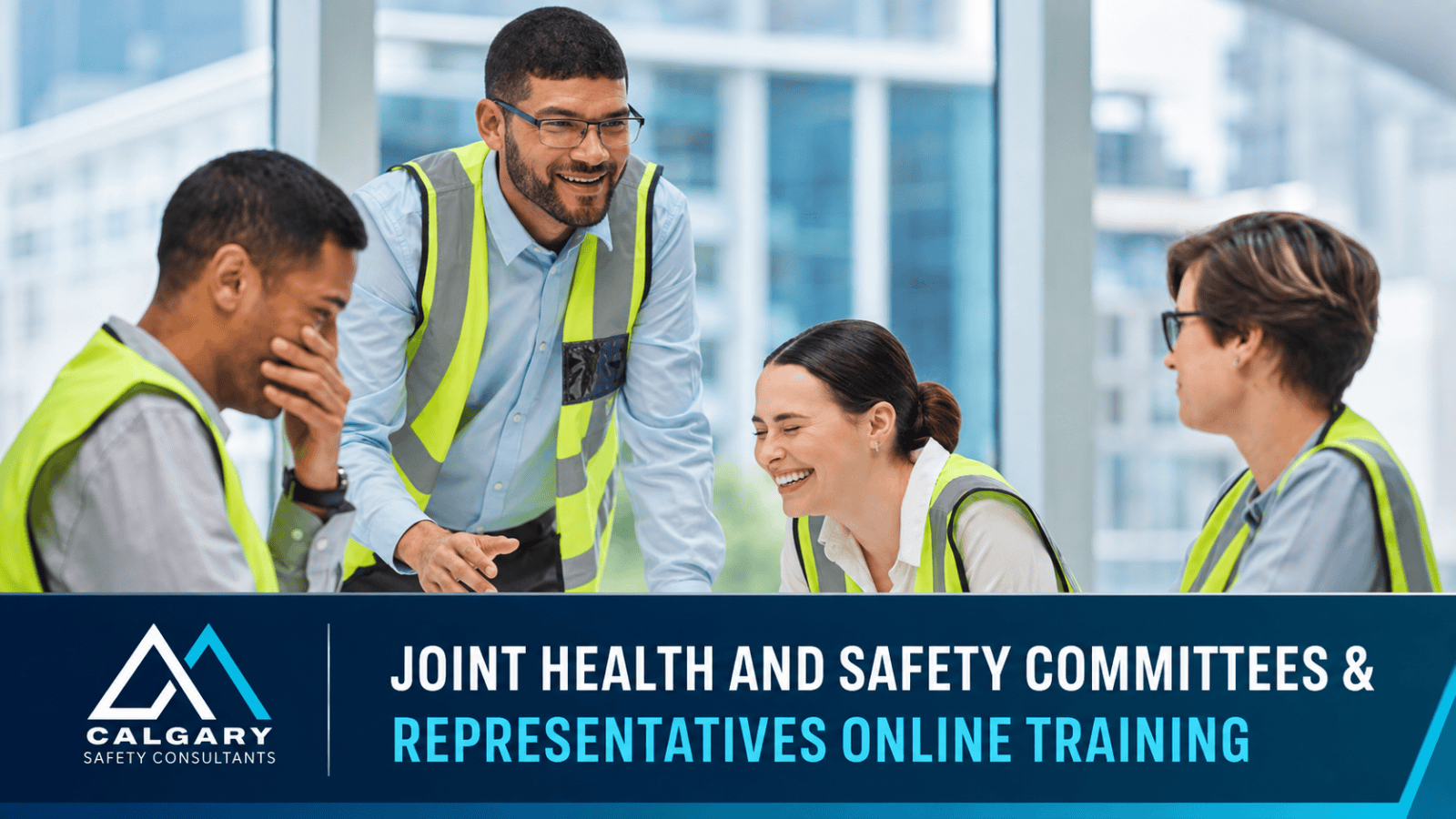
Our Joint Health Safety Committee & Representatives Online Training – Alberta course provides committee members, Health and Safety Representatives, supervisors, managers, and employers with the practical knowledge needed to participate effectively in workplace health and safety.
Joint Health and Safety Committee Training Alberta can be used for important roles in worker participation, hazard identification, inspections, incident review, communication, and workplace safety improvement.
This Alberta-focused online training explains how committees and representatives function within the occupational health and safety system and how worker and employer representatives can work together to identify concerns, assess workplace information, develop recommendations, monitor corrective actions, and improve overall safety performance.
The course goes beyond committee meetings and legislative terminology. Participants develop practical knowledge they can apply to hazard assessments, workplace inspections, incident investigations, committee documentation, communication, problem-solving, conflict resolution, and joint decision-making.
Upon successful completion of the course requirements, participants receive a Joint Health Safety Committee & Representatives Online Training – Alberta Certificate of Completion that can be retained as part of their workplace training records.
If you require virtual or group training we can assist – click here
For more information on our online course – click here
Joint Health and Safety Committee Training Alberta – Course at a glance
Course: Joint Health and Safety Committee Training Alberta
Delivery: 100% online and self-paced
Availability: Accessible 24 hours a day
Jurisdiction: Alberta
Course format: Online lessons, workplace examples, practical scenarios, knowledge checks, and final assessment
Certificate: Issued after successful completion
Price: See registration page for current pricing
Audience: Joint Health and Safety Committee members, Health and Safety Representatives, worker representatives, employer representatives, co-chairs, supervisors, managers, and workplace safety personnel
Training focus: Alberta OHS responsibilities, committee operations, worker participation, hazard management, inspections, investigations, communication, corrective actions, and committee effectiveness
What Does Joint Health and Safety Committee Training Alberta Cover?
This Online WHMIS Training course explains the purpose of WHMIS and how Canada’s hazard communication system helps workers identify, understand, and control the risks associated with hazardous products.
Participants learn how to:
This Joint Health Safety Committee & Representatives Online Training – Alberta course provides participants with a practical understanding of how workplace health and safety committees and representatives contribute to an effective occupational health and safety system.
Participants learn how worker participation connects with hazard management, inspections, investigations, workplace communication, recommendations, and corrective-action follow-up.
Participants learn how to:
- Understand the purpose and function of Joint Health and Safety Committees.
- Understand the purpose and role of Health and Safety Representatives.
- Recognize the responsibilities of worker and employer representatives.
- Understand Alberta occupational health and safety responsibilities.
- Recognize worker health and safety rights.
- Understand employer, supervisor, and worker responsibilities.
- Participate effectively in committee meetings.
- Understand the responsibilities of committee co-chairs.
- Develop and work within committee terms of reference.
- Prepare and review meeting agendas.
- Maintain meaningful meeting minutes and records.
- Document recommendations and action items.
- Track responsibilities, deadlines, and corrective actions.
- Identify workplace hazards.
- Participate in hazard assessments.
- Understand risk assessment and risk prioritization.
- Apply the hierarchy of controls when reviewing workplace hazards.
- Participate in workplace inspections.
- Review inspection findings and corrective actions.
- Understand incident and near-miss investigation principles.
- Review incident findings and recommendations.
- Improve communication between workers and management.
- Address committee disagreements constructively.
- Apply problem-solving and decision-making techniques.
- Use workplace evidence to support recommendations.
- Participate in joint safety decision-making.
- Monitor whether implemented safety improvements remain effective.
The goal is not simply to understand what a committee or representative is. Participants develop practical skills that can help them contribute more effectively to workplace health and safety activities.
Online Joint Health and Safety Committee Training Alberta Workplaces
This OOur Joint Health Safety Committee & Representatives Online Training – Alberta course provides flexible training for individuals who participate in or support workplace health and safety committees and representative functions.
Effective committees create a structured connection between frontline workplace experience and employer decision-making.
Workers may identify hazards, equipment concerns, unsafe conditions, procedural weaknesses, communication problems, or ineffective controls that may not be immediately visible to management.
Employer representatives can contribute organizational knowledge, compliance information, resources, operational considerations, and the authority needed to implement improvements.
When worker and employer representatives work effectively together, health and safety concerns can move from discussion to practical workplace action.
This online course is suitable for organizations operating in industries such as:
- Construction
- Oil and gas
- Manufacturing
- Transportation and logistics
- Warehousing and distribution
- Utilities
- Municipal operations
- Healthcare
- Property management
- Maintenance
- Professional and administrative workplaces
- Retail
- Industrial operations
- Renewable energy
- Contractors and service organizations
The principles covered in the course apply across workplace environments because worker participation, hazard identification, communication, corrective-action follow-up, inspections, and effective safety decision-making are relevant in every industry.
Who Should Take Joint Health and Safety Committee Training Alberta?
This course is intended for individuals who participate in, support, supervise, or work with workplace health and safety committees and representatives in Alberta.
It is particularly appropriate for:
- Joint Health and Safety Committee members
- Worker representatives
- Employer representatives
- Committee co-chairs
- Health and Safety Representatives
- New committee members
- Existing committee members requiring refresher training
- Supervisors
- Managers
- Health and safety coordinators
- Health and safety advisors
- Human resources personnel with workplace safety responsibilities
- Employers establishing or improving a health and safety committee
- Workers preparing to become committee representatives
- Personnel involved in workplace inspections
- Personnel involved in hazard assessments
- Personnel involved in incident investigations
- Personnel responsible for corrective-action follow-up
Supervisors and managers can also benefit from this training because effective committee performance depends on management understanding how worker participation, committee recommendations, inspections, investigations, communication, and corrective actions fit within normal workplace operations..
Joint Health and Safety Committee Training Alberta Course Features
Our Joint Health Safety Committee & Representatives Online Training – Alberta course has been developed to make learning practical, accessible, and convenient.
Course features include:
- 100% online and self-paced learning
- Immediate access after registration
- Available 24 hours a day
- Mobile, tablet, and desktop compatible
- Alberta-focused occupational health and safety content
- Practical workplace examples
- Workplace scenarios
- Knowledge checks and assessment activities
- Clear explanations of committee and representative responsibilities
- Training applicable to worker and employer representatives
- Certificate of Completion
- Progress tracking
- No classroom attendance required
The course emphasizes practical workplace application rather than simply reviewing legislative terminology.
Participants learn how to recognize health and safety concerns, evaluate workplace information, ask useful questions, document decisions, develop recommendations, participate in inspections and investigations, communicate effectively, and follow corrective actions through to completion. activities.
Joint Health and Safety Committee Training Alberta Course Modules
The course is organized into three major modules that develop the knowledge and practical skills needed to participate effectively as a committee member or Health and Safety Representative.
Module One: Roles, Responsibilities & Legal Compliance
Module One explains the purpose and function of Joint Health and Safety Committees and Health and Safety Representatives and introduces participants to Alberta occupational health and safety responsibilities.
Participants examine how worker participation fits within workplace safety management and how health and safety responsibilities are shared among employers, supervisors, workers, committee members, representatives, contractors, and other workplace parties.
Topics include:
- Purpose and function of Joint Health and Safety Committees
- Role of Health and Safety Representatives
- Alberta occupational health and safety framework
- Worker health and safety rights
- Employer responsibilities
- Supervisor responsibilities
- Worker responsibilities
- Worker participation
- Committee membership and representation
- Worker and employer representatives
- Committee co-chairs
- Terms of reference
- Committee meeting structure
- Meeting agendas
- Meeting minutes
- Committee recommendations
- Corrective-action tracking
- Record keeping
- Problem-solving
- Committee decision-making
- Worker communication and engagement
- Working with OHS officers
- Shared workplace health and safety responsibility
- Accountability and follow-up
The module emphasizes that effective committees need more than scheduled meetings. Agendas, minutes, hazard assessments, inspection findings, incident information, recommendations, employer responses, assigned responsibilities, deadlines, and corrective-action tracking all contribute to a functioning committee process. important role every worker plays in preventing injuries and illnesses.
Module Two: Hazard Management & Workplace Safety Practices
Joint Health and Safety Committee members and Health and Safety Representatives may participate in hazard assessments, inspections, incident reviews, and discussions about workplace controls.
Module Two develops the practical hazard-management knowledge needed to participate effectively in these activities.
Participants examine major categories of workplace hazards, including:
- Physical hazards
- Chemical hazards
- Biological hazards
- Ergonomic hazards
- Psychosocial hazards
Topics include:
- Hazard recognition
- Hazard identification
- Formal hazard assessments
- Site-specific hazard assessments
- Field-level hazard assessments
- Evaluating likelihood and severity
- Risk assessment
- Risk prioritization
- Hierarchy of controls
- Elimination
- Substitution
- Engineering controls
- Administrative controls
- Personal protective equipment
- Control effectiveness
The course reinforces an important principle: identifying a hazard or making a recommendation is only the beginning. Effective health and safety management requires issues to be followed until appropriate action has been implemented and its effectiveness has been reviewed. beginning work, reducing the likelihood of injuries, exposures, fires, chemical releases, and other workplace incidents.
Module Three: Employee Representatives Working with Employer Representatives
A Joint Health and Safety Committee provides a structured process for worker and employer representatives to examine workplace health and safety concerns together. Module Three focuses on collaboration, communication, conflict resolution, problem-solving, joint decision-making, and implementation of workplace safety improvements.
Topics include:
- Worker representative responsibilities
- Employer representative responsibilities
- Understanding different workplace perspectives
- Building productive working relationships
- Effective safety communication
- Worker engagement
- Reporting safety concerns
- Building trust
- Communication barriers
- Common committee disagreements
- Differences in risk perception
- Conflict resolution
- Active listening
- Defining the problem
- Separating facts from assumptions
- Using evidence to support decisions
- Negotiating practical solutions
- Consensus building
- Developing committee recommendations
- Joint safety decision-making
- Encouraging employer support
- Joint workplace inspections
- Reviewing investigations
- Monitoring implemented safety measures
- Measuring corrective-action effectiveness
Participants learn how clear communication, credible evidence, good documentation, assigned responsibilities, realistic timelines, and consistent follow-up can help transform committee discussions into practical workplace improvements.
Why Joint Health and Safety Committee Training Alberta Matter
Joint Health and Safety Committees and Health and Safety Representatives provide workers with a structured way to participate in workplace health and safety.
A well-functioning committee can help identify emerging hazards, review workplace concerns, evaluate inspection and incident information, recommend improvements, improve communication, and monitor unresolved issues.
The effectiveness of a committee depends on what happens after a concern is raised.
A strong committee process moves through several stages:
- Identify the concern.
- Understand the hazard or safety issue.
- Gather relevant information.
- Evaluate the potential risk.
- Review existing controls.
- Develop practical recommendations.
- Assign responsibility where appropriate.
- Establish follow-up.
- Monitor corrective actions.
- Confirm whether the action improved workplace conditions.
When this process works effectively, the committee becomes a practical part of workplace safety management rather than simply an administrative requirement.
Practical Skills for Joint Health and Safety Committee Members and Representatives
Effective participation requires more than knowing the legislation.
Participants in Joint Health Safety Committee & Representatives Online Training – Alberta develop practical knowledge that can help them:
- Ask better questions during committee meetings.
- Identify workplace hazards more effectively.
- Distinguish between a safety concern and its underlying cause.
- Review hazard assessments more critically.
- Evaluate whether existing controls are adequate.
- Participate more effectively in inspections.
- Review incident findings without focusing only on worker error.
- Develop clearer committee recommendations.
- Use evidence to support proposed improvements.
- Document action items more effectively.
- Track unresolved concerns.
- Communicate committee activities to workers.
- Work constructively through disagreements.
- Determine whether corrective actions actually reduced risk.
These practical abilities can help committees and representatives make a stronger contribution to workplace health and safety.
Complete Your Joint Health and Safety Committee Training Alberta
Getting started is straightforward.
Register online, begin your Joint Health and Safety Committee Training Alberta, complete each course module at your own pace, successfully complete the required assessment, and receive your Certificate of Completion.
Because the course is fully online, participants can complete their training when it suits their schedule, whether at home, in the office, or at a worksite.
Employers can use the course to support:
- New committee member orientation
- Health and Safety Representative development
- Committee refresher training
- Supervisor development
- Manager awareness training
- Worker representative training
- Employer representative training
- Workplace safety-program improvement
- Committee effectiveness initiatives
Training is most effective when participants can apply the information within their own workplace.
Employers should therefore support committee members and representatives with access to appropriate workplace information, hazard assessments, inspection findings, incident information, procedures, documentation, and opportunities for meaningful participation.
Frequently Asked Questions About Joint Health and Safety Committee Training Alberta
What is Joint Health Safety Committee & Representatives Online Training – Alberta?
Joint Health Safety Committee & Representatives Online Training – Alberta provides committee members and representatives with practical knowledge about committee functions, worker participation, occupational health and safety responsibilities, hazard management, inspections, investigations, communication, and corrective-action follow-up.
The course focuses specifically on Alberta workplaces and the practical responsibilities associated with committee and representative participation.
Who should take Joint Health Safety Committee & Representatives Online Training – Alberta?
The course is suitable for Joint Health and Safety Committee members, worker representatives, employer representatives, committee co-chairs, Health and Safety Representatives, supervisors, managers, and health and safety personnel.
It can also benefit employers and supervisors who regularly work with workplace health and safety committees or representatives.
What does a Joint Health and Safety Committee do?
A Joint Health and Safety Committee provides a structured process for worker and employer representatives to participate in workplace health and safety.
Activities may include reviewing workplace concerns, discussing hazards, participating in inspections and investigations, examining safety information, making recommendations, communicating with workers, and monitoring corrective actions.
What does a Health and Safety Representative do?
A Health and Safety Representative provides worker representation on workplace health and safety matters in workplaces where a representative is used rather than a committee.
Representatives may participate in hazard identification, inspections, workplace concerns, recommendations, communication, and other health and safety activities.
Does this course cover Alberta occupational health and safety requirements?
Yes. The course introduces Alberta’s occupational health and safety framework and examines employer, supervisor, worker, committee-member, and representative responsibilities.
It also connects these responsibilities with practical activities such as hazard assessments, inspections, incident investigations, committee meetings, recommendations, communication, and corrective-action follow-up.
Does the course cover workplace inspections?
Yes. Workplace inspections are an important part of the course.
Participants learn how inspections are prepared, conducted, documented, communicated, and followed up so identified hazards aren’t simply recorded without action.
Does the course cover hazard assessments?
Yes. Participants review hazard recognition, hazard identification, risk assessment, risk prioritization, and the hierarchy of controls.
This knowledge helps committee members and representatives evaluate workplace concerns and proposed corrective actions more effectively.
Does the course cover incident investigations?
Yes. The course introduces incident-investigation principles including evidence collection, witness interviews, contributing factors, root-cause analysis, corrective actions, reporting, and follow-up.
Participants also learn how committees and representatives may contribute to incident review and prevention activities.
Does the training cover Joint Health and Safety Committee meetings and minutes?
Yes. Participants learn about meeting structure, agendas, minutes, recommendations, assigned responsibilities, action items, documentation, and follow-up.
The objective is to help committee members use meetings to support practical workplace action rather than simply producing meeting records.
Does the course cover conflict resolution between worker and employer representatives?
Yes. The course examines common committee disagreements, communication challenges, differences in risk perception, active listening, evidence-based decision-making, negotiation, consensus building, and conflict resolution.
These skills help worker and employer representatives address disagreements while maintaining focus on workplace health and safety.
Can employers purchase this training for multiple employees?
Yes. Employers can arrange online training for multiple Joint Health and Safety Committee members, Health and Safety Representatives, supervisors, managers, or other employees.
Calgary Safety Consultants can also assist organizations requiring virtual, group, or additional workplace health and safety training.
Can this course help improve an existing Joint Health and Safety Committee?
Yes. The course is relevant to both new and experienced committee members because it addresses committee operations, communication, hazard management, inspections, incident review, documentation, problem-solving, conflict resolution, recommendations, and corrective-action follow-up.
These areas often determine whether a committee simply meets or actively contributes to workplace safety improvement.
Additional Joint Health Safety Committee & Representatives Resources
For additional information on Joint Health and Safety Committees, Health and Safety Representatives, and Alberta occupational health and safety requirements, review the following government and technical resources.
Government of Alberta – Health and Safety Committees and Representatives
https://www.alberta.ca/work-site-health-safety-committees
This Government of Alberta resource explains the role of workplace health and safety committees and Health and Safety Representatives and provides guidance on Alberta requirements.
Alberta Occupational Health and Safety Act
https://search-ohs-laws.alberta.ca/legislation/occupational-health-and-safety-act
The Alberta OHS Act establishes the legislative framework for workplace health and safety and outlines the responsibilities of employers, supervisors, workers, and other work site parties.
Alberta Occupational Health and Safety Code
https://search-ohs-laws.alberta.ca/legislation/occupational-health-and-safety-code
The Alberta OHS Code contains detailed requirements that support Alberta’s occupational health and safety framework, including requirements related to hazard assessment, workplace controls, training, and other safety obligations.
Canadian Centre for Occupational Health and Safety – Health and Safety Committees
https://www.ccohs.ca/oshanswers/hsprograms/hscommittees
CCOHS provides practical guidance on health and safety committees, including committee organization, worker participation, meetings, recommendations, communication, and effective workplace involvement.