On this page
Quick answer
What Is an Asbestos Code of Practice?
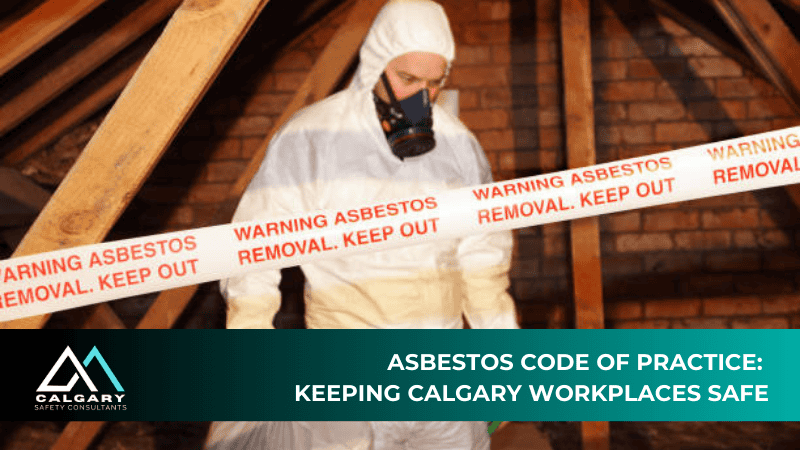
An asbestos code of practice is a written set of procedures that explains how your organization will identify asbestos, assess the risk, control fibre release, train workers, handle waste and meet provincial requirements before anyone disturbs asbestos-containing materials.
In Alberta, handling asbestos-containing material requires a written code of practice under Part 4 of the OHS Code (section 26 and Schedule 1, Table 1). The Alberta Asbestos Abatement Manual is the government’s best-practice guide for safe removal and abatement. It is a valuable reference for your code of practice, but it does not replace it.
Other key Alberta requirements:
- Notify Alberta OHS at least 72 hours before starting work that may release asbestos fibres.
- Workers must complete government-approved asbestos training and hold a valid asbestos worker certificate (valid for three years) before they enter an asbestos restricted area, and every other worker who works with asbestos must be trained to do the work safely.
- Asbestos-containing materials that may release fibres must be removed before a building is demolished.
Why Calgary Businesses Should Care
Asbestos isn’t only an abatement contractor’s problem. Building owners, employers, prime contractors, supervisors and maintenance staff all make decisions that affect whether asbestos gets disturbed. In older commercial, industrial and residential buildings, it may be found in:
- Pipe, boiler, wall and ceiling insulation
- Floor tiles, ceiling tiles and their adhesives
- Roofing materials
- Cement products
- Drywall joint compounds and textured coatings
- Mechanical systems and other building materials
Asbestos is most dangerous when it is disturbed. Drilling, cutting, scraping, sanding or demolishing these materials can release fibres into the air, and breathing them can cause asbestosis, lung cancer and mesothelioma, often decades later. Canada prohibited most asbestos products in 2018, but that doesn’t remove what is already in older buildings.
The practical risk shows up during renovations, tenant improvements, restoration work, mechanical upgrades, flooring removal, demolition and emergency repairs. If nobody checked for asbestos first, workers may already have disturbed it before anyone realizes. The result can be worker exposure, a work stoppage, emergency cleanup, project delays, regulatory orders, WCB claims and legal liability.
What an Asbestos Code of Practice Should Include
An asbestos code of practice shouldn’t be a generic document copied from another company. It needs to reflect your actual buildings, materials, workers, tasks, contractors and provincial requirements. A strong one usually covers:
- Identification: how asbestos-containing materials are identified, surveyed and recorded, and how workers find out where they are.
- Hazard assessment and risk classification: how each task is assessed before work starts and classified by risk.
- Controls: containment, wetting and other fibre-control methods, restricted areas, and when a qualified abatement contractor is needed.
- Personal protective equipment: including respiratory protection and decontamination.
- Training: what each role needs, from awareness training to certified abatement training.
- Waste handling: how asbestos waste is sealed, labelled, stored, transported and disposed of.
- Air monitoring and health monitoring, where they are required.
- Notification: who notifies the regulator, when and how.
- Contractor responsibilities: how contractors are selected, briefed and checked.
- Emergency procedures: what to do if suspect material is damaged or disturbed unexpectedly, including clear stop-work direction.
Alberta Asbestos Requirements
Alberta’s main asbestos rules are in Part 4 of the OHS Code, alongside general requirements such as hazard assessment and respiratory protection. The key asbestos requirements for employers are:
- A written code of practice when workers handle asbestos-containing material (section 26 and Schedule 1, Table 1).
- Notification: at least 72 hours before beginning work that may release asbestos fibres, such as removing asbestos, set-up operations that may release fibres, or demolishing or renovating a building or equipment that contains asbestos. Notice is given through the Asbestos Project Notification form.
- Training: workers must complete government-approved asbestos training and hold a valid asbestos worker certificate before entering an asbestos restricted area. Certificates expire three years from the date of issue. Workers who aren’t entering restricted areas must still be trained for the work they do.
- Demolition: asbestos-containing materials that may release fibres must be removed before demolition begins, apart from limited exceptions accepted by Alberta OHS.
- Waste: asbestos waste must be contained in sealed containers and labelled.
The Alberta Asbestos Abatement Manual sets out best practices for safely removing or abating asbestos-containing materials. Use it to shape the procedures in your code of practice, and make sure your code also reflects the specific buildings, tasks and people in your operation.
For an Alberta employer, the code of practice should connect the legal requirement to the actual work. If a contractor is removing asbestos-containing pipe insulation, for example, the document should explain who confirms the material, how the area is isolated, who is allowed to enter, what respiratory protection is required, how waste is sealed and labelled, and how the area is cleared before other trades return.
Asbestos Requirements in BC and Saskatchewan
If you work across provincial borders, your code of practice has to reflect the province where the work takes place. The goal is the same everywhere, but the rules differ.
British Columbia. Part 6 of WorkSafeBC’s OHS Regulation sets detailed asbestos requirements. Employers must have an exposure control plan where workers may be exposed to potentially harmful levels of asbestos. The employer and the owner must have a qualified person sample suspect materials and build an inventory of asbestos-containing materials. Before work with or near asbestos-containing material begins, a qualified person must assess and classify the work, and written procedures must cover containment, fibre control, personal protective equipment, decontamination and waste removal. Since January 1, 2024, asbestos abatement contractors in BC must be licensed, and anyone doing asbestos abatement work must complete mandatory training and hold a certificate.
Saskatchewan. The Government of Saskatchewan expects owners, employers, workers, self-employed persons and contractors to understand asbestos risks and know how to identify and handle asbestos-containing materials. The Saskatchewan Asbestos Abatement Manual sets out requirements and best practices, and some asbestos work is classed as a high-risk process that requires notifying Occupational Health and Safety at least 14 days before the process starts, using the Notification of High Risk Asbestos Process form.
Putting the Code of Practice to Work
Start with the hazard assessment
A hazard assessment is the foundation of any asbestos code of practice. The assessment should answer practical questions. Is asbestos present? Where is it, and what condition is it in? Will workers disturb it? How risky is the task? Are other workers, occupants or contractors nearby? Will the work need containment, negative air, decontamination, air monitoring or a qualified abatement contractor?
When the hazard assessment is weak, the procedure is weak too. That leads to missed materials, unclear instructions, poor contractor control and higher exposure risk.
Match training to the work
Training should be based on exposure potential, not job title. A worker who only needs awareness training should know where asbestos is and what not to disturb. A maintenance worker may need more, because they could drill, open ceiling spaces, remove panels or respond to damaged materials. An abatement worker needs much more specific training, including containment, respiratory protection, decontamination, waste handling and emergency procedures. The practical test is simple: if a worker is expected to recognize, avoid, report, control or work around asbestos, their training must match that responsibility.
Make it more than a binder
Compliance means the code of practice is actually used. That includes current surveys, clear procedures, training records, contractor prequalification, provincial notifications, PPE and respiratory protection records, air monitoring where required, disposal documentation and supervisor oversight. A usable code of practice helps supervisors make decisions before work begins, and it gives workers clear direction to stop and report if they find suspect material.
Good internal measures include completing an asbestos review before every renovation or demolition job, making sure workers are trained before they are assigned asbestos-related work, documenting notifications before regulated work begins, and closing out corrective actions before affected areas return to normal use.
Example situation: a property maintenance company completes small repairs in older commercial spaces across Alberta, BC and Saskatchewan. It has a safety manual but no clear asbestos code of practice and no consistent pre-work review. After it introduces an asbestos review step, updates its safe work procedures, confirms training needs for maintenance staff and supervisors, and adds asbestos checks to its inspections, supervisors start spotting suspect materials before work begins, and testing and abatement planning happen earlier in each job.
How we help
How Calgary Safety Consultants Can Help
Asbestos compliance gets more complex when you work in more than one province. Calgary Safety Consultants helps employers build practical asbestos programs that fit the work, the province and the level of risk. Depending on what you need, we can:
- Develop or update your asbestos code of practice and safe work procedures
- Plan hazard assessments for work that could disturb asbestos-containing materials, using survey results from qualified professionals
- Build contractor management processes, so abatement and other contractors are selected, briefed and checked
- Review training needs for workers, maintenance staff and supervisors
- Review your documentation and records for compliance or audit purposes, and track corrective actions
Asbestos surveys, sampling, testing and removal must be done by qualified asbestos professionals. Our role is to help you build the program around that work, so the right checks happen before anyone disturbs suspect material. Projects are led by John Duplessis, B.Sc., CRSP, who has more than 30 years of occupational health and safety experience.
Jurisdiction note: This article provides general occupational health and safety information. The legal requirements that apply depend on the workplace location, industry and federal, provincial or territorial jurisdiction. Verify current requirements with the applicable regulator before using the information operationally. Government of Canada overview of occupational health and safety jurisdiction.
References
- Government of Alberta. Alberta Asbestos Abatement Manual. https://www.alberta.ca/alberta-asbestos-abatement-manual
- Government of Alberta. Submit an asbestos project notification. https://www.alberta.ca/submit-asbestos-project-notification
- Government of Alberta. Asbestos worker training. https://www.alberta.ca/asbestos-worker-training
- Government of Alberta. OHS Code, Schedule 1: Chemical Substances. https://search-ohs-laws.alberta.ca/legislation/occupational-health-and-safety-code/schedule-1-chemical-substances/
- Government of Alberta. OHS Code, Part 4: Chemical Hazards, Biological Hazards and Harmful Substances. https://search-ohs-laws.alberta.ca/legislation/occupational-health-and-safety-code/part-4-chemical-hazards-biological-hazards-and-harmful-substances/
- WorkSafeBC. OHS Regulation, Part 6: Substance Specific Requirements. https://www.worksafebc.com/en/law-policy/occupational-health-safety/searchable-ohs-regulation/ohs-regulation/part-06-substance-specific-requirements
- WorkSafeBC. Asbestos training, certification and licensing. https://www.worksafebc.com/en/health-safety/education-training-certification/asbestos-training-certification-licensing
- Government of Saskatchewan. Understanding, identifying and handling asbestos. https://www.saskatchewan.ca/business/safety-in-the-workplace/hazards-and-prevention/asbestos-in-saskatchewan/understanding-identifying-and-handling-asbestos
- Government of Saskatchewan. Asbestos in Saskatchewan. https://www.saskatchewan.ca/business/safety-in-the-workplace/hazards-and-prevention/asbestos-in-saskatchewan
- Canadian Centre for Occupational Health and Safety. Asbestos: What is... https://www.ccohs.ca/oshanswers/chemicals/asbestos/whatis.html

About the author
John Duplessis, B.Sc., CRSP
John Duplessis is a Canadian Registered Safety Professional with more than 30 years of occupational health and safety experience in oil and gas, construction, green energy, midstream operations, and industrial project work.