On this page
At Calgary Safety Consultants, we work with farmers, ranchers, and agribusiness owners to develop practical, cost-effective safety solutions to keep workers, families, and communities safe.
Let’s dig into the top hazards on farms and what you can do to prevent injuries.
Why Is Agriculture One of the Most Dangerous Industries?
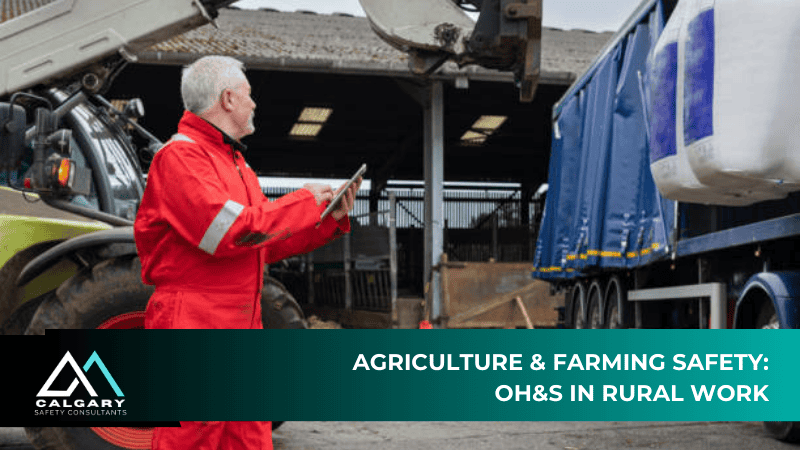
According to Canadian agricultural safety statistics, farming accounts for one of the highest rates of workplace fatalities in Canada. In Alberta, machinery-related incidents, falls, and animal-related injuries are leading causes of serious accidents.
Fast Facts on Farm Safety Risks:
✔ Agriculture has a fatality rate of 12.9 per 100,000 workers—one of the highest in any industry.
✔ Machinery rollovers and entanglements cause over 50% of farm fatalities.
✔ Livestock-related injuries account for thousands of emergency room visits each year.
✔ Falls from grain bins, silos, and ladders are a growing safety concern.
Agriculture Fatality Reports – Canadian Agricultural Safety Association:
https://www.casa-acsa.ca/en/resources/farm-fatality-reports/
Farming Safety: Top Hazards and How to Prevent Them
- Machinery & Equipment Accidents
Tractors, combines, balers, augers—farm equipment is powerful but unforgiving. Rollovers, entanglements, and crush injuries are among the leading causes of serious injuries and deaths on farms.
✅ How to Stay Safe:
- Always use seat belts and rollover protection systems (ROPS) on tractors.
- Never remove or bypass safety guards on moving parts.
- Keep hands, feet, and clothing away from PTO shafts & augers.
- Train workers on safe equipment operation & lockout/tagout procedures.
Farm Equipment Safety Guide – Canadian Centre for Occupational Health and Safety:
https://www.ccohs.ca/oshanswers/safety_haz/agriculture/machinery.html
- Livestock-Related Injuries
Animals may be predictable most of the time, but under stress or in unfamiliar situations, even the calmest cattle, horses, or pigs can kick, bite, or trample.
✅ How to Stay Safe:
- Always have an escape route when working with livestock.
- Never turn your back on large animals in close quarters.
- Train workers on safe animal handling & restraint techniques.
- Use proper PPE like gloves, boots, and helmets when handling livestock.
Livestock Handling Safety – Government of Canada:
https://www1.agriculture.alberta.ca/%24department/deptdocs.nsf/all/aet13294/%24file/Farm_Safety_Planning.pdf?OpenElement=
- Grain Handling & Suffocation Risks
Grain bins may look harmless, but they’re one of the deadliest hazards on a farm. Workers can sink in flowing grain in seconds, leading to suffocation or crushing injuries.
✅ How to Stay Safe:
- Never enter a grain bin alone—use a buddy system.
- Wear a harness & lifeline when working inside bins.
- Always turn off augers & grain-handling equipment before entering.
- Use ventilation systems to reduce grain dust exposure.
Grain Bin Safety Tips – Alberta Agriculture and Forestry:
https://www.alberta.ca/grain-bin-safety.aspx
- Chemical Exposure & Pesticide Safety
Farms rely on herbicides, pesticides, and fertilizers, but exposure can cause serious respiratory issues, skin burns, and even long-term health problems.
✅ How to Stay Safe:
- Always wear PPE (gloves, goggles, respirators) when handling chemicals.
- Store chemicals in locked, ventilated areas away from food & water sources.
- Follow SDS (Safety Data Sheets) guidelines for handling & disposal.
- Train workers on chemical safety & emergency spill response.
Pesticide Safety Guidelines – Health Canada:
https://www.canada.ca/en/health-canada/services/consumer-product-safety/pesticides-pest-management.html
- Heat Stress & Cold Stress
Farm work doesn’t stop for extreme weather, but heat stroke and frostbite are real risks for outdoor workers.
✅ How to Stay Safe:
- Take regular breaks in shaded or heated areas.
- Drink plenty of water to prevent dehydration.
- Wear weather-appropriate clothing—light, breathable gear in summer, insulated layers in winter.
- Train workers to recognize the signs of heat exhaustion & frostbite.
Heat Stress Prevention – WorkSafe Alberta:
https://www.alberta.ca/heat-stress.aspx
How we help
How Calgary Safety Consultants Can Help
At Calgary Safety Consultants, we provide farm safety solutions tailored to rural work environments.
Our Services Include:
✔ Safety Audits – Identifying hazards before they become accidents.
✔ Chemical & Pesticide Safety Compliance – Helping you meet WHMIS & SDS regulations.
✔ Emergency Response Planning – Preparing farms for fire, medical, and chemical emergencies.
Need help improving farm safety? Contact us today!
Final Thoughts: Farm Work is Tough—Let’s Make It Safer!
Farming is physically demanding, unpredictable, and full of hazards—but with the right safety measures, training, and risk management, injuries can be prevented.
Want to improve safety on your farm? Let’s talk! Book your complimentary consultation today.
Stay safe, stay compliant, and keep your business running smoothly!

About the author
John Duplessis, B.Sc., CRSP
John Duplessis is a Canadian Registered Safety Professional with more than 30 years of occupational health and safety experience in oil and gas, construction, green energy, midstream operations, and industrial project work.