On this page
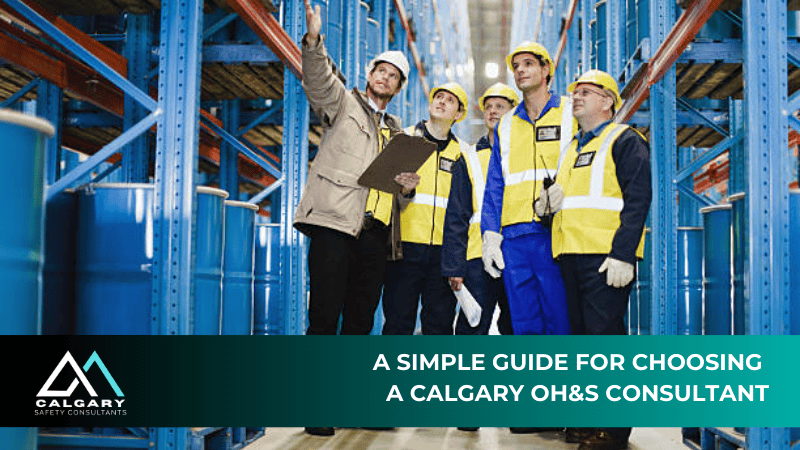
A consultant can provide specialized advice, documents, training or implementation support. The employer still retains its legal duties and must provide the authority, information, people and resources needed to act on the advice.
Choosing a Calgary OH&S consultant: eight questions to ask
1. Which jurisdiction and requirements govern the work?
Ask the consultant to identify whether the workplace is provincially or federally regulated and to explain any other authority that may apply. For Alberta-regulated work, the starting point is the Alberta OHS Act, Regulation and Code. A proposal should distinguish legal requirements from voluntary standards, client requirements and recommended practices.
2. What hazards, industry and work activities are in scope?
Relevant experience should match the assignment. Experience with industrial construction does not automatically establish competence in occupational hygiene, ergonomics, psychological health, transportation or another specialty. Ask for examples that protect client confidentiality and show how the consultant approaches similar hazards.
3. What do the credentials actually demonstrate?
The Canadian Registered Safety Professional designation is administered by the Board of Canadian Registered Safety Professionals and is relevant to broad occupational health and safety practice. Other designations may be valuable for construction, training, auditing or specific technical work.
A CRSP is not a licence to practise engineering, medicine, law or occupational hygiene. Confirm that any regulated or specialized service is completed or reviewed by a person authorized and competent to provide it. Verify designation status with the issuing organization rather than relying only on a résumé.
4. How will legislation and standards be verified?
Ask how the consultant confirms that a legal requirement is current and in force. The work should cite the applicable Act, regulation or code section where legal interpretation matters. Standards should be identified by issuing organization, title and edition when they govern the work.
5. Does an audit or certification protocol apply?
If the assignment involves COR, SECOR or another certification, confirm the certifying partner, industry, certification level and current protocol. Audit alignment can support the program, but it does not replace legal compliance, effective controls or the implementation evidence an auditor will seek.
6. What is included in the scope and deliverables?
A clear proposal should define the work sites, documents, interviews, observations, meetings, deliverables, exclusions and client responsibilities. It should also identify assumptions, unresolved information and services that require another professional.
7. How will recommendations be implemented and validated?
A document is not proof that a control works. Ask how the consultant will involve knowledgeable workers and supervisors, test practical feasibility, support training and verify implementation. Site validation is especially important when a procedure changes equipment operation, emergency response or high-risk work.
8. How will confidentiality, conflicts and quality be managed?
Discuss confidentiality, data handling, conflicts of interest, insurance, review processes and correction of errors before work begins. References and sample deliverables can help, provided no client information is disclosed without authorization.
What a useful consultant relationship looks like
A strong consultant translates requirements into workable actions and explains limitations plainly. The employer supplies site knowledge and decision-making authority. Workers, supervisors and committees or representatives contribute practical information and help verify that controls work under real conditions.
Choose the person or team whose competence matches the assignment, not simply the longest list of letters or the lowest price. The best fit may involve more than one specialist.
Official and professional sources
- Government of Alberta – OHS Act, Regulation and Code.
- Alberta Occupational Health and Safety Act, sections 3 to 12 – work-site party obligations.
- Board of Canadian Registered Safety Professionals – designation and certification information.
- Alberta Construction Safety Association – industry and COR resources.
Sources verified November 5, 2026. Professional designations and audit requirements should be confirmed directly with the issuing organization.
How we help
How Calgary Safety Consultants Can Help
- Risk Assessments: We can review identified and potential hazards within the agreed scope.
- Tailored Training: Need a quick “Safety 101” for new hires? We’ve got you.
- Regulatory Compliance: We can review the agreed scope against verified OHS requirements and identify matters requiring legal or other professional review.
- Continuous Improvement: Safety isn’t “set it and forget it.” We’ll help you monitor, tweak, and improve over time.
Wrapping It Up
Selecting the right safety consultant isn’t rocket science—but it’s not something you should take lightly. Look for someone with the right credentials, relevant experience, and the ability to communicate clearly. When you find the right fit, your consultant becomes a valuable partner, helping you protect your people, your business, and your bottom line.
Contact Calgary Safety Consultants and take the first step toward measurable safety success. Book your complimentary consultation today.
References:
- BCRSP (2021). Canadian Registered Safety Professional (CRSP). Retrieved from https://bcrsp.ca/
- ACSA (2024). Alberta Construction Safety Association. Retrieved from https://www.youracsa.ca/
- Government of Alberta. Occupational Health and Safety (OHS). Retrieved from https://www.alberta.ca/occupational-health-safety.aspx
So, go ahead—find that stellar Calgary safety consultant who can help turn your workplace into a safe, productive environment. Your team (and your peace of mind) will thank you! Give us a call today if you want to know more.

About the author
John Duplessis, B.Sc., CRSP
John Duplessis is a Canadian Registered Safety Professional with more than 30 years of occupational health and safety experience in oil and gas, construction, green energy, midstream operations, and industrial project work.