On this page
The good news? The fix isn’t complicated. A proactive, well-planned housekeeping program can drastically reduce STF incidents, improve safety culture, and keep your operation compliant with Canadian legislation. And you don’t need a six-figure budget or a battalion of cleaners to make it happen. You just need structure, buy-in, and the right guidance.
Let’s break it down.
Why Slips, Trips, and Falls Deserve More Attention
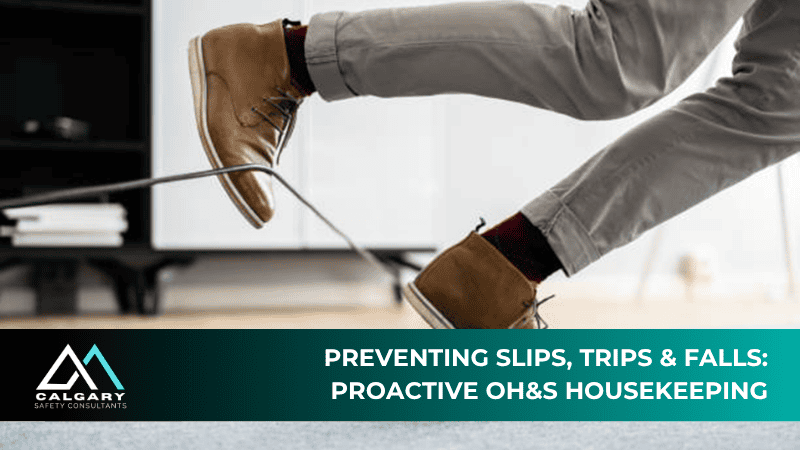
Here’s a reality check: STFs account for roughly 20% of all workplace injuries in Canada, according to the Canadian Centre for Occupational Health and Safety (CCOHS). That includes everything from minor bruises to fractures, concussions, and even fatalities.
And the financial hit? It’s no small puddle. According to Alberta’s Occupational Health and Safety data, the average direct cost of a single STF injury is over $12,000, not including lost productivity, retraining, or equipment downtime. Multiply that by multiple events per year, and suddenly that wet floor by the breakroom is costing you more than your coffee budget.
https://www.ccohs.ca/oshanswers/safety_haz/falls.html
https://ohs-pubstore.labour.alberta.ca/slips-trips-and-falls
But here’s the kicker—most of these incidents are preventable with simple housekeeping and hazard awareness. Not fancy equipment. Not expensive consultants. Just smart, proactive habits embedded into your daily operations.
Why Traditional “Clean as You Go” Doesn’t Work
You’ve probably heard it before: “Everyone is responsible for housekeeping.” That sounds great until you walk into a shop after a busy shift and see cords across the floor, a leaking jug of oil, and an emergency exit blocked by packing foam.
Here’s the thing—cleaning up after the fact is reactive. That means the hazard already existed and someone either tripped over it, almost tripped over it, or didn’t see it in time.
A proactive program builds systems around prevention, not cleanup. That includes engineered solutions, scheduled inspections, defined responsibilities, and data-driven monitoring. If you’re just hoping your team notices and fixes hazards before something happens, you’re gambling with people’s safety—and your bottom line.
Legal Obligations in Canada
Across all provinces and territories, employers are legally required to ensure that floors, stairs, and walkways are kept in a safe condition. It’s a core principle of every Occupational Health and Safety Code.
For example, in Alberta, Part 2 of the OHS Code (Section 9) mandates that employers must identify, assess, and control hazards—including STF hazards—and ensure safe conditions are maintained.
Failing to do this can result in:
- Administrative penalties
- Stop-work orders
- Orders to revise your hazard assessment
- Civil or criminal liability under Bill C-45 if negligence contributes to a serious incident
That’s not just regulatory jargon—that’s real risk.
The 7-Step Proactive Housekeeping Strategy
Let’s walk through what a proactive STF prevention and housekeeping program looks like. These steps aren’t theoretical—they’re built from what we implement every day at Calgary Safety Consultants.
- Leadership Sets the Tone
Housekeeping has to be owned from the top. If managers walk past a mess and say nothing, that tells your team it’s not a priority. Set KPIs tied to safety and cleanliness. Include STF prevention in safety meetings. Make it visible, consistent, and mandatory.
- Assess and Map Your Hazards
Start with a walkthrough. Use your site maps and mark high-traffic zones, entrances, loading bays, staircases, and production floors. Look for:
- Sloped or uneven flooring
- Moisture-prone zones (e.g., near sinks or entrances)
- Electrical cords or hoses crossing paths
- Poor lighting
- Cluttered storage
Use incident logs and near-miss reports to identify historical hotspots.
For help with this process, check out Alberta’s Hazard Assessment and Control Handbook:
https://ohs-pubstore.labour.alberta.ca/download/sample/25
- Set Clear, Measurable Standards
Vague policies like “keep walkways clear” don’t cut it. Define what “good housekeeping” looks like in measurable terms. For example:
- Walkways must be free of obstructions wider than 30 cm
- Spills must be contained in 5 minutes and fully cleaned in 15
- Entry mats must be cleaned or replaced every shift during winter
- Cords must be secured or rerouted using cable management systems
Write these into your procedures. Train to them. Audit against them.
- Assign Ownership
Ownership makes or breaks your housekeeping program. Each work zone needs an assigned person (and a backup) responsible for daily checks and sign-offs. This could be tracked on a whiteboard, mobile app, or inspection form. When everyone knows who’s accountable, things get done.
- Train, Engage, Repeat
Don’t just talk about it once during onboarding and forget it. Regular toolbox talks, safety moments, and even friendly competitions keep people engaged. Use real photos from your own site to highlight common risks.
Encourage near-miss reporting. If someone almost trips, that’s not just lucky—it’s valuable data. Celebrate when people speak up, not just when no one gets hurt.
WorkSafeBC offers excellent guides on creating an STF-aware workplace:
https://www.worksafebc.com/resources/health-safety/books-guides/preventing-slips-trips-falls?lang=en
- Track Leading Indicators
Waiting until someone gets hurt to evaluate your program is too late. Instead, measure things like:
- Number of daily housekeeping checks completed
- Time between spill occurrence and cleanup
- Number of STF near-miss reports
- Percentage of mats and floor markings in good condition
Use this data to adjust, improve, and allocate resources. Bonus: when the inspector shows up, you’ve got hard proof you’re managing STF risks proactively.
- Review and Improve
Housekeeping is a living program, not a set-and-forget policy. Review your metrics monthly. Celebrate the wins (e.g., 30 days without a spill-related near-miss). If your data shows repeat issues in one area, investigate the root cause and fix it. Maybe it’s a drainage issue. Maybe it’s poor lighting. Maybe people need better PPE.
Low-Cost Improvements with Big Impact
You don’t need to spend a fortune to level up your STF prevention game. Here are some quick wins we recommend:
- Anti-slip tape on stairs and ramps
- LED task lighting in dark corners and stairwells
- Wall-mounted spill stations with pads and mops
- Overhead cable hangers or floor cord covers
- Bright floor markings for aisleways
- Grippy entry mats with moisture-wicking properties
- Umbrella bag stands at main entrances
- Micro-cleaning kits for small, frequent cleanups
Small fixes, big payoffs.
Where Calgary Safety Consultants Comes In
At Calgary Safety Consultants, we help businesses of all sizes build OH&S programs that work—not just on paper, but in real life.
Our housekeeping and STF prevention support includes:
- STF Risk Assessments: We inspect your site, identify hazards, and prioritize fixes based on risk.
- Custom Housekeeping Programs: Policies, checklists, inspection templates, and tracking tools tailored to your operation.
- Training Workshops: Short, hands-on sessions for workers and supervisors—delivered on-site or virtually.
- Coaching and Follow-Up: We don’t walk away after a binder drop. We stick with you to monitor progress, tweak your program, and ensure compliance.
- Audit Preparation: If OH&S comes knocking, we’ll help gather your records, explain your program, and stand beside you during inspections.
We’ve helped Alberta manufacturers, contractors, warehouse operators, and office teams slash their STF incidents—and improve safety culture while doing it.
Let’s chat: book a consultation or email info@calgarysafetyconsultants.ca
Related services: Hazard assessments, JHAs and workplace inspections and Workplace inspection and compliance training.
Final Word: Don’t Slip Up
Slips, trips, and falls might not make headlines, but they’re among the most preventable and disruptive incidents out there. Don’t wait until someone gets hurt to take action.
A proactive housekeeping program is more than mops and mats—it’s a mindset. It’s a culture of care, accountability, and action. And it’s one of the most cost-effective investments you can make in your team’s safety and your company’s success.
Jurisdiction note: This article provides general occupational health and safety information. The legal requirements that apply depend on the workplace location, industry and federal, provincial or territorial jurisdiction. Verify current requirements with the applicable regulator before using the information operationally. Government of Canada overview of occupational health and safety jurisdiction.
References
- CCOHS – Prevention of Slips, Trips and Falls
https://www.ccohs.ca/oshanswers/safety_haz/falls.html - Alberta OHS – Slips, Trips and Falls
https://ohs-pubstore.labour.alberta.ca/slips-trips-and-falls - CCOHS – Workplace Housekeeping
https://www.ccohs.ca/oshanswers/hsprograms/housekeeping/house.html - Alberta OHS – Hazard Assessment and Control Handbook
https://ohs-pubstore.labour.alberta.ca/download/sample/25 - WorkSafeBC – Preventing Slips, Trips, and Falls
https://www.worksafebc.com/resources/health-safety/books-guides/preventing-slips-trips-falls?lang=en - WorkSafeBC – STF Injury Awareness
https://www.worksafebc.com/about-us/news-events/news-releases/2019/October/raising-awareness-about-dangers-of-slips-trips-falls-at-work

About the author
John Duplessis, B.Sc., CRSP
John Duplessis is a Canadian Registered Safety Professional with more than 30 years of occupational health and safety experience in oil and gas, construction, green energy, midstream operations, and industrial project work.