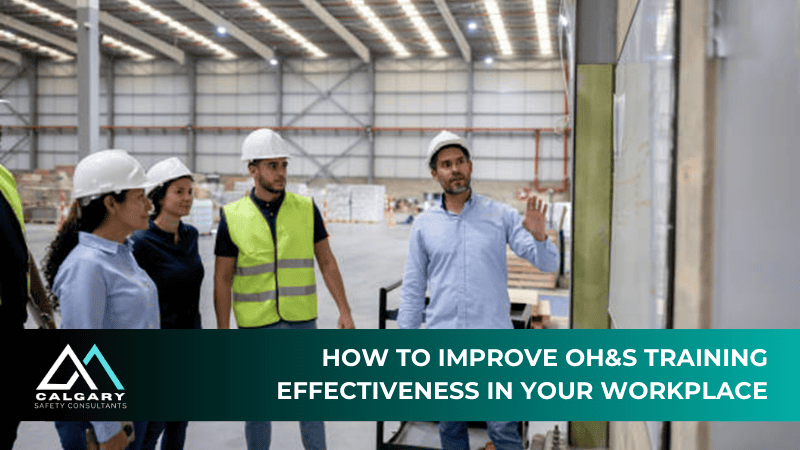
How to Improve OH&S Training Effectiveness in Your Workplace
(A No-Fluff Guide for Canadian Employers Who Want Real Results)
Most OH&S training suck. It’s not that people don’t care about safety (which they do). It’s that traditional training often feels like a box-ticking exercise: dull PowerPoints, irrelevant examples, or sessions that leave workers wondering, “What does this have to do with my job?”
If your team’s eyes glaze over during toolbox talks or they “forget” everything after that online module, you’ve got a training effectiveness problem. And you’re not alone. Across Canadian workplaces, well-meaning training falls flat. But here’s the kicker: ineffective safety training doesn’t just waste time—it puts people at risk and opens your company up to serious liability.
So how do you fix it? How do you actually make safety training work?
This guide walks you through practical, tested ways to improve OH&S training effectiveness in any Canadian workplace. Whether you’re in construction, manufacturing, oil and gas, or an office setting—these tips apply. And if you need backup, Calgary Safety Consultants is here to help make it stick.
Why OH&S training Fails (and What to Do About It)
Before we talk solutions, let’s quickly pinpoint what’s going wrong:
- One-size-fits-all content: Generic training doesn’t connect with your team’s actual work.
- Overuse of passive learning: Endless slides and lectures = minimal retention.
- No follow-up: Training ends, and so does the conversation.
- Compliance-first mindset: You’re focused on checking regulatory boxes, not changing behaviour.
Now let’s turn that around.
How to Get it Right
1. Start with a Hazard-Focused Training Needs Assessment
Good training starts with understanding what your workers actually need to know—not just what’s on a regulatory checklist.
A Training Needs Assessment (TNA) should:
- Be tied directly to your formal and site-specific hazard assessments
- Identify skill gaps and high-risk activities
- Account for worker experience levels and roles
- Consider past incidents, near-misses, and inspections
In Canada, this type of alignment is not only smart—it’s part of your responsibility under provincial OH&S legislation. For example, Alberta’s OHS Code states that employers must ensure workers are “adequately trained in the safe operation of equipment and work practices” (Section 15).
Need help creating a meaningful TNA? We can develop customized training plans based on your operations. Calgary Safety Consultants specializes in building safety programs that match your hazards and meet legislative expectations.
2. Use Real-World Scenarios (Not Just Theory)
Let’s be real—workers don’t retain abstract safety talk. They remember stories, case studies, and incidents that hit close to home.
The best safety training uses:
- Job-specific examples (e.g., how your team handles confined spaces)
- Near-miss investigations from your own workplace
- Videos and images from your own job sites or facilities
By tying training to the real hazards your team faces, you boost engagement, memory, and accountability. Make it relatable, and it’ll stick.
3. Mix Your Methods: People Learn Differently
There’s no silver bullet training method. Some people learn by doing, others by seeing, and some by hearing. That’s why mixing delivery methods is so important:
- Hands-on demos – ideal for equipment, tools, or PPE use
- Short videos – great for visual learners and remote workers
- Interactive quizzes – boost retention and keep people engaged
- Scenario-based discussions – build critical thinking
And yes, online training can work—if it’s paired with real-life follow-up and practice. We offer blended learning packages that combine digital modules with instructor-led sessions and on-site evaluations, designed around your actual hazards.
4. Make Supervisors Accountable for Reinforcing Training
Here’s the truth: If supervisors don’t back up safety training, your message won’t last.
That means:
- Following up during toolbox talks
- Coaching workers during tasks
- Correcting unsafe behaviour early and often
Think of supervisors as your frontline safety trainers. They need to be equipped not just with safety knowledge, but with soft skills to lead and coach.
We offer supervisor-specific safety leadership training that teaches how to enforce safety expectations without alienating staff. Learn more here:
https://calgarysafetyconsultants.ca/
5. Create a Feedback Loop with Workers
Too often, OH&S training is a one-way street. That’s a mistake.
Workers are your best resource for understanding what’s working—and what’s not. After each session or module, ask:
- “Did this apply to your job?”
- “What would have made this better?”
- “Did we miss anything you face in the field?”
Build a feedback system into your training program. Use anonymous surveys, group discussions, or even short debriefs after toolboxes.
Then act on that feedback. Update your materials. Switch up the method. Add new content. Let the training evolve.
6. Follow Up with Refresher Training That Matters
Annual training is great for compliance, but high-risk tasks deserve more frequent refreshers.
For example:
- Respirator fit testing? Annual, per CSA Z94.4-18
https://www.csagroup.org/store/product/CAN-CSA-Z94.4-18/?srsltid=AfmBOorm_R53EFkYEbePkr1hBNPGUfQISTBPCw-i6cAnGWA2TVZ5DPf1 - Fall protection? Annually or whenever equipment or procedures change
- WHMIS? At least annually and whenever new chemicals are introduced
https://www.ccohs.ca/topics/hazards/chemical/whmis/
Refreshers don’t need to be full-day events. They can be:
- Short toolbox talks
- Field-level hazard assessments that double as “micro-training”
- Task observations followed by on-the-spot coaching
We offer flexible refresher training—online, onsite, or hybrid—that targets your most critical hazards.
7. Track It, Test It, Prove It
It’s not enough to hope your team learned something. You need to measure it. Not just with a quiz—but by tracking behaviour over time.
- Are near-misses going down?
- Are inspections showing better PPE compliance?
- Are safe work practices being followed without reminders?
You also need a way to prove due diligence. That means:
- Signed training records
- Documented evaluations or field observations
- Certificates for completed programs
- Updated worker training matrices
Our digital training management systems help you stay audit-ready and organized. Whether you’re prepping for a COR audit or facing an OHS inspection, we’ve got you covered.
How Calgary Safety Consultants Can Help
We don’t do cookie-cutter. We offer customized, boots-on-the-ground safety training built for real Canadian workplaces.
Here’s what we bring to the table:
- Tailored training for your hazards, job roles, and work sites
- Online and in-person options with blended delivery
- Supervisor coaching and leadership development
- WHMIS, PPE, Fall Protection, Confined Space, Respirator Fit Testing—and more
- Training matrix development and documentation tracking
- Compliance guidance for Alberta, BC, Saskatchewan, and federal OH&S rules
Whether you’re looking to revamp your program or build it from scratch, we’ll help you train smarter—not harder.
Reach out today at https://calgarysafetyconsultants.ca
Final Thought
You don’t need fancy tech or flashy slides to improve safety training. You just need training that makes sense to your workers. Make it relevant. Make it engaging. Make it stick.
And if you want help doing that—real help, not more binders—we’re here.
And if you need help getting there? We’ve got your back. Contact Calgary Safety Consultants for your complimentary consult to explore tailored OH&S solutions that drive real results.
Stay safe!
References
- CSA Group. Z94.4-18 – Selection, Use, and Care of Respirators. Retrieved from:
https://www.csagroup.org/store/product/CAN-CSA-Z94.4-18/?srsltid=AfmBOorm_R53EFkYEbePkr1hBNPGUfQISTBPCw-i6cAnGWA2TVZ5DPf1 - Canadian Centre for Occupational Health and Safety (CCOHS). WHMIS 2015. Retrieved from:
https://www.ccohs.ca/topics/hazards/chemical/whmis/ - WorkSafeBC. Training and Orientation Resources. Retrieved from:
https://www.worksafebc.com/en/health-safety/create-manage/training-orientation
Frequently Asked Questions on How to Improve OH&S Training Effectiveness in Your Workplace
Do you offer management OH&S training?
Yes, we provide comprehensive, tailored training programs that cover safety management, hazard identification, incident investigations, leadership for a safer workplace and beyond.
What platforms do you use for virtual OH&S training?
We use Microsoft Teams to deliver our online OH&S training sessions, ensuring a seamless and interactive experience for participants.
Why is OH&S training often ineffective in Canadian workplaces?
Many OH&S training programs rely on generic content, passive learning, and minimal follow-up. Without job-specific examples or reinforcement from supervisors, workers struggle to retain information.
What does effective OH&S training look like?
Effective training uses real-world scenarios, blends delivery methods (hands-on, online, visual), includes hazard-specific content, and involves continuous feedback and refreshers.
How often should safety training be refreshed?
WHMIS should be refreshed annually or when new chemicals are introduced. Respirator fit testing is required annually per CSA Z94.4. High-risk tasks may require more frequent or situational refreshers.