
Why Harassment & Violence Prevention Training Matters in Canada
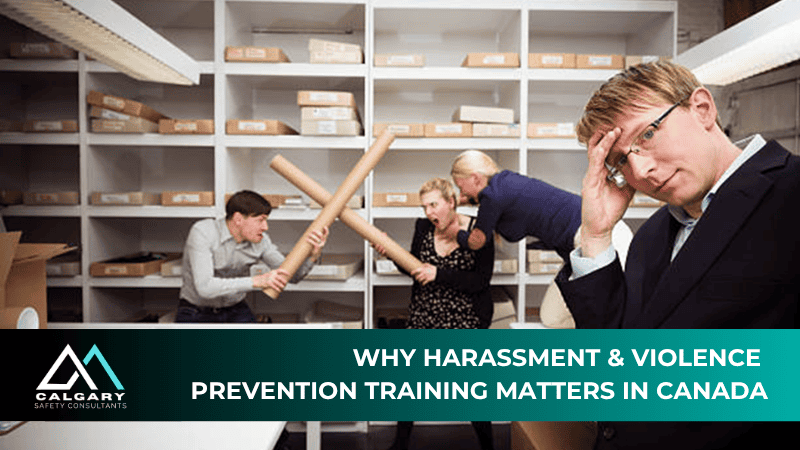
Let’s be real—workplace harassment and violence aren’t just HR issues. They’re real problems affecting real people, and they can destroy team morale, trigger legal nightmares, and damage your company’s reputation faster than you can say “policy binder.”
If you’re an employer in Canada, especially in provinces like Alberta, BC, or Ontario, the law already requires you to do more than hang a Code of Conduct in the breakroom. You’ve got to train your people. You’ve got to prevent incidents. And when something does happen? You need to know how to respond—and fast.
That’s why we built our Respectful Workplace: Harassment and Violence Prevention Online Training—for Canadian businesses who want to do better. Not just legally. But ethically, culturally, and practically.
Let’s unpack why this matters, what your responsibilities actually are, and how Calgary Safety Consultants can help.
Why It’s Not Just a “Big Company Problem”
A lot of smaller or mid-size companies think respectful workplace training is for large organizations with a big HR team and a full-time safety manager.
Wrong.
Anyone can experience harassment or violence at work—warehouse workers, office staff, nurses, contractors, supervisors, even owners. And the effects are massive:
- Increased turnover
- More sick days
- Legal exposure
- Toxic workplace culture
- Safety hazards tied to psychological stress
This stuff affects productivity, morale, and bottom lines. And yeah—it’s the law.
What the Law Actually Says in Canada
Harassment and violence in the workplace are regulated under provincial and federal OH&S legislation.
For example:
- Alberta employers must comply with Part 27 of the Occupational Health and Safety Code
https://www.alberta.ca/workplace-harassment-violence.aspx - Federal employers (banks, transportation, telecom, etc.) must meet Workplace Harassment and Violence Prevention Regulations under the Canada Labour Code
https://laws-lois.justice.gc.ca/eng/regulations/SOR-2020-130/
These rules aren’t vague. They require:
- Clear policies and reporting procedures
- Risk assessments and prevention plans
- Mandatory training for all workers
Yes—all of them. Frontline, managers, and execs.
The Reality on the Ground
Workplace harassment isn’t always physical. It can be subtle, quiet, or hard to see:
- Jokes that aren’t funny
- Inappropriate comments or gestures
- Passive-aggressive behavior
- Bullying masked as “management style”
- Power plays, exclusion, intimidation
- Repeated unwanted advances
And violence? It’s not just fists and threats. It can be verbal abuse, psychological harm, or intimidation—often involving customers, clients, or even the public.
If your team doesn’t know how to spot these red flags—or doesn’t feel safe reporting them—you’ve got a culture risk. That’s where respectful workplace training comes in.
What Online Training Should Covers
Respectful Workplace: Harassment and Violence Prevention is a practical, Canadian-tailored online course that helps your workers understand:
- What harassment and violence really look like in the workplace
- How to recognize early warning signs—especially in subtle or non-physical forms
- What their legal rights and responsibilities are
- How to respond if they’re a target or a witness
- What managers and employers must do to prevent and respond to incidents
- How to build and maintain a psychologically safe workplace
- The steps to follow in a complaint or investigation process
- Strategies to de-escalate and prevent future problems
Our is available 100% online and mobile-friendly, so your team can complete it when it works for them—no classroom booking required.
And yes—it’s updated to meet provincial and federal OH&S requirements.
The Calgary Safety Consultants Approach
At https://calgarysafetyconsultants.ca, we don’t just hand you a slide deck and walk away.
We offer:
- Customizable training options based on your industry and risk profile
- Workplace-specific policies and response templates
- Support with your violence and harassment prevention plan
- Ongoing access to digital training modules
- Consultation for investigations or escalations if something serious happens
We’ve worked with companies in construction, healthcare, transportation, education, retail—you name it. Our goal is to make respectful workplace training practical, relatable, and legally sound.
Why Training Is More Than Just Compliance
Let’s say it straight: training should not be about “checking the box.”
When you do this right, here’s what happens:
- Employees know their boundaries and their rights
- Supervisors stop brushing things off
- Workers feel safe speaking up early
- Your team works better, trusts each other more
- Issues get resolved quickly—before they explode
And if a formal complaint does come in? You’ve got documentation, proof of training, and a consistent process to fall back on.
You don’t want your first time thinking about harassment policies to be after someone’s hired a lawyer.
Who Should Take This Course?
Short answer: everyone.
But to break it down:
- All employees: Learn how to identify and prevent harassment and violence
- Supervisors and managers: Understand legal obligations and leadership responsibilities
- Business owners and HR reps: Build a foundation for compliance, culture, and crisis response
This course is especially important for:
- Businesses new to OH&S compliance
- Growing teams with changing workplace dynamics
- Companies with public-facing roles (retail, clinics, transport, etc.)
- Unionized workplaces with collective agreements to uphold
Don’t Take Our Word for It—Look at the Research
- CCOHS notes that workplace harassment and violence are underreported, and that creating a respectful workplace is key to worker mental health and safety:
https://www.ccohs.ca/oshanswers/psychosocial/violence/violence.html - A 2023 Angus Reid survey found that nearly half of Canadians have experienced bullying or harassment at work—most commonly verbal abuse or psychological pressure.
https://angusreid.org/story-10-the-metoo-movement/ - According to the Mental Health Commission of Canada, psychologically safe workplaces lead to better mental health outcomes, fewer conflicts, and improved team performance:
https://mentalhealthcommission.ca/resource/national-standard/
Respectful workplaces don’t just prevent harm—they perform better.
Need Help Getting Started?
Training doesn’t have to be overwhelming. Calgary Safety Consultants can guide you through every step—from policy setup to training rollouts to response plans.
Visit us at:
https://calgarysafetyconsultants.ca/Full-Training-Offerings
We also listed it here:
https://learnformula.com/course/respectful-workplace-harassment-and-violence-prevention
We’re based in Calgary, but we serve clients across the world.
Final Thoughts
Harassment and violence prevention isn’t about policing language or micromanaging people. It’s about creating a space where people feel respected, heard, and safe. Every business—no matter how big or small—can benefit from that.
Let’s stop reacting and start preventing. Let’s stop checking boxes and start building real respect. Your team deserves better. Your workplace can be better.
If you’re ready to for training, Calgary Safety Consultants is here to guide you! Contact Calgary Safety Consultants for your complimentary consult to explore tailored OH&S solutions that drive real results.
Frequently Asked Questions
Why is vendor and contractor safety compliance important?
Is harassment and violence prevention training required by law in Canada?
What kinds of behaviours are considered harassment or violence?
It includes physical threats, verbal abuse, bullying, intimidation, inappropriate jokes or gestures, and repeated unwanted attention. Psychological harm counts too.
How often should harassment and violence prevention training be completed?
Many jurisdictions recommend or require training to be refreshed every 2–3 years, or more frequently if there are changes in roles, policies, or incidents.