On this page
Why Heat Is a Real Hazard on Western Canadian Worksites
It’s easy to think of heat stress as a southern problem, but summers across the Prairies and BC regularly bring stretches of hot, humid days, and the 2021 heat dome showed how quickly conditions can turn dangerous.
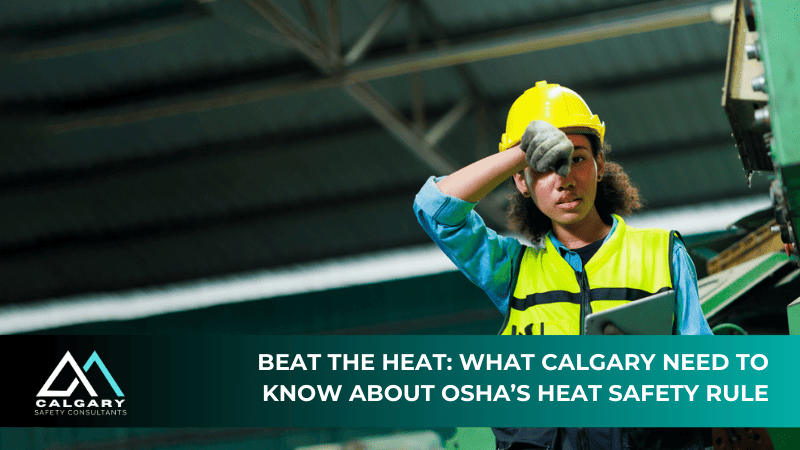
Heat stress happens when the body can’t shed heat fast enough. Early signs include heavy sweating, cramps, headache, dizziness and fatigue. Left untreated, it can progress to heat exhaustion and then heat stroke, which is a medical emergency.
The risk isn’t only about the thermometer. Humidity, direct sun, radiant heat from equipment or roofing, heavy physical work, and protective clothing all add to the load.
That’s why a roofer in full fall protection, a cook beside a commercial range and a labourer in coveralls can be at risk on a day that feels only warm to everyone else.
Alberta: Your Hazard Assessment Drives Your Heat Controls
Alberta has no heat-specific regulation. Instead, heat falls under the employer’s general duty in the Occupational Health and Safety Act and the hazard assessment requirements in Part 2 of the OHS Code.
You must identify heat as a hazard where workers may be exposed to it, eliminate or control it, and repeat the assessment when conditions change, such as during a heat warning.
The Government of Alberta’s guidance on working in extreme temperatures lists the controls it expects to see:
- A work-rest schedule, with heavier jobs moved to cooler parts of the day
- Shade or a cooling station where workers can rest
- Plenty of cool drinking water (the guidance suggests about one cup every 15 minutes)
- Time to acclimatize, which can take four to seven working days
- Training so workers recognize heat hazards and the signs of heat stress
British Columbia: Specific Heat Stress Rules
BC’s Occupational Health and Safety Regulation covers heat exposure in Part 7, sections 7.27 to 7.32. Where workers may be exposed to heat stress conditions, the employer must:
- Keep exposure below the ACGIH heat stress screening criteria, the widely used exposure guidelines that account for temperature, humidity, workload and clothing (section 7.28)
- Carry out a heat stress assessment and develop and implement a heat stress exposure control plan (section 7.29)
- Use engineering controls first, and where they aren’t practicable, use administrative controls such as a work-rest cycle, or personal protective equipment that’s at least as effective (section 7.30)
- Provide and maintain an adequate supply of cool drinking water close to the work area (section 7.31)
- Remove any worker showing signs or symptoms of heat stress from the hot environment and have them treated by a first aid attendant or physician (section 7.32)
WorkSafeBC published new and revised heat exposure guidelines on March 12, 2026, covering exposure limits, unacclimatized workers, assessments, exposure control plans, controls and water. If your BC heat plan predates them, it’s worth a review.
Saskatchewan: Thermal Conditions and Heat Stress Protection
Section 6-7 of The Occupational Health and Safety Regulations, 2020 requires employers to keep indoor thermal conditions reasonable and appropriate for the work.
Where indoor conditions can’t reasonably be controlled, or where work is done outdoors, the employer must take effective measures to protect workers from heat stress disorders. If workers have concerns about their thermal conditions, the employer must provide suitable monitoring equipment.
WorkSafe Saskatchewan’s technical guide, Working Under Hot Conditions, sets out work-rest tables based on the ACGIH guidelines and recommends water, training for workers and supervisors, and first aid providers who can recognize and treat heat illness.
Heat Stress at Work: A Practical Plan for All Three Provinces
Whatever province you work in, these eight steps provide a practical starting point for controlling heat stress:
- Assess the hazard. Identify the tasks, locations and people at risk, and record how you’ll measure conditions, such as the humidex or a WBGT meter.
- Engineer it out where you can. Use shade structures, ventilation, fans, cooling equipment and shielding from hot surfaces.
- Plan the work. Schedule heavy tasks for cooler hours, rotate crews and set work-rest cycles that tighten as conditions worsen.
- Provide water and cooling. Keep cool drinking water close to the work and give workers a shaded or cooled place to rest.
- Acclimatize workers. Ease new and returning workers into hot work over the first several shifts.
- Train everyone. Make sure workers and supervisors can spot the signs of heat illness and know they can stop work and speak up.
- Prepare to respond. Have first aid ready, know how to cool a worker quickly, and call 911 for suspected heat stroke.
- Monitor and review. Watch Environment and Climate Change Canada heat warnings and revisit your assessment when conditions change.
What About the US OSHA Heat Rule?
OSHA proposed a federal heat injury and illness prevention standard in August 2024. As of spring 2026, it had not been finalized and had no target date. In any case, US rules don’t apply to employers in Alberta, BC or Saskatchewan.
They’re a useful reference, but your provincial legislation is what an officer or auditor will hold you to.
Why It Matters for Your Business
Heat illness slows crews down, increases mistakes and leads to lost-time claims. An officer who finds no heat hazard assessment can issue an order, and a COR or SECOR auditor will look for heat in your hazard assessments and training records.
A short, practical heat plan protects your people and your productivity, and it’s much easier to put in place before the first heat warning than during one.
How we help
How Calgary Safety Consultants Can Help
We help employers across Alberta, BC and Saskatchewan assess heat hazards, build heat stress exposure control plans, write safe work procedures and train supervisors to manage hot-weather work. Book a free 30-minute consultation to talk through your crews and sites.
Jurisdiction note: This article provides general occupational health and safety information. The legal requirements that apply depend on the workplace location, industry and federal, provincial or territorial jurisdiction. Verify current requirements with the applicable regulator before using the information operationally.
Government of Canada overview of occupational health and safety jurisdiction.
References
- Government of Alberta. Occupational Health and Safety Code, Part 2: Hazard Assessment, Elimination and Control. https://search-ohs-laws.alberta.ca/legislation/occupational-health-and-safety-code/part-2-hazard-assessment-elimination-and-control/
- Government of Alberta. Working in extreme temperatures. https://www.alberta.ca/working-extreme-temperatures
- WorkSafeBC. OHS Regulation, Part 7, Division 4: Heat Exposure. https://www.worksafebc.com/en/law-policy/occupational-health-safety/searchable-ohs-regulation/ohs-regulation/part-07-noise-vibration-radiation-and-temperature
- WorkSafeBC. OHS Guidelines: Heat exposure (March 12, 2026). https://www.worksafebc.com/law-policy/occupational-health-safety/searchable-ohs-regulation/updates-decisions/2026/March/guidelines_260312
- WorkSafe Saskatchewan. Working Under Hot Conditions technical guide. https://www.worksafesask.ca/wp-content/uploads/2024/12/Working-under-hot-conditions-technical-guide-WorkSafe-Saskatchewan.pdf
- Occupational Safety and Health Administration (OSHA). Heat Injury and Illness Prevention in Outdoor and Indoor Work Settings: Rulemaking. https://www.osha.gov/heat-exposure/rulemaking

About the author
John Duplessis, B.Sc., CRSP
John Duplessis is a Canadian Registered Safety Professional with more than 30 years of occupational health and safety experience in oil and gas, construction, green energy, midstream operations, and industrial project work.