WHMIS training in Canada
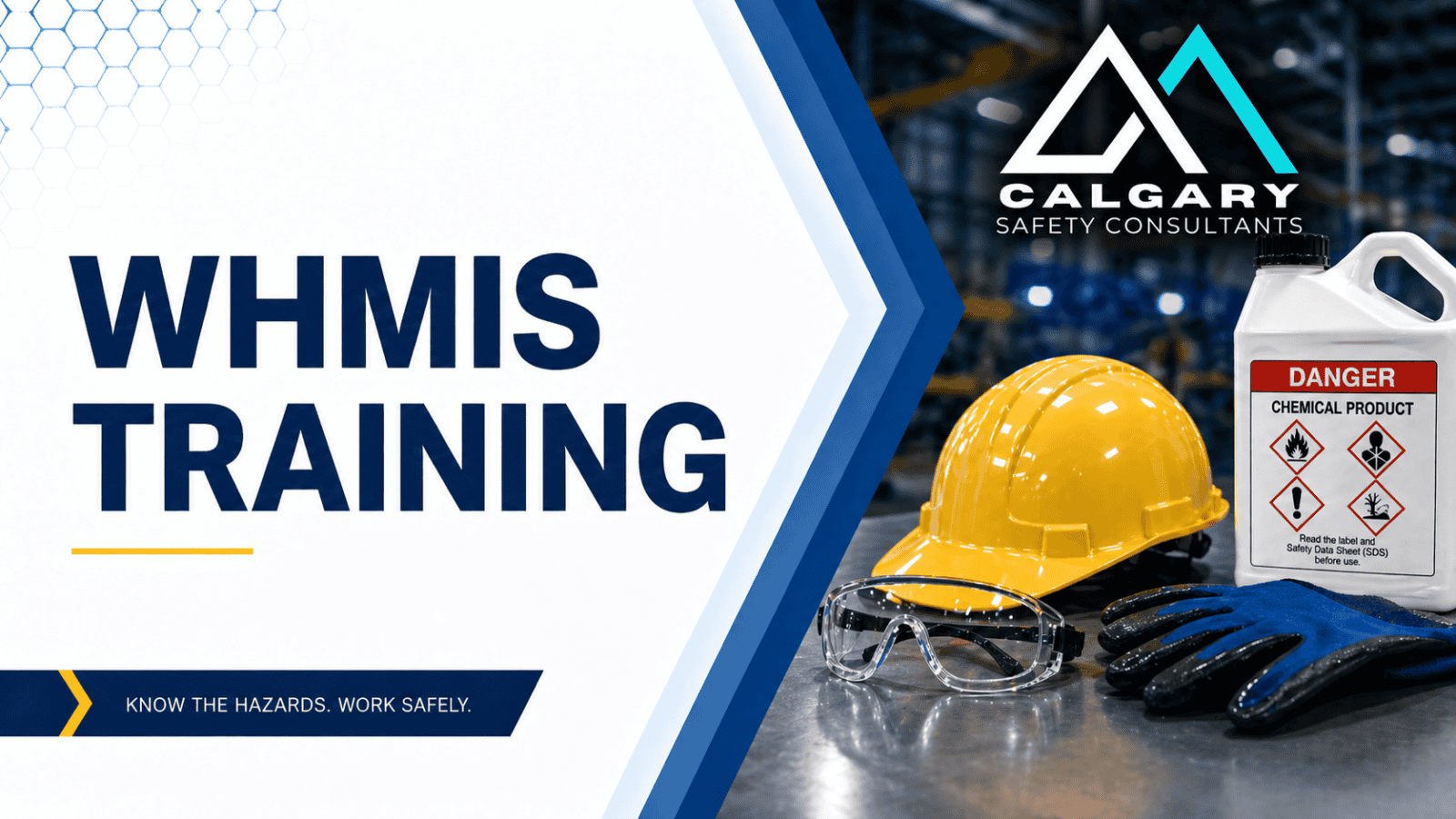
If your employees work with, handle, use, store, or may be exposed to hazardous products in the workplace, they need to understand their responsibilities under Canada’s Workplace Hazardous Materials Information System (WHMIS) requirements.
Calgary Safety Consultants provides practical WHMIS Training for Canadian workers and employers, with flexible delivery options including Online WHMIS Training, Virtual Instructor-Led WHMIS Training, and Classroom WHMIS Training.
Our WHMIS training helps workers understand workplace hazardous products, WHMIS labels and pictograms, Safety Data Sheets (SDSs), hazard information, safe handling practices, required controls, personal protective equipment, and what to do in the event of an exposure or emergency.
Whether you need to train one employee or an entire workforce, we can help you choose a training format that works for your operations, your employees, and your schedule.
Calgary Safety Consultants provides WHMIS Training for individuals and organizations across Canada whose workers use, handle, store, or may be exposed to hazardous products. Our WHMIS training is available through self-paced online learning, live virtual instructor-led sessions, and in-person classroom training. Whether you need WHMIS training for one new employee or your entire workforce, training can be selected based on your employees’ responsibilities, workplace hazards, location, schedule, and operational requirements.
WHMIS Training and Certification Across Alberta, British Columbia and Saskatchewan
WHMIS Training and Certification in Alberta
Calgary Safety Consultants provides WHMIS Training in Alberta for workers, supervisors, contractors, and employers throughout the province. Online delivery makes the course accessible to organizations with employees working from a single location, multiple branches, construction projects, industrial facilities, remote worksites, or rotating schedules.
Alberta employers have responsibilities under provincial occupational health and safety requirements when workers work with or near hazardous products. Alberta’s OHS Code requires affected workers to receive training on supplier and work site labels, Safety Data Sheets, safe storage, use and handling procedures, fugitive emissions where applicable, and emergency procedures involving hazardous products.
Our online WHMIS training for Alberta workers provides the general education needed to understand the WHMIS system, including hazard classes, pictograms, labels, Safety Data Sheets, exposure hazards, safe handling principles, PPE, and emergency response.
Online training doesn’t eliminate the employer’s responsibility to provide workplace-specific instruction. Employers should connect general WHMIS education to the actual hazardous products workers use or may encounter, including:
-
Hazardous products present at the workplace.
-
Locations and methods for accessing Safety Data Sheets.
-
Workplace and supplier labelling practices.
-
Required PPE and exposure controls.
-
Safe handling, storage, transfer, and disposal procedures.
-
Spill, leak, fire, release, and exposure response procedures.
-
Workplace-specific safe work practices and emergency requirements.
WHMIS Training in Alberta is available for employers throughout Calgary, Edmonton, Red Deer, Fort McMurray, Grande Prairie, Lethbridge, Medicine Hat, Canmore, and surrounding rural and remote Alberta communities. Online delivery is particularly useful for employers that need consistent training across several locations without coordinating workers around a classroom schedule.
WHMIS should also form part of the employer’s broader health and safety system. Training records, SDS accessibility, hazardous product inventories, workplace inspections, hazard assessments, emergency planning, and supervisor oversight all contribute to effective hazard communication and employer due diligence.
For additional assistance with safety programs, COR and SECOR preparation, hazard assessments, training, audits, regulatory compliance, and ongoing OH&S support, visit our Alberta Safety Consultants page.
WHMIS Training and Certification in British Columbia
Calgary Safety Consultants provides WHMIS Training in British Columbia for workers, supervisors, contractors, and employers across the province. Our online WHMIS training gives BC organizations a flexible way to provide consistent general WHMIS education to employees working at one workplace, several locations, project sites, service routes, or remote operations.
In British Columbia, WHMIS requirements are administered within the WorkSafeBC occupational health and safety framework. WorkSafeBC requires employers to provide general WHMIS education and specific worker training where workers work with hazardous products or may be exposed to them during their work. The training must address labels, Safety Data Sheets, safe use, storage, handling and disposal, and applicable emergency procedures. WorkSafeBC specifically requires workplace-specific instruction covering the safe work and emergency response procedures used at the workplace.
Our online WHMIS training for BC workers provides a practical foundation covering hazard recognition, WHMIS pictograms, physical and health hazards, supplier and workplace labels, Safety Data Sheets, exposure routes, controls, PPE, safe handling, storage, and emergency response.
Employers must then connect that knowledge to their particular operation. Workplace-specific WHMIS training should explain:
-
Which hazardous products workers use or may encounter.
-
Where Safety Data Sheets are located and how workers can access them.
-
Required PPE, ventilation, engineering controls, and work practices.
-
Product-specific storage and compatibility requirements.
-
Workplace labelling and chemical transfer procedures.
-
Spill, leak, exposure, fire, and emergency response procedures.
-
Any worksite-specific precautions associated with the products and processes being used.
This distinction is particularly important because WorkSafeBC treats WHMIS as an active workplace program rather than simply a certificate. The BC OHS Regulation requires the WHMIS program to be reviewed at least annually, or more frequently when work conditions or available hazard information change, and includes periodic evaluation of worker knowledge.
Calgary Safety Consultants provides WHMIS training across Vancouver and the Lower Mainland, Kelowna, Kamloops, Cranbrook, Golden, Revelstoke, and communities throughout British Columbia. Online delivery also allows employers to train workers in smaller or remote communities without waiting for an instructor-led session.
For broader assistance with WorkSafeBC compliance, safety program development, hazard assessments, training, inspections, incident investigations, and ongoing occupational health and safety support, visit our British Columbia Safety Consultants page.
WHMIS Training and Certification in Saskatchewan
Calgary Safety Consultants provides WHMIS Training in Saskatchewan for workers, supervisors, contractors, and employers throughout the province. Online training provides a practical option for organizations that need consistent WHMIS education across offices, construction projects, agricultural operations, industrial facilities, transportation operations, municipal workplaces, mines, oil and gas operations, manufacturing facilities, or multiple locations.
The Government of Saskatchewan identifies WHMIS as a workplace hazard communication system involving product labels, Safety Data Sheets, and worker education and training. Where a WHMIS-controlled hazardous product is used in a Saskatchewan workplace, the employer is responsible for ensuring appropriate labels are provided, Safety Data Sheets are readily available, and workers receive both general and site-specific WHMIS training.
Our online WHMIS training for Saskatchewan workers provides the general foundation workers need to understand hazardous product information and use it when making workplace decisions. Training addresses WHMIS responsibilities, pictograms, hazard classes, physical and health hazards, labels, Safety Data Sheets, exposure routes, safe handling, storage, PPE, and emergency response.
The employer must then connect that general education to the workplace. Saskatchewan specifically identifies the need for site-specific training based on the chemicals actually used in the workplace. This should include:
-
Hazardous products present at the workplace.
-
Product-specific Safety Data Sheets.
-
Workplace and supplier labels.
-
Required controls and personal protective equipment.
-
Storage and chemical compatibility requirements.
-
Safe handling, transfer, and disposal procedures.
-
Procedures for spills, releases, fires, and worker exposures.
-
Workplace-specific emergency and reporting requirements.
WHMIS Training in Saskatchewan is available for employers throughout Regina, Saskatoon, Moose Jaw, Swift Current, and surrounding Saskatchewan communities. Because the course is delivered online, organizations can also provide the same general WHMIS education to workers at rural and remote locations without coordinating travel or removing an entire workforce from operations at the same time.
Employers looking for current regulatory information can review the Government of Saskatchewan – Workplace Hazardous Materials Information System (WHMIS) page.
For broader assistance with occupational health and safety programs, training, hazard assessments, compliance, inspections, incident investigations, and safety program development, visit our Saskatchewan Safety Consultants page.
WHMIS Training and Certification Delivery Options
Online WHMIS Training and Certification
Online WHMIS training is the recommended option for most workers and employers. It allows workers to complete training at their own pace, reduces scheduling disruption, supports consistent course delivery, and gives employers documentation for training records, onboarding, audits, inspections, and contractor requirements.
Start Online WHMIS Office Training
Virtual Instructor-Led WHMIS Training and Certification
Virtual WHMIS training is available for teams that want live instruction, group discussion, and the opportunity to ask employer-specific questions. This option is useful for supervisors, safety coordinators, or teams working with more complex hazardous product procedures. Fill out the contact form below.
Request Virtual WHMIS Training
Classroom WHMIS Training and Certification
Classroom WHMIS training is available for workplaces that prefer in-person instruction or need support applying WHMIS requirements to specific products, procedures, SDS access systems, storage areas, PPE requirements, or emergency response expectations. Fill out the contact form below.
Who Needs WHMIS Training and Certification?
WHMIS training is needed when workers use, handle, store, or may be exposed to hazardous products at work. This includes workers, supervisors, contractors, and employers in workplaces where hazardous products are used during normal operations, maintenance, cleaning, storage, emergency response, or cleanup activities.
This may include construction, manufacturing, oil and gas, transportation, warehousing, laboratories, maintenance, healthcare, cleaning services, office environments, agriculture, municipal operations, and other workplaces where workers may encounter hazardous products.
WHMIS training is especially important for:
- New worker onboarding.
- Workers who use or may be exposed to hazardous products.
- Supervisors responsible for workers who handle hazardous products.
- Employers maintaining training records for audits, inspections, contractor prequalification, or COR-related safety program requirements.
- Workplaces introducing new hazardous products, new procedures, or updated SDS information.
Frequently Asked Questions about WHMIS Training or Certification
What is WHMIS training and who needs it?
WHMIS (Workplace Hazardous Materials Information System) training is required for workers who are exposed to or may come into contact with hazardous products in the workplace. This includes employees in industries such as construction, manufacturing, healthcare, and transportation.
Is WHMIS training mandatory in Alberta, BC, and Saskatchewan?
Yes. Employers are required under occupational health and safety legislation to ensure workers are trained and competent in WHMIS if they work with or around hazardous products.
How long does it take to complete WHMIS training?
Most online WHMIS courses can be completed in approximately 1–2 hours, depending on the learner. The course is self-paced, allowing workers to complete it quickly and efficiently.
Is WHMIS training legally required in Canada?
Yes. Canadian workplaces that use, handle, store, or may expose workers to hazardous products must provide WHMIS education and workplace-specific training. Online WHMIS training can support the general education portion, while employers must ensure workers also understand the hazardous products, SDSs, labels, controls, and procedures used at their specific workplace.
How often should WHMIS training be refreshed?
WHMIS education and training should be reviewed at least annually and updated when workplace conditions, hazardous products, SDSs, labels, procedures, roles, or hazard information change. Employers should also confirm any refresher or evaluation requirements that apply in their province or territory.
Is your WHMIS training aligned with current Canadian WHMIS requirements?
Yes. Calgary Safety Consultants provides WHMIS online training aligned with current Canadian WHMIS requirements, including amended Hazardous Products Regulations requirements where applicable. Employers are still responsible for providing workplace-specific WHMIS training based on the hazardous products, SDSs, labels, procedures, controls, and emergency-response requirements used in their workplace.
Is your WHMIS training aligned with current Canadian WHMIS requirements?
Yes. Calgary Safety Consultants provides WHMIS online training aligned with current Canadian WHMIS requirements, including amended Hazardous Products Regulations requirements where applicable. Employers are still responsible for providing workplace-specific WHMIS training based on the hazardous products, SDSs, labels, procedures, controls, and emergency-response requirements used in their workplace.
Does online WHMIS training replace workplace-specific training?
No. Online WHMIS training helps workers understand the WHMIS system, labels, SDSs, pictograms, hazard classes, and general responsibilities. Employers must also provide workplace-specific training so workers understand the hazardous products, safe work procedures, storage requirements, controls, spill response, emergency procedures, and SDS access processes used at their own worksite.
Which WHMIS page should I use if my company has workers in more than one province?
If your company operates in more than one province, start with this main WHMIS training page, then review the provincial WHMIS pages for Alberta, British Columbia, and Saskatchewan. Online WHMIS training provides the general foundation, while employers should confirm site-specific training, hazardous product information, SDS access, PPE, emergency procedures, and local workplace requirements for each worksite.
Is online WHMIS training the best option for most employers?
For most employers, yes. Online WHMIS training is usually the fastest and most practical option because it is self-paced, consistent, easy to assign, and easier to document. Virtual and classroom WHMIS training are useful when teams need live instruction, group discussion, or help applying WHMIS requirements to workplace-specific hazardous products and procedures.
Should I choose online, virtual, or classroom WHMIS training?
Online WHMIS training is the best option for most workers and employers because it is self-paced, consistent, cost-effective, and easy to document. Virtual WHMIS training is useful when a team wants live instruction or group discussion. Classroom WHMIS training is best when a workplace needs in-person support applying WHMIS requirements to specific hazardous products, procedures, PPE, SDS access systems, storage areas, or emergency-response expectations.