Workplace Safety Blog & OH&S Articles

Summary Content

Calgary Safety Consultants publishes practical workplace safety articles for employers, supervisors, managers, safety representatives, and business owners who need clear guidance on occupational health and safety requirements.

Our articles cover OH&S compliance, COR and SECOR readiness, safety manuals, hazard assessments, workplace inspections, incident reporting, WHMIS, TDG, safety training, emergency response planning, leadership, and safety culture.

The goal is simple: help employers understand what is required, what commonly goes wrong, and what practical steps can reduce risk before an incident, audit failure, claim, or regulatory issue creates a larger problem.

If your safety program is outdated, your documentation is incomplete, or your team needs help turning safety requirements into usable workplace practices, Calgary Safety Consultants can help.

Also, we write on a large number of topics, so feel free to use the search functions above to find the information you need. 
How to Use COR Audit Services to Strengthen Safety Compliance

How to Use COR Audit Services to Strengthen Safety Compliance

If you are trying to improve your safety program, reduce risk, and meet regulatory expectations, COR audit services are one of the most effective tools available in Canada. These services help you evaluate your current safety system, identify gaps, and align your program with Certificate o
April 2, 2026
How do you conduct a workplace violence and harassment risk assessment?

How do you conduct a workplace violence and harassment risk assessment?

Workplace violence and harassment are often misunderstood risks. Many organizations assume that because they are not in a traditionally high-risk sector like healthcare, corrections, or retail, the likelihood of violence is low. However, experience across Canadian workplaces shows that vio
March 30, 2026
What if your safety culture depends on one strong leader?

What if your safety culture depends on one strong leader?

In many workplaces, the problem is not a lack of hazard awareness. Workers often know exactly what the risks are. They understand the dangers of working at heights, bypassing machine guards, driving equipment too fast, or skipping personal protective equipment. However, even with that know
March 26, 2026
What if workers know the hazards but still accept the risk?

What if workers know the hazards but still accept the risk?

Many workplaces have one person who seems to carry the safety program on their shoulders. It might be a passionate supervisor, a knowledgeable safety manager, or an owner who genuinely cares about their workers. When that person is present, safety meetings happen, hazards are addressed, an
March 23, 2026
What if contractors follow different safety standards than you?

What if contractors follow different safety standards than you?

Contractors are part of modern business. Whether you run a construction company, operate an industrial facility, or manage a commercial property, contractors are regularly brought in to complete specialized work. Electrical contractors, equipment installers, maintenance crews, consultants,
March 19, 2026
What if your hazard assessments ignore psychosocial risk factors?

What if your hazard assessments ignore psychosocial risk factors?

Hazard assessments are supposed to identify what can hurt people before it actually does. In most workplaces, we are fairly good at spotting physical hazards. We look for pinch points, fall exposures, confined spaces, energized systems, hazardous chemicals, and mobile equipment. We build c
March 16, 2026
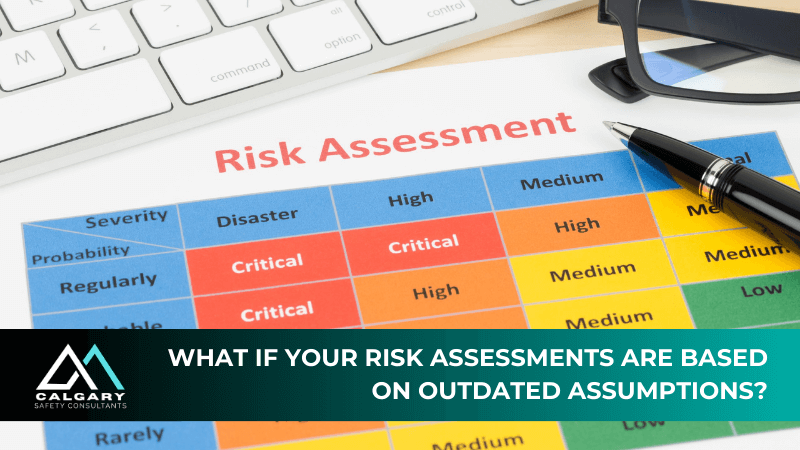
What if your risk assessments are based on outdated assumptions?

What if your risk assessments are based on outdated assumptions?

Risk assessments are supposed to reflect real work, real hazards, and real conditions. However, in many organizations, they quietly become historical documents rather than living tools. Tasks evolve, equipment changes, staffing shifts, and production pressures increase, yet the risk assess
March 12, 2026
What if near misses are warning signs you are overlooking?

What if near misses are warning signs you are overlooking?

Most serious incidents do not begin with a catastrophic failure. They begin quietly, often as near misses that appear minor, routine, or not worth reporting. A tool slips but no one is hurt. A vehicle brakes suddenly but avoids collision. A chemical container leaks slightly but is caught i
March 9, 2026
What if leaders reward output more than safe performance?

What if leaders reward output more than safe performance?

The moment leaders begin rewarding output more than safe performance, a quiet shift starts to occur inside the workplace. At first, nothing seems wrong. Production numbers look strong, deadlines are met, and the organization appears efficient. However, beneath the surface, a different syst
March 5, 2026
What if production pressure is quietly driving unsafe decisions?

What if production pressure is quietly driving unsafe decisions?

The moment production pressure begins to outweigh safety thinking, risk starts growing in the background, often unnoticed and rarely documented. On paper, procedures still exist, safety meetings still occur, and policies still look strong. However, in the field, subtle compromises begin to
March 2, 2026
What if your safety rules conflict with how the job is actually done?

What if your safety rules conflict with how the job is actually done?

The moment safety rules stop matching reality, risk begins to grow quietly. On paper, everything may still look compliant, procedures may still exist, and training records may still be complete. However, in the field, workers start adapting, modifying, and bypassing because the job still h
February 26, 2026
What if Your Safest Worker Is the One Silently Burning Out?

What if Your Safest Worker Is the One Silently Burning Out?

The worker everyone trusts is often the one nobody checks on. They follow procedures, they do not complain, they do not cut corners, and they rarely get injured. On paper, they are your safest person. However, safety is not only about visible risk, because hidden strain can slowly erode ju
February 23, 2026
What if your new worker thinks they're doing it right, but without guidance?

What if your new worker thinks they're doing it right, but without guidance?

The most dangerous words in a workplace are not “that looks unsafe.” The most dangerous words are “I thought that’s how you do it.” If you have ever watched a new worker confidently do something a little sideways, you already know what I mean. They are not trying to be difficult,
February 19, 2026
What if a small change in the work today created a major new hazard?

What if a small change in the work today created a major new hazard?

You have seen this movie at work even if nobody calls it what it is. A “simple” tweak gets made because production is behind, the right tool is missing, a contractor shows up late, the weather turns, a supervisor tries to help, or someone has a clever shortcut that saves ten minutes. N
February 16, 2026
What If Your Workers Stopped Speaking Up Because They Feel Unsafe Doing So?

What If Your Workers Stopped Speaking Up Because They Feel Unsafe Doing So?

Picture this for a second. A worker notices a shortcut that is quietly becoming “the way we do it,” and they can see exactly how it could end in a serious injury. They hesitate, they look around, they decide it is not worth being labeled difficult, and they say nothing. That moment is
February 12, 2026
What if you're investigating your incidents but they keep reoccurring?

What if you're investigating your incidents but they keep reoccurring?

You did the investigation. You filled out the form. You held the meeting. And then the same type of incident happened again, which means you did not actually “solve” it, you documented it. Recurring incidents are not usually a mystery. They are a signal that the organization is treatin
February 9, 2026
What if workers lose hearing despite a compliant hearing program?

What if workers lose hearing despite a compliant hearing program?

A lot of workplaces have the “checkbox” version of hearing conservation: there is a policy, there are earplugs at the door, there is annual training, there are audiograms on file, and everyone can point to a binder if an auditor shows up. Then the audiometric results keep drifting, the
February 5, 2026
What if your hazard assessment looks complete, but misses a critical risk?

What if your hazard assessment looks complete, but misses a critical risk?

You have probably seen it, and if you are honest you have probably built it at least once: a hazard assessment that looks polished, covers every department, and checks every box, yet the one risk that could actually kill someone is either missing, minimized, or buried under “general prec
February 2, 2026
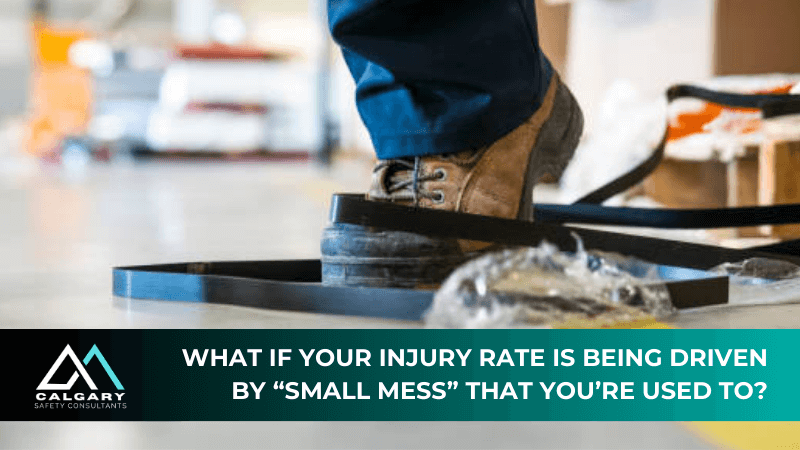
What if your injury rate is being driven by “small mess” that you’re used to?

What if your injury rate is being driven by “small mess” that you’re used to?

The dangerous part about housekeeping isn’t the big mess. It’s the steady, low-level clutter and poor storage that becomes normal. A scrap of strapping on the floor. A pallet parked “just for a minute” in a walkway. A box cutter left on a bench. An extension cord that turns into a
January 29, 2026
What if your biggest safety risk isn’t on the jobsite—it’s between jobsites?

What if your biggest safety risk isn’t on the jobsite—it’s between jobsites?

Most companies put their safety energy where the work happens. Tool time. Site conditions. PPE. Permits. That all matters. But here’s the uncomfortable truth: for a lot of teams, the highest-frequency, highest-severity exposure isn’t a saw, a ladder, or a chemical. It’s the drive to
January 26, 2026
What if your first aider is trained, but your first aid response still fails?

What if your first aider is trained, but your first aid response still fails?

We all know the feeling of relief that comes with “We’ve got a first aider on shift.” It sounds like a control. It feels like due diligence. It checks the box. But here’s the uncomfortable truth: a trained first aider does not guarantee a working first aid response. The response ca
January 22, 2026
What if an injury happens because a hand was in the wrong place?

What if an injury happens because a hand was in the wrong place?

You can do everything “right” for a whole shift, and still get hurt in the one moment that matters. That’s what makes pinch points and line-of-fire injuries so frustrating. The incident isn’t usually a mystery. It’s a predictable chain: hands close to the action, force applied, s
January 19, 2026
What if your inspections only identify hazards but never eliminate them?

What if your inspections only identify hazards but never eliminate them?

That’s more common than most organizations want to admit. The inspection happens. The checklist gets completed. A few photos get taken. Maybe the safety committee reviews the findings. Then the report lands in a folder, the shift moves on, and the same hazards show up again next month li
January 15, 2026
What if one exhausted worker is your highest-risk hazard today?

What if one exhausted worker is your highest-risk hazard today?

Most leaders picture “hazards” as equipment, traffic, chemicals, heights, or electricity. Fatigue is different. It’s a risk multiplier that quietly makes normal work more dangerous without changing the task, tools, or site conditions. Fatigue destroys decision-making and hazard perce
January 12, 2026

Calgary Safety Consultants (CSC) specializes in providing expert Occupational Health & Safety (OH&S) solutions, including COR audits, safety consulting, and risk management. With over 30 years of experience, we serve high-risk industries like oil & gas, construction, and manufacturing in Calgary and beyond. Our tailored, proven approach helps businesses enhance safety, reduce risks, and achieve compliance. Let us support your team’s journey toward a safer workplace. 

Book a Free OH&S Consultation

Need help with a safety manual, COR audit preparation, OHS order, hazard assessment, training, or ongoing safety support? Complete the form below or book a 30-minute consultation. We will review your situation, identify the next practical step, and explain how Calgary Safety Consultants can help.

Prefer to book directly?

Request your 30-minute consultation today by completing the calendar appointment below.