Workplace Safety Blog & OH&S Articles

Summary Content

Calgary Safety Consultants publishes practical workplace safety articles for employers, supervisors, managers, safety representatives, and business owners who need clear guidance on occupational health and safety requirements.

Our articles cover OH&S compliance, COR and SECOR readiness, safety manuals, hazard assessments, workplace inspections, incident reporting, WHMIS, TDG, safety training, emergency response planning, leadership, and safety culture.

The goal is simple: help employers understand what is required, what commonly goes wrong, and what practical steps can reduce risk before an incident, audit failure, claim, or regulatory issue creates a larger problem.

If your safety program is outdated, your documentation is incomplete, or your team needs help turning safety requirements into usable workplace practices, Calgary Safety Consultants can help.

Also, we write on a large number of topics, so feel free to use the search functions above to find the information you need. 
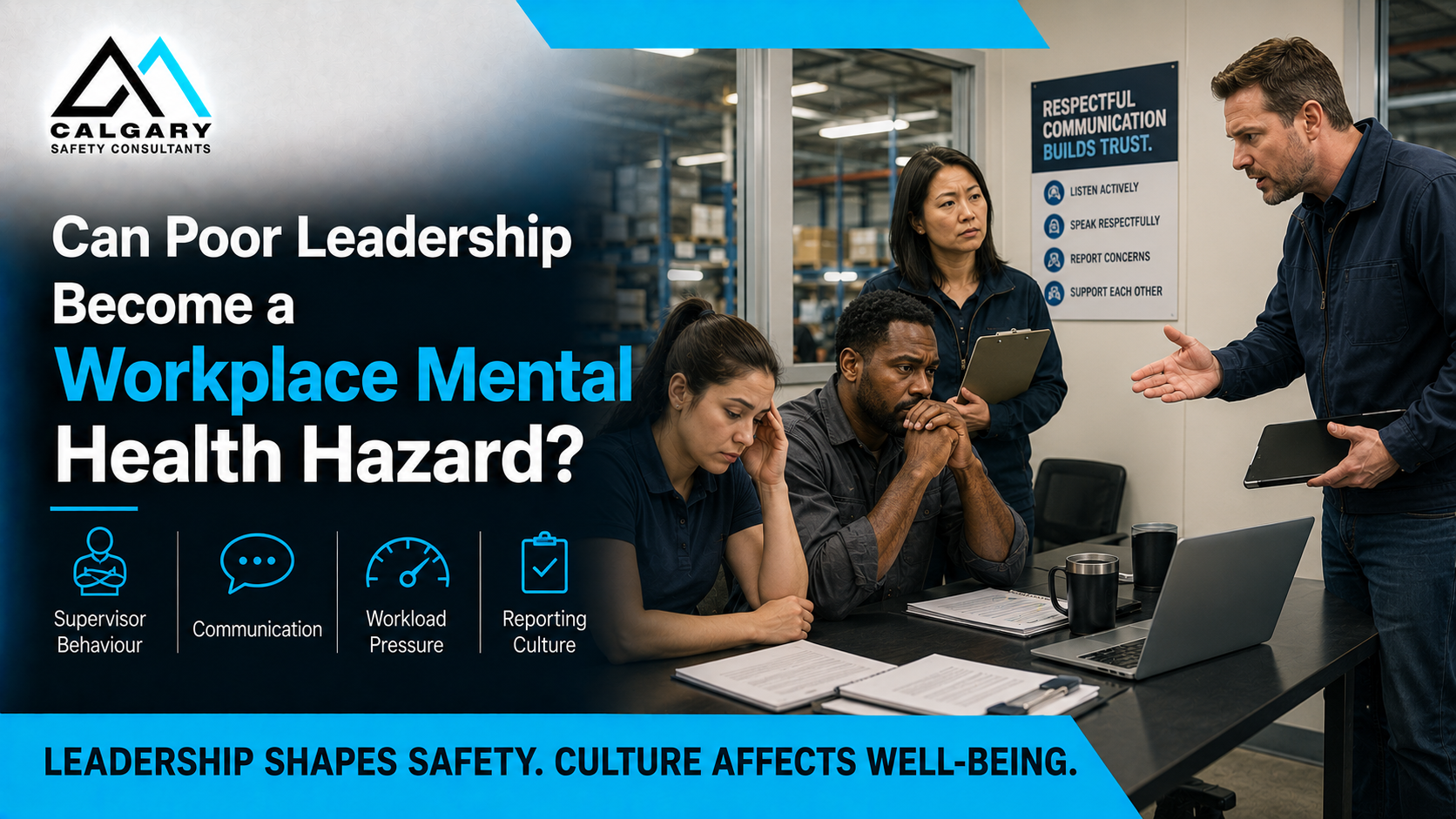
Can Poor Leadership Become a Workplace Mental Health Hazard?

Can Poor Leadership Become a Workplace Mental Health Hazard?

Yes. Can Poor Leadership Become a Workplace Mental Health Hazard? In practical terms, it can when supervisor behaviour, poor communication, unreasonable or poorly managed workload, constant uncertainty, disrespectful conduct, or a weak reporting culture creates or increases psychological r
September 17, 2026
Why Good Safety Programs Fail During Implementation - Key Causes

Why Good Safety Programs Fail During Implementation - Key Causes

Why Good Safety Programs Fail During Implementation? In many workplaces, the problem is not a lack of safety documentation. The problem is that the written program never becomes part of how work is planned, supervised, performed, checked, and corrected. A manual can contain strong policies
September 14, 2026
How Often Should Employers in Canada Conduct Workplace Inspections?

How Often Should Employers in Canada Conduct Workplace Inspections?

If you’re asking, “How Often Should Employers, in Canada Conduct Workplace Inspections?”, there isn’t one inspection frequency that applies to every Canadian workplace. The legal requirements and legal expectation depend on the jurisdiction, type of workplace, hazards, equipment, w
September 10, 2026
What Does “Reasonably Practicable” Mean Under Occupational Health and Safety Requirements?

What Does “Reasonably Practicable” Mean Under Occupational Health and Safety Requirements?

What Does “Reasonably Practicable” Mean Under legislative Occupational Health and Safety Requirements? In practical terms, it means an employer must take health and safety measures that are feasible in the circumstances and appropriate when viewed from the perspective of a reasonable p
September 7, 2026
Psychological Safety vs. Psychological Health and Safety: What’s the Difference?

Psychological Safety vs. Psychological Health and Safety: What’s the Difference?

Psychological Safety vs. Psychological Health and Safety: What’s the Difference? The simplest answer is that psychological safety generally describes whether workers feel safe speaking up, asking questions, reporting mistakes, raising concerns, or challenging decisions without fear of em
September 3, 2026
When Does Your Workplace Legally Require a Health and Safety Committee or Representative?

When Does Your Workplace Legally Require a Health and Safety Committee or Representative?

When Does Your Workplace Legally Require a Health and Safety Committee or Representative? The answer depends on the health and safety committee requirements in the province where the work is performed, the number of workers regularly employed at the workplace or work site, the duration of
August 31, 2026
Can Your Company Show Worker Participation in Workplace Safety Programs?

Can Your Company Show Worker Participation in Workplace Safety Programs?

Can Your Company Show That Workers Participate in the Safety Program? Real worker participation in workplace safety involves more than attending meetings, signing forms, or listening to toolbox talks. Employers should be able to demonstrate that workers identify hazards, recommend controls
August 27, 2026
Are Your Safe Work Procedures Current Enough to Protect Workers?

Are Your Safe Work Procedures Current Enough to Protect Workers?

Are Your Safe Work Procedures Current Enough to Protect Workers? Employers should ask this whenever equipment, materials, staffing, work methods, workplace conditions, or regulatory expectations change. Safe work procedures can’t protect workers effectively when they describe outdated eq
August 24, 2026
Does Your Safety Training Prove Competency or Only Attendance?

Does Your Safety Training Prove Competency or Only Attendance?

Does your safety training prove competency or only attendance? A signed form or course certificate may confirm that a worker participated in workplace safety training, but it doesn’t necessarily prove that the worker can perform the job safely. Employers need a practical process for conf
August 20, 2026
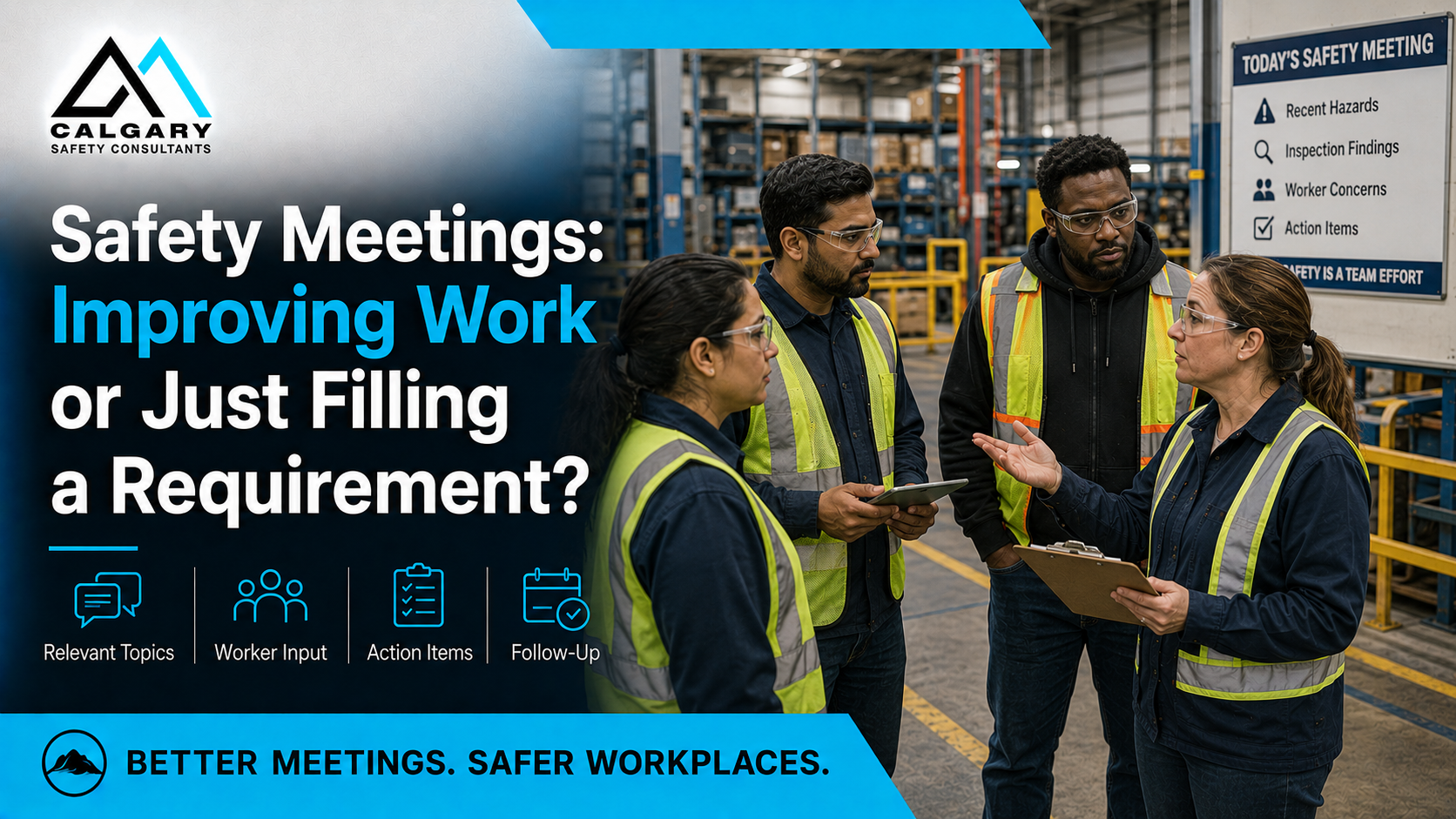
Are Your Safety Meetings Improving Work or Just Filling a Requirement?

Are Your Safety Meetings Improving Work or Just Filling a Requirement?

Are Your Safety Meetings Improving Work or Just Filling a Requirement? Effective workplace safety meetings should help workers and supervisors respond to current hazards, recent incidents, inspection findings, operational changes, and unresolved concerns. When every meeting uses the same g
August 17, 2026
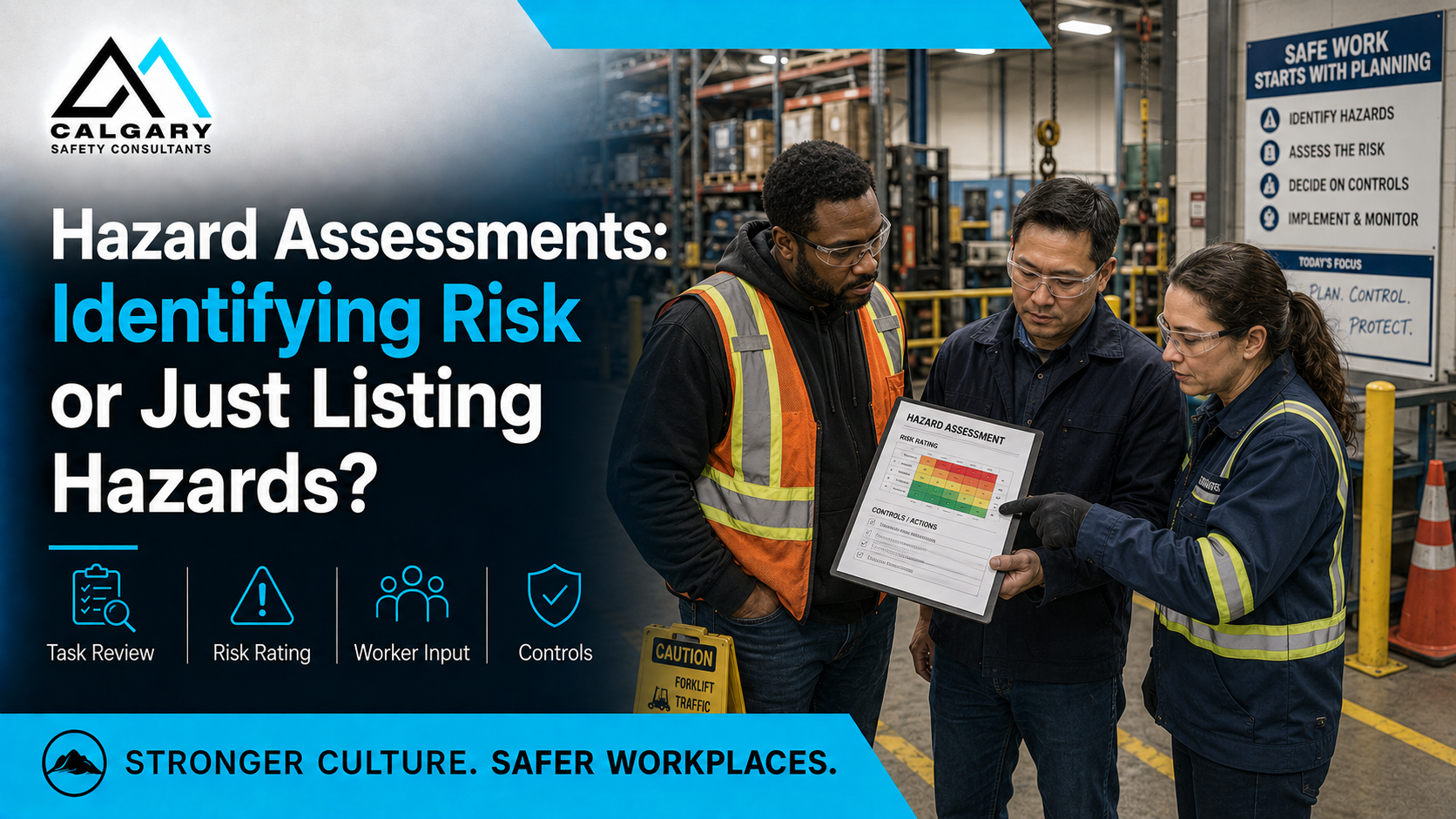
Are Your Hazard Assessments Identifying Risk or Just Listing Hazards?

Are Your Hazard Assessments Identifying Risk or Just Listing Hazards?

Are Your Hazard Assessments Identifying Risk or Just Listing Hazards? A workplace hazard assessment should do more than produce a list of equipment, conditions, and possible injuries. It should evaluate which hazards create the greatest risk, identify effective controls, assign responsibil
August 13, 2026
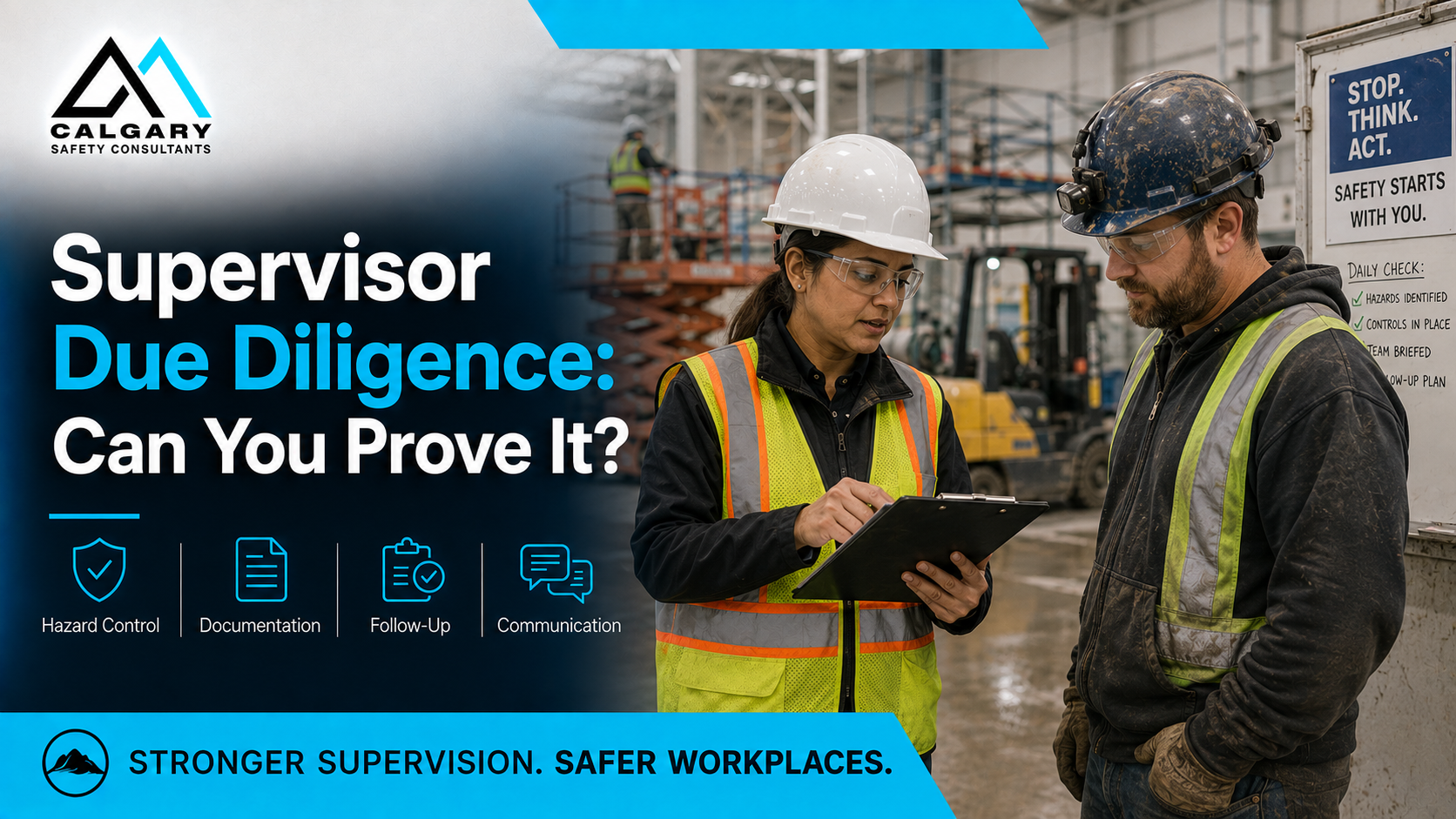
Can Your Supervisors Prove They Are Exercising Due Diligence?

Can Your Supervisors Prove They Are Exercising Due Diligence?

Can Your Supervisors Prove They Are Exercising Due Diligence? The answer depends on more than whether supervisors attend safety meetings or sign completed forms. Employers should be able to demonstrate that supervisors understand their responsibilities, identify and control workplace hazar
August 10, 2026
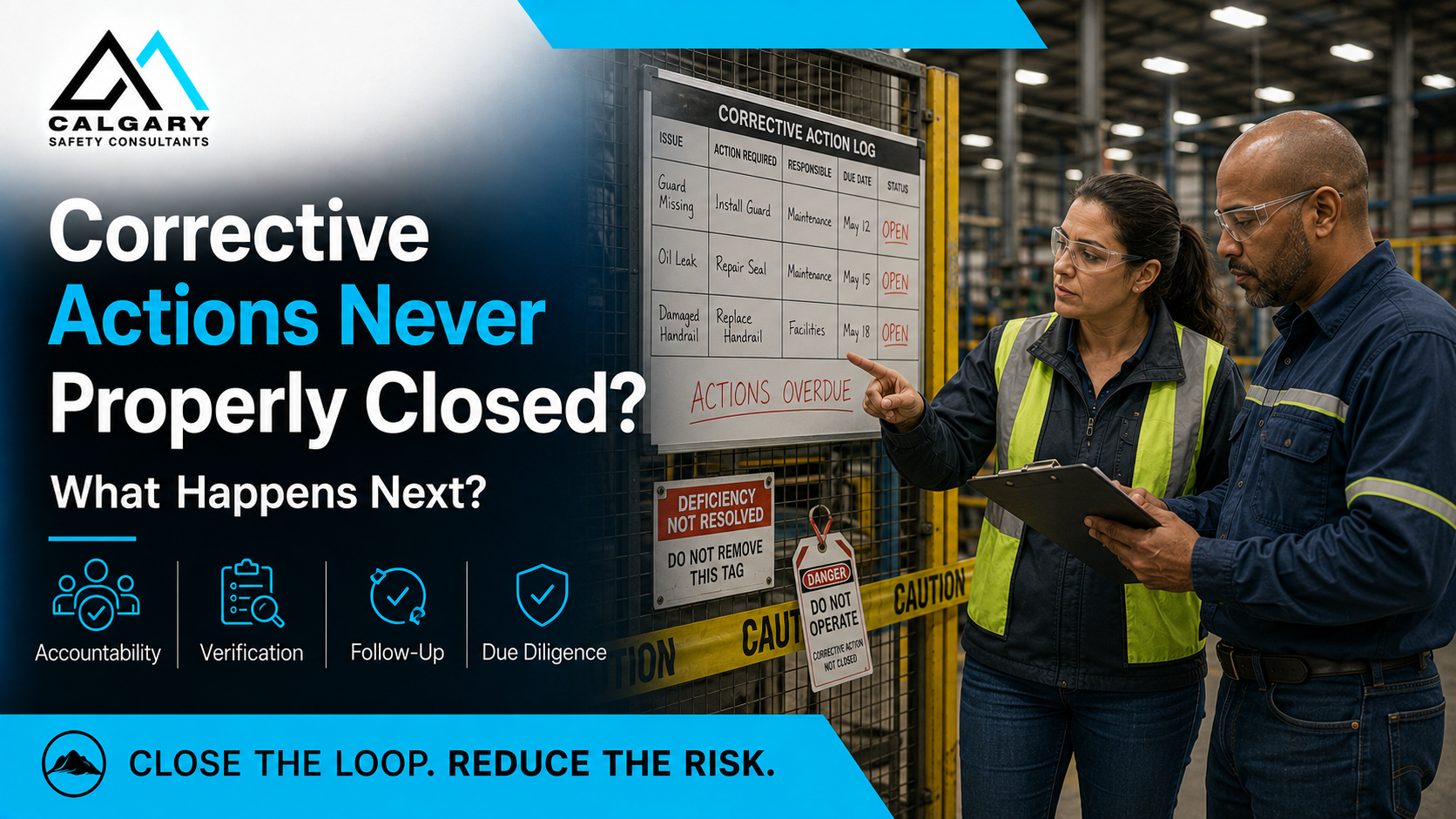
What Happens When Corrective Actions Are Never Properly Closed?

What Happens When Corrective Actions Are Never Properly Closed?

What happens when corrective actions are never properly closed? Hazards remain in the workplace, responsibilities become unclear, deficiencies reappear, and employers may struggle to demonstrate that reasonable steps were taken to protect workers. Effective corrective action tracking requi
August 6, 2026
Are Your Safety Inspections Finding Problems or Just Completing Paperwork?

Are Your Safety Inspections Finding Problems or Just Completing Paperwork?

Are Your Safety Inspections Finding Problems or Just Completing Paperwork? A workplace safety inspection program should identify hazards, confirm whether controls are working, and trigger corrective action before someone is injured or operations are disrupted. When inspections repeatedly p
August 3, 2026
How to Test Your Safety Program Before Someone Else Does

How to Test Your Safety Program Before Someone Else Does

How to test your safety program before someone or something else does? Start by checking whether your written safety manual matches what actually happens in the field. A strong safety program is not proven by the binder, the policy statement, or the number of forms in a folder. It is prove
July 30, 2026
Are Supervisors a Major Test of the OHS System?

Are Supervisors a Major Test of the OHS System?

Are supervisors a major test of the OHS system? Yes. Supervisors are often where the safety program either becomes real or starts to break down. A company may have a polished safety manual, completed forms, and written procedures, but the real test is what supervisors do when hazards appea
July 27, 2026
Is a Safety Manual the Same as a Working Safety System in Canada?

Is a Safety Manual the Same as a Working Safety System in Canada?

Is a safety manual the same as a working safety system? No. A safety manual is an important document, but a working safety system is what happens when the policies, procedures, training, inspections, hazard controls, and corrective actions are actually used in the workplace. In Alberta, Br
July 23, 2026
When Was the Last Time Your Safety Program Was Actually Tested?

When Was the Last Time Your Safety Program Was Actually Tested?

When Was the Last Time Your Safety Program Was Actually Tested? If the answer is “not recently,” your company may be carrying more risk than it realizes. A safety program can look complete on paper but still fail when it is tested through an inspection, incident, COR audit, SECOR revie
July 20, 2026
Regulatory Issues and OHS Response: What Now?

Regulatory Issues and OHS Response: What Now?

Employers typically require a comprehensive OH&S response, beyond a swift email, amended document, or verbal confirmation, when faced with regulatory concerns. An OHS inspection, order, complaint, serious incident follow-up, or documentation request can quickly become a test of due diligen
July 16, 2026
Is Your Safety Manual Actually Working?

Is Your Safety Manual Actually Working?

The efficacy of a safety program assessment lies in its ability to verify the actual utilization, understanding, and application of your safety manual in the operational environment. The mere presence of a policy repository—whether in binders, on shared drives, or as PDFs—does not guar
July 13, 2026
What Is Safety Culture? Climate, Culture, and Better Results

What Is Safety Culture? Climate, Culture, and Better Results

What is safety culture? Safety culture is the deeper pattern of values, beliefs, decisions, and behaviours that shape how a workplace manages risk. Safety climate is different. Climate reflects how workers currently perceive safety in the workplace, including supervision, trust, communicat
July 9, 2026
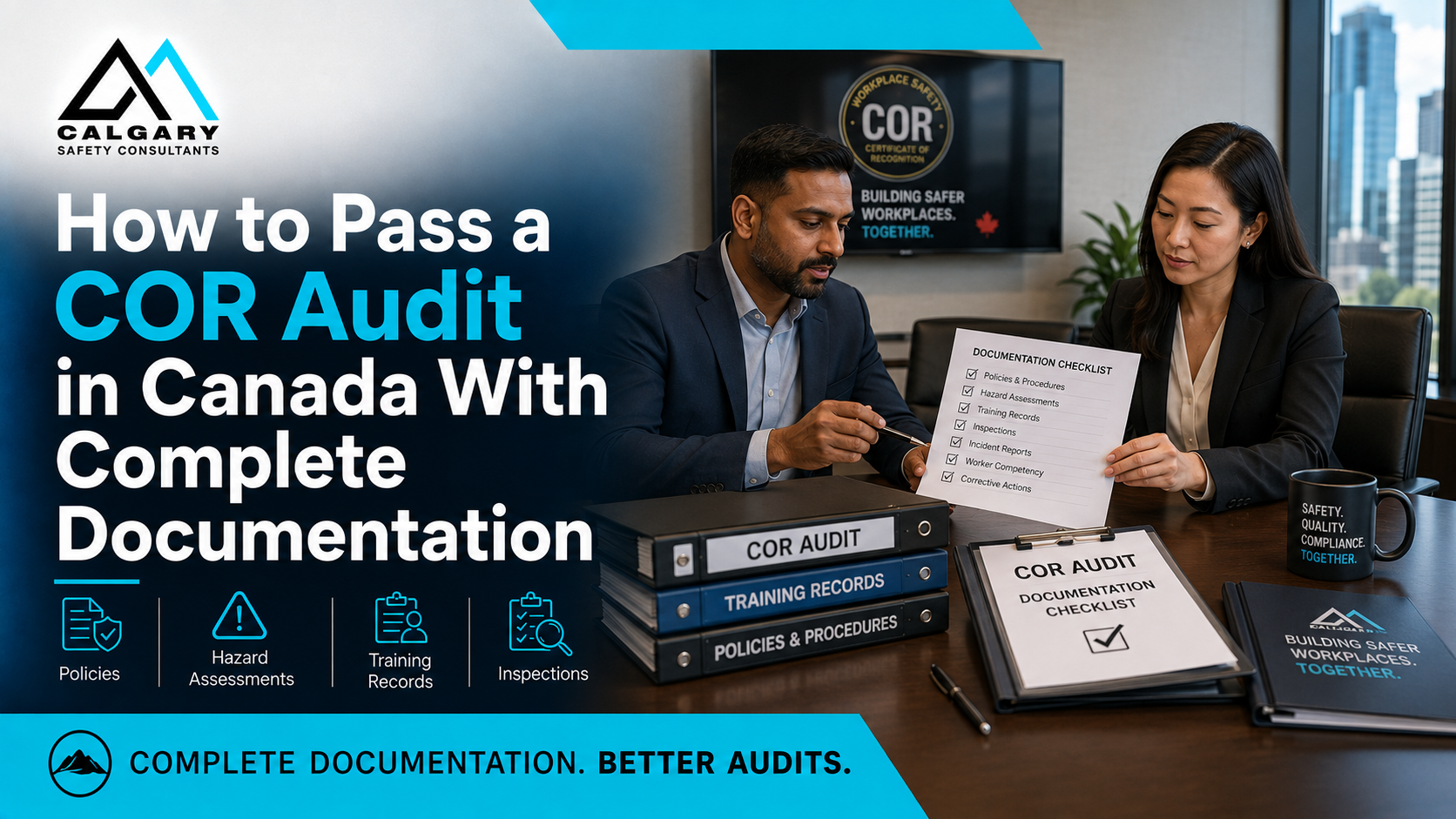
How to Pass a COR Audit in Canada With Complete Documentation

How to Pass a COR Audit in Canada With Complete Documentation

The easiest way to pass a COR audit is to have a safety system that is documented, implemented, understood, and verified before the auditor shows up. It's not solely about reviewing paperwork when it comes to COR. Through a review of documents, staff interviews, and direct observations, a
July 6, 2026
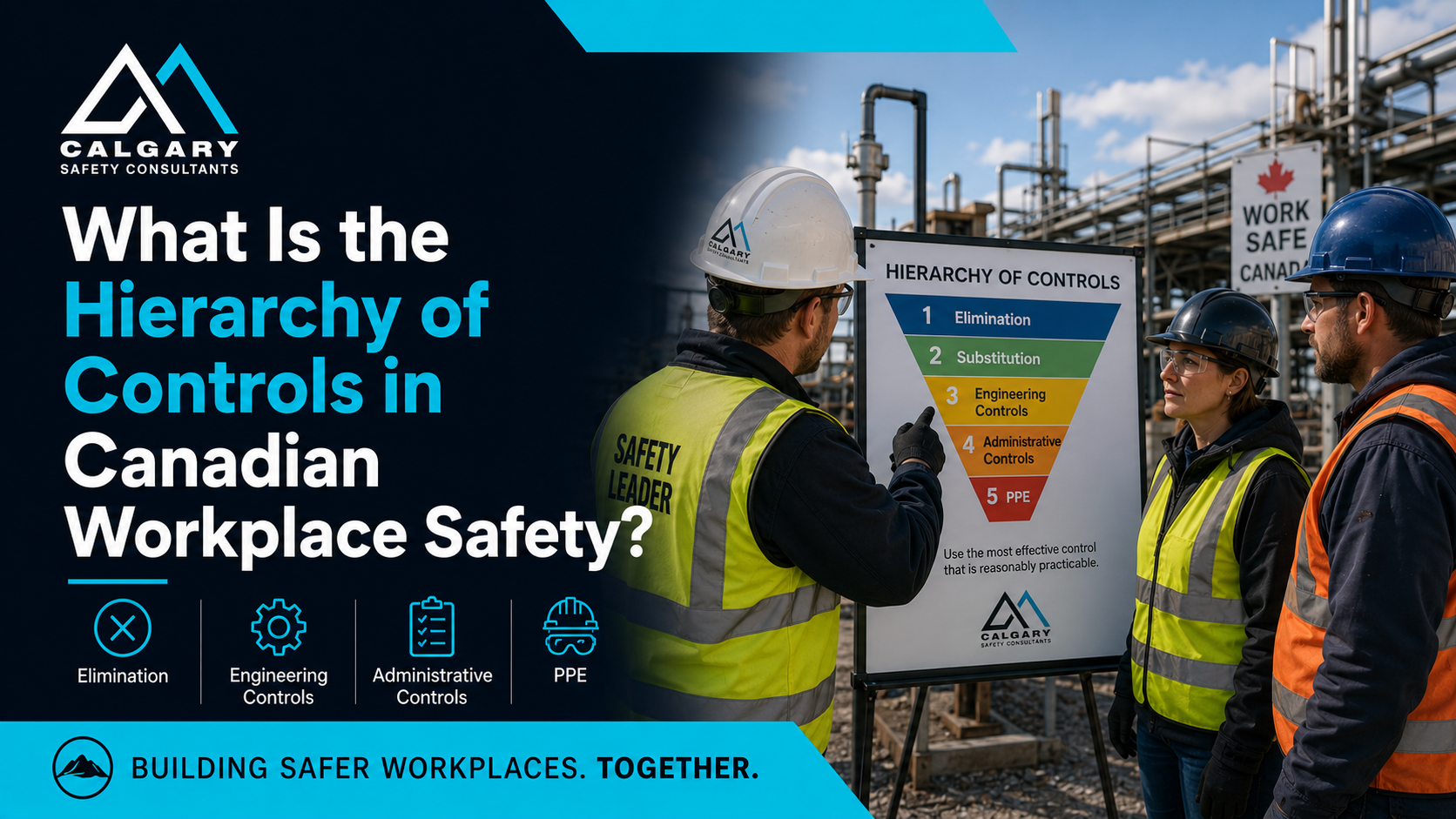
What Is the Hierarchy of Controls in Canadian Workplace Safety?

What Is the Hierarchy of Controls in Canadian Workplace Safety?

The hierarchy of controls, simply put, ranks methods for managing workplace hazards from most effective to least effective. From an operational health and safety standpoint, it assists employers in deciding on strategies such as hazard removal, replacement, physical control, procedural exp
July 2, 2026
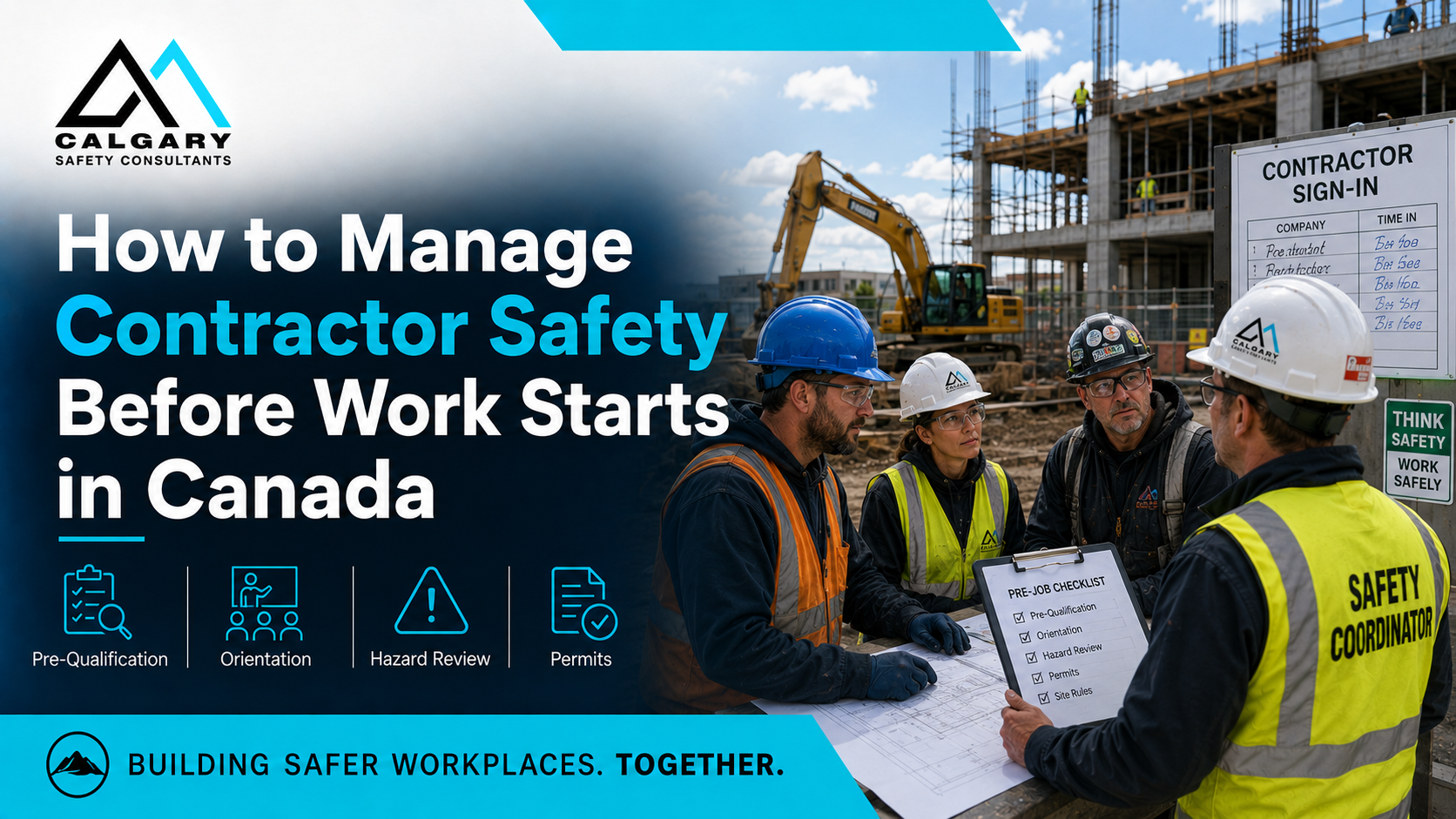
How to Manage Contractor Safety Before Work Starts in Canada

How to Manage Contractor Safety Before Work Starts in Canada

When external employers, trades, service providers, or subcontractors are on-site, it is vital to know how to handle their safety. Practically speaking, you should confirm the contractor's identity before they show up, outline site safety protocols before work commences, oversee the work a
June 29, 2026

Calgary Safety Consultants (CSC) specializes in providing expert Occupational Health & Safety (OH&S) solutions, including COR audits, safety consulting, and risk management. With over 30 years of experience, we serve high-risk industries like oil & gas, construction, and manufacturing in Calgary and beyond. Our tailored, proven approach helps businesses enhance safety, reduce risks, and achieve compliance. Let us support your team’s journey toward a safer workplace. 

Book a Free OH&S Consultation

Need help with a safety manual, COR audit preparation, OHS order, hazard assessment, training, or ongoing safety support? Complete the form below or book a 30-minute consultation. We will review your situation, identify the next practical step, and explain how Calgary Safety Consultants can help.

Prefer to book directly?

Request your 30-minute consultation today by completing the calendar appointment below.