
Respectful workplace training helps employers prevent harassment, bullying, workplace violence, discrimination-related conduct, and other behaviours that can damage worker safety, morale, productivity, and legal compliance.
Calgary Safety Consultants provides respectful workplace training for employers across Alberta, British Columbia, and Saskatchewan, with options for workers, supervisors, managers, and leadership teams. The training is designed to help organizations meet practical OH&S expectations while giving workers clear guidance on acceptable conduct, reporting procedures, early intervention, documentation, and response.
In Western Canada, harassment and violence prevention is not just a workplace culture issue. It is also a health and safety issue. Alberta treats violence and harassment as workplace hazards that must be addressed through hazard assessment, prevention planning, worker training, investigation, and support. BC requires employers to prevent and respond to bullying and harassment through policies and procedures. Saskatchewan also recognizes personal harassment and bullying as conduct that can affect a worker’s psychological or physical well-being.
Many employers searching for respectful workplace training are also looking for workplace harassment training, bullying and harassment prevention training, or workplace violence prevention training. Although the terminology varies, these programs all focus on creating safer workplaces, improving reporting procedures, strengthening supervisor response, and reducing workplace conduct risks.

Calgary Safety Consultants provides respectful workplace training designed to meet legislative requirements while supporting practical application across different roles within the organization.
Choose the supervisor and manager course for leaders who may need to receive complaints, document concerns, respond to incidents, support workers, and escalate matters for review or investigation.
Choose the worker course for general employee awareness and expected workplace conduct.
This course can support employers with operations in one province or across multiple provinces. The training is especially useful for organizations that need a consistent workplace conduct standard across Alberta, BC, and Saskatchewan while still recognizing that each province has its own OH&S and employment-related expectations.
For Alberta employers, respectful workplace training should connect to violence and harassment prevention plans, hazard assessments, reporting procedures, investigation requirements, worker instruction, and supervisor responsibilities. Alberta requires employers to instruct workers on recognizing violence or harassment, the employer’s prevention plan, appropriate responses, reporting, investigation, and documentation.
For BC employers, respectful workplace training should support bullying and harassment policies, reporting expectations, investigation procedures, and the responsibilities of workers, supervisors, and employers. WorkSafeBC states that employers must implement procedures for responding to reports or incidents of bullying and harassment.
For Saskatchewan employers, respectful workplace training should address harassment, personal harassment, bullying, reporting, policy awareness, and the difference between inappropriate conduct and reasonable management action. Saskatchewan describes personal harassment as conduct that can adversely affect a worker’s psychological or physical well-being and cause humiliation or intimidation.
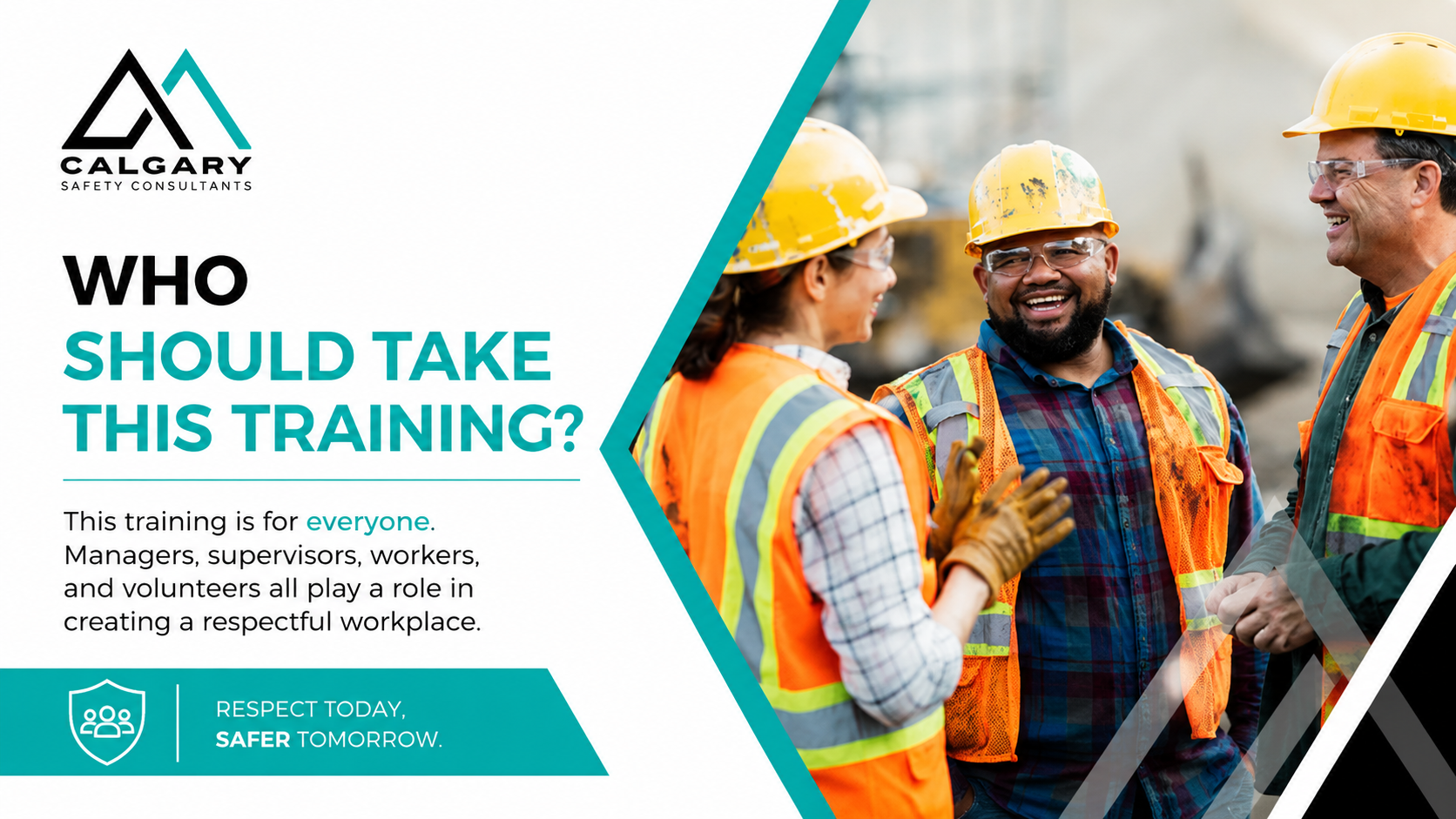
Respectful workplace training is recommended for:
Harassment, bullying, and workplace violence prevention training is an important part of meeting employer responsibilities across Canadian jurisdictions, although the exact requirements vary by province and territory.
Worker respectful workplace training should focus on recognizing inappropriate conduct, understanding workplace expectations, reporting concerns, participating in investigations, avoiding retaliation, and contributing to a respectful work environment.
Supervisor and manager training should go further. Supervisors need to understand how to respond when they observe concerning behaviour, receive a complaint, document facts, protect confidentiality, avoid bias, prevent retaliation, and escalate matters properly. This matters because poor supervisor response can turn an early workplace concern into a formal complaint, legal dispute, WCB issue, employee relations problem, or operational disruption.
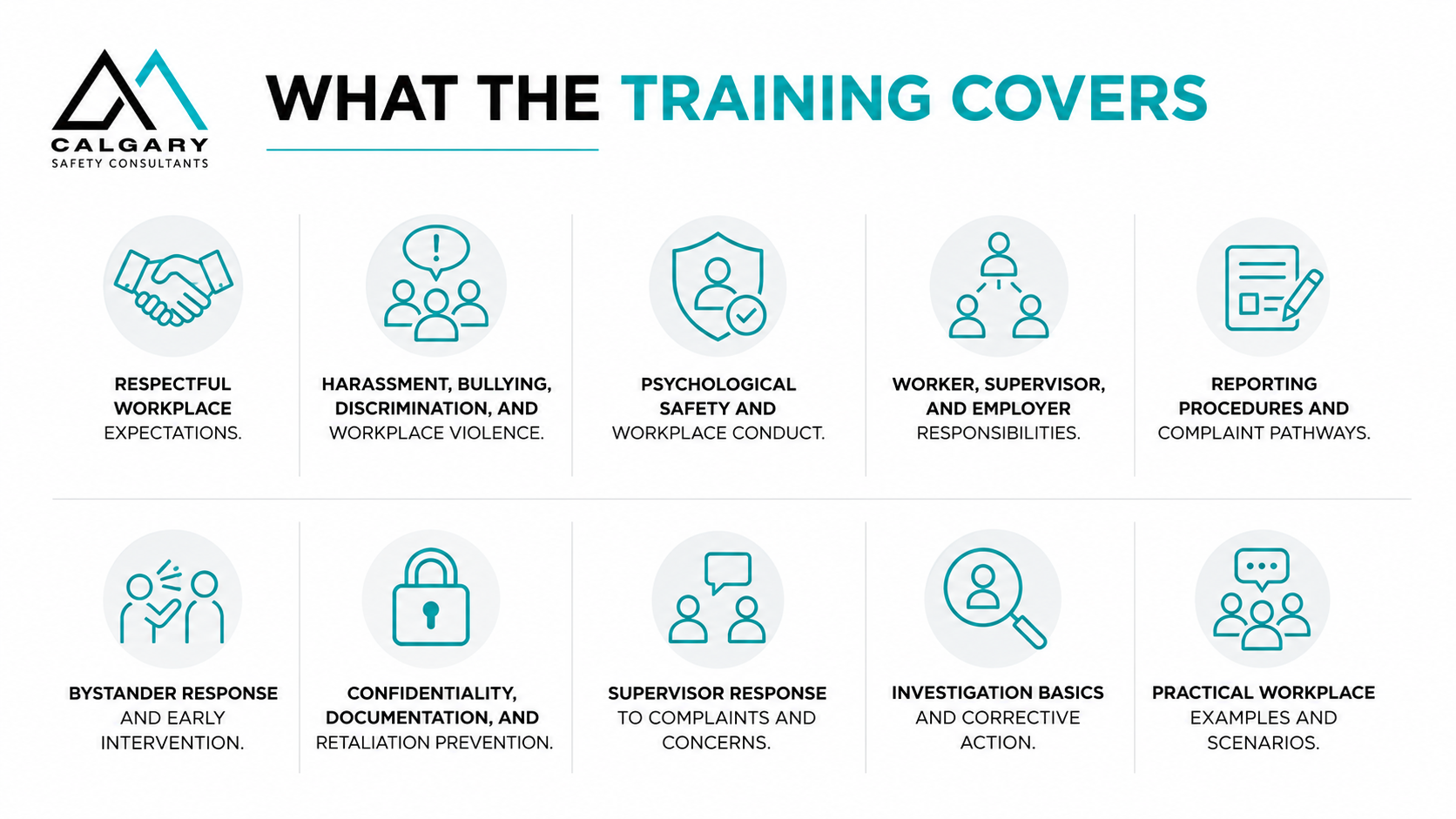
This training covers practical topics that help workers and supervisors recognize, report, prevent, and respond to respectful workplace concerns:
Respectful workplace problems rarely stay isolated. When concerns are ignored, they can lead to absenteeism, turnover, productivity loss, team conflict, complaints, investigations, claims, reputational damage, and regulatory scrutiny.
Good training gives workers a clear standard before problems escalate. It also gives supervisors a practical response framework so they do not freeze, dismiss concerns, overreact, or make comments that create additional liability. For employers, this supports stronger due diligence, better documentation, better workplace culture, and improved audit readiness.
Although respectful workplace expectations share common principles across Canada, each province has its own occupational health and safety requirements, reporting expectations, employer responsibilities, and workplace harassment prevention obligations.
Calgary Safety Consultants provides respectful workplace and harassment prevention training designed to support employers operating in Alberta, British Columbia, and Saskatchewan. Our province-specific training pages explain regional workplace requirements, employer obligations, supervisor responsibilities, reporting expectations, and practical workplace prevention strategies.
Explore province-specific respectful workplace training information below:
Online respectful workplace training helps employers deliver consistent harassment and violence prevention instruction across multiple worksites, remote teams, and distributed operations. Online delivery improves accessibility, training consistency, completion tracking, and documentation while allowing workers and supervisors to complete training at their own pace.
Calgary Safety Consultants is here to help you ensure compliance, enhance safety, and streamline your OH&S program. Don’t wait—fill out the form, and we’ll connect with you to discuss how we can support your business. Let’s get started!
Respectful workplace training helps workers, supervisors, and employers understand acceptable workplace behaviour, harassment prevention, bullying prevention, workplace violence awareness, reporting procedures, and employer responsibilities. The goal is to create safer workplaces where concerns are addressed early before they escalate into complaints, investigations, turnover, claims, or regulatory issues.
Training typically covers harassment and violence definitions, examples of inappropriate behaviour, reporting procedures, employer and worker responsibilities, and how to respond to workplace concerns.
All employees should receive respectful workplace training, with additional or enhanced training recommended for supervisors, managers, and those responsible for handling complaints or investigations.
Alberta employers are required to address workplace harassment and violence as part of their occupational health and safety responsibilities. Employers must develop prevention plans, instruct workers and supervisors, establish reporting procedures, investigate incidents, and take corrective action where necessary.
While legislation may not specifically use the phrase “respectful workplace training,” training workers and supervisors is an important part of demonstrating due diligence and supporting compliance with Alberta occupational health and safety requirements related to harassment and violence prevention.
British Columbia employers are expected to prevent and address workplace bullying and harassment under WorkSafeBC requirements. Employers must develop policies and procedures, provide worker instruction, respond to complaints, and investigate incidents appropriately.
Respectful workplace training helps BC employers educate workers and supervisors on workplace conduct expectations, reporting procedures, complaint response, and employer responsibilities.
Saskatchewan employers have legislated responsibilities related to workplace harassment and violence prevention. Employers must develop and implement harassment prevention policies, investigate harassment complaints, and maintain workplace violence policy statements and prevention plans where required. Respectful workplace training helps workers and supervisors understand conduct expectations, reporting procedures, complaint response, documentation, and their role in supporting a safer workplace.
Harassment generally involves inappropriate comments, conduct, displays, or behaviours that create humiliation, intimidation, or psychological harm in the workplace.
Bullying often involves repeated harmful behaviour intended to intimidate, isolate, undermine, or control another worker.
Workplace violence involves threats, attempted violence, or physical acts that could cause injury or harm.
Although these issues can overlap, each creates different workplace risks and may require different prevention, reporting, investigation, and response strategies.
Yes. Supervisors and managers should receive more advanced respectful workplace training because they have additional responsibilities when concerns arise.
Worker training focuses primarily on recognizing inappropriate behaviour, understanding workplace expectations, reporting concerns, and participating in prevention efforts.
Supervisor training should also include complaint handling, documentation, confidentiality, retaliation prevention, early intervention, escalation procedures, and appropriate response techniques. Supervisors are often the first point of contact when workplace concerns emerge, so their response can significantly affect workplace outcomes.
Yes. Respectful workplace training can support organizations operating across Alberta, British Columbia, Saskatchewan, and other Canadian jurisdictions.
A properly designed course can provide consistent workplace conduct expectations while also addressing important provincial differences related to harassment prevention, reporting procedures, employer obligations, and occupational health and safety requirements.
This is especially useful for companies with multiple locations, remote workers, travelling workers, or operations that cross provincial boundaries.
Most employers should consider refresher training regularly to reinforce expectations, maintain awareness, and address changes in workplace risks, legislation, policies, or organizational structure.
Additional refresher training is often beneficial after workplace incidents, complaints, investigations, policy updates, leadership changes, or operational growth. Regular reinforcement helps maintain accountability and keeps respectful workplace expectations visible within the organization.
Yes. Respectful workplace training can support occupational health and safety compliance by helping employers address workplace harassment, bullying, violence prevention, reporting procedures, worker instruction, supervisor responsibilities, and documentation expectations.
Training also supports due diligence by demonstrating that workers and supervisors received instruction regarding workplace conduct expectations, reporting procedures, and prevention responsibilities.
Strong respectful workplace programs can also help reduce operational disruption, complaints, turnover, absenteeism, conflict escalation, and reputational risk.
Yes. Calgary Safety Consultants can provide respectful workplace training through online self-paced courses, virtual instructor-led training, or in-person sessions depending on organizational needs, workforce size, scheduling requirements, and operational considerations.
Training can also be customized to address company policies, industry-specific risks, supervisor responsibilities, workplace culture concerns, and multi-province operations across Alberta, British Columbia, and Saskatchewan.

Calgary Safety Consultants provides practical occupational health and safety consulting, safety training, COR support, safety program development, and regulatory compliance support for employers across Alberta, British Columbia, and Saskatchewan.
We help organizations strengthen worker training, improve documentation, manage workplace hazards, prepare for audits, and build safety systems that support compliance, productivity, and operational due diligence.