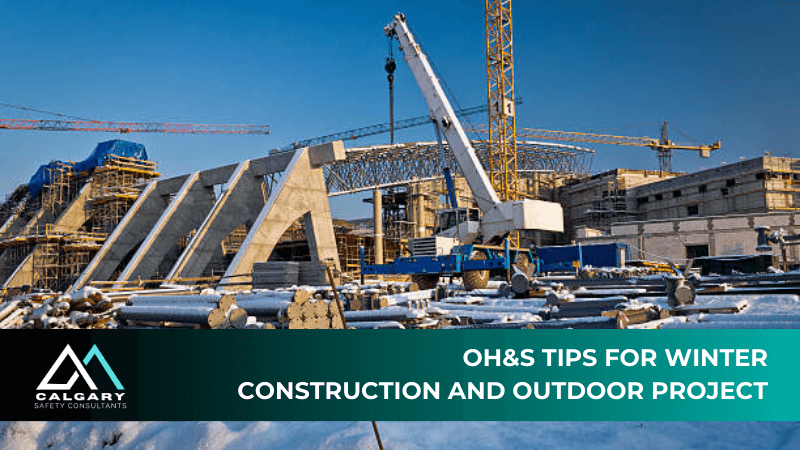
Winter doesn’t stop construction or outdoor projects in Canada. Houses still go up, utilities still get repaired, roadwork still happens, and plenty of smaller contractors keep pushing to meet deadlines in minus temperatures. The problem is that winter changes the risk profile of almost everything you do on site.
Cold, wind, snow, ice, reduced daylight, and cranky equipment all stack up. If you treat winter like “just another season,” the odds of a serious incident climb fast. If you treat it like a distinct hazard environment, you can keep people safe and keep the work moving.
This blog walks through the main winter hazards for construction and outdoor projects, what good OH&S practice looks like, and how to simplify your winter safety planning so it actually gets used in the field.
In summer, most of your hazard controls are built around energy, heights, line of fire, and equipment. Those don’t go away in winter; they just get layered with new problems: cold stress, low friction surfaces, reduced visibility, and slower reaction times.
Canadian safety bodies are clear that extreme temperatures are a workplace hazard in their own right, and employers are expected to control them just like any other hazard. That includes identifying the risk, planning work around conditions, and putting real controls in place so workers are not exposed to dangerous cold or icy surfaces without protection. (Alberta.ca)
For construction and outdoor projects, that means winter needs to show up explicitly in your hazard assessments, safe work practices, emergency plans, and site supervision. If your paperwork still reads like July in January, you have a gap.
Cold stress is not just “being uncomfortable.” It is a physiological load that pulls focus, slows hands, and affects decision-making. At the extreme end, workers can experience frostbite and hypothermia, both of which can be permanently disabling or fatal. (CCOHS)
Factors that drive cold stress include air temperature, wind speed, humidity, and duration of exposure. A mild day on the thermometer can still be a high-risk day once the wind picks up or clothing gets wet. (UFCW Locals 175 & 633)
From an OH&S point of view, a solid winter plan does a few things:
In a construction or outdoor project context, this might look like shorter exposures on scaffolds, limiting structural steel work at extreme wind chills, rotating workers between indoor and outdoor tasks when possible, and building warm-up breaks into the daily schedule instead of making people “earn them.”
When people hear “construction fall,” they often picture a worker coming off a roof or scaffold. In winter, it is just as likely to be a slip on black ice while carrying materials or stepping off the back of a truck.
Across Canadian workplaces, slips, trips, and falls on the same level spike in winter and are a major source of lost-time injuries. Snow, slush, ice, and frozen ruts all reduce traction. Hidden trip hazards under snow – offcut lumber, cords, uneven ground – make it worse. (Ontario)
Good winter control measures for construction and outdoor projects include:
For elevated work, your existing fall protection program still applies – guardrails, travel restraint, fall arrest – but winter adds a twist. Frozen lanyards, icy anchor points, and snow-covered roofs all require additional checks before use. You may need to tighten your “go/no-go” decisions for roof work or elevated platforms based on snow, ice, and wind. (Raken)
Winter is also hard on vehicles and heavy equipment. Braking distances increase. Visibility drops with blowing snow or fogged windows. Hydraulic systems and controls respond more slowly. That mix of slower machines and slower humans can lead to bad outcomes around mobile equipment.
Safe winter operation of vehicles and equipment should cover at least:
For crews who drive as part of the job – site-to-site travel, service calls, or hauling equipment – winter driving safety becomes a direct part of your OH&S program, not just “personal responsibility.” That includes vehicle readiness, route planning, weather checks, and the right to refuse travel in conditions that meet your definition of imminent danger. (Safety in Schools Foundation)
Strong winter safety does not happen by accident. It is the result of planning, clear procedures, and a culture where workers are encouraged to speak up when conditions change.
From a management-system perspective, here is what should be in place for winter construction and outdoor projects:
Worker participation is critical. People on the tools are the first to see that a pathway has iced over, that gloves are not warm enough for a particular task, or that the warm-up shelter is too far from the workface. When workers are encouraged – and expected – to report these issues without fear of being seen as “soft,” your winter risk picture improves quickly.
This is exactly where a focused OH&S partner can make life easier. Calgary Safety Consultants (https://calgarysafetyconsultants.ca) works with construction companies, trades, and project owners across Alberta and Western Canada to turn winter from a vague concern into a clear, controlled part of your safety program.
Here are a few practical ways a consulting partner like Calgary Safety Consultants can help:
If you want help tightening up your winter construction or outdoor project safety before the next cold snap, you can connect directly through https://calgarysafetyconsultants.ca and build a simple, seasonal action plan.
Winter construction and outdoor work will always carry more risk than working inside in mild weather. That is reality. But “more risk” does not have to mean “out of control.” When cold, snow, and ice are treated as core hazards – not background noise – you can manage them like any other part of your OH&S program.
That means recognizing cold stress as a genuine health risk, designing work around weather and daylight, being relentless about snow and ice control, dialing in your vehicle and equipment practices, and building real winter thinking into your hazard assessments and emergency plans. It also means listening to the people actually working outdoors and giving them both the gear and the authority to look after themselves and their crew.
Done right, winter safety is not about shutting everything down; it is about being deliberate. Work still gets done. Projects still move. People go home with all ten fingers and toes, and you avoid the kind of serious incident that can define a company for the wrong reasons.
From my perspective, this piece does a good job of connecting the high-level OH&S expectations with the gritty realities of winter construction and outdoor work. It tries to stay practical without turning into a checklist and keeps the tone informal enough that a supervisor, foreperson, or small contractor could actually read it and use it.
If anything, the next step for a company reading this would be to translate it into site-specific actions: pick three or four winter hazards that show up on your projects every year, build clear controls around them, and train your crews on those controls before the weather turns. The blog is a strong starting point, but the real value comes when it’s turned into habit in the field.
Calgary Safety Consultants can help you turn your safety program into a powerful asset, not a regulatory liability. Reach out today and take the next step toward building a workplace that’s not just compliant—but genuinely safe.
Connect with us here and let us help you improve your OH&S practices.
Winter changes the risk profile on every job. Cold temperatures, wind chill, ice, snow, and poor visibility all increase the chance of incidents like slips, equipment collisions, and cold stress. A good OH&S program treats winter as a specific hazard environment and builds controls around cold exposure, winter access, vehicle operation, and emergency response instead of treating it like just another season.
The big ones are cold stress and hypothermia, frostbite, slips and trips on ice or packed snow, vehicle and equipment incidents on slick surfaces, reduced visibility, and problems with heaters, generators, and temporary structures. These hazards show up in day-to-day tasks like walking across site, working at height, loading trucks, and driving between jobs.
Employers should build cold stress into their hazard assessments and then apply practical controls: warm-up shelters close to the workface, layered winter PPE, clear work/rest schedules based on temperature and wind chill, training on early signs of cold stress, and the authority for supervisors to change or stop work when conditions cross defined thresholds. Monitoring weather and wind chill daily is part of that control.
Need help with a safety manual, COR audit preparation, OHS order, hazard assessment, training, or ongoing safety support? Complete the form below or book a 30-minute consultation. We will review your situation, identify the next practical step, and explain how Calgary Safety Consultants can help.
Prefer to book directly?
Request your 30-minute consultation today by completing the calendar appointment below.

Calgary Safety Consultants provides practical occupational health and safety consulting, safety training, COR support, safety program development, and regulatory compliance support for employers across Alberta, British Columbia, and Saskatchewan.
We help organizations strengthen worker training, improve documentation, manage workplace hazards, prepare for audits, and build safety systems that support compliance, productivity, and operational due diligence.