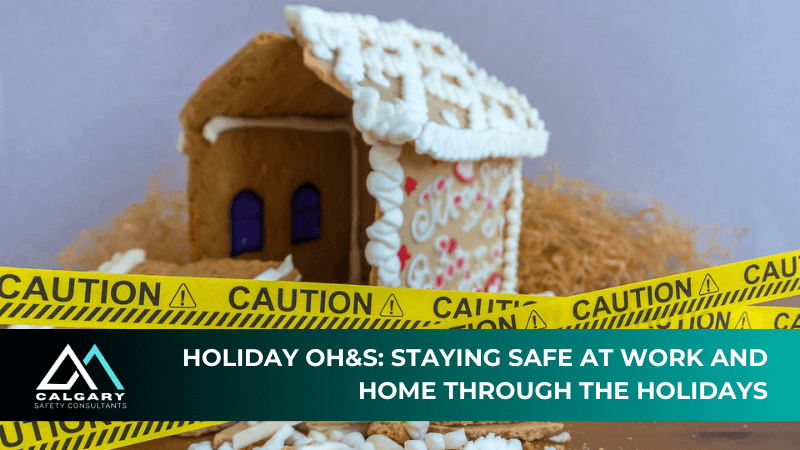
The holiday season is supposed to be the “slow down, relax, enjoy” time of year. In reality, for a lot of workplaces it is the exact opposite. You get year-end production pushes, last-minute projects, short-staffed shifts, stormy weather, and a steady stream of distractions from parties, shopping, and family commitments.
All of that shows up in safety performance. Fatigue, stress, short cuts, and impaired judgment are classic drivers for incidents, and they are all more common around Christmas and New Year’s. Add in seasonal hazards like snow and ice, temporary electrical decorations, extra heaters, and holiday celebrations that involve alcohol, and you have a mix that needs to be managed, not ignored.
From an OH&S perspective, the holidays are less about “festive safety posters” and more about adjusting your controls to match the reality of how people are working and living at this time of year.
The holiday season is supposed to be the “slow down, relax, enjoy” time of year. In reality, for a lot of workplaces it is the exact opposite. You get year-end production pushes, last-minute projects, short-staffed shifts, stormy weather, and a steady stream of distractions from parties, shopping, and family commitments.
All of that shows up in safety performance. Fatigue, stress, short cuts, and impaired judgment are classic drivers for incidents, and they are all more common around Christmas and New Year’s. Add in seasonal hazards like snow and ice, temporary electrical decorations, extra heaters, and holiday celebrations that involve alcohol, and you have a mix that needs to be managed, not ignored.
From an OH&S perspective, the holidays are less about “festive safety posters” and more about adjusting your controls to match the reality of how people are working and living at this time of year.
December is famous for people trying to squeeze 40 hours of life into a 24-hour day. Shopping, family events, kids’ activities, financial stress, grief, and loneliness all show up at work through distraction, reduced focus, and lower tolerance for hassle.
Fatigue and stress are well-established contributors to workplace injuries, errors, and near misses. They make people more likely to miss hazards, skip steps, misjudge distances, or take chances they normally would not. The Canadian Centre for Occupational Health and Safety has long warned that stress and fatigue can impair decision-making and increase incident risk in all types of jobs, not just safety-sensitive work. See for example:
https://www.ccohs.ca/oshanswers/psychosocial/stress.html
At the same time, some workers find the holidays especially difficult from a mental health standpoint due to family issues, loss, isolation, or financial problems. You will often not see that on the surface, but you will see the effects: absenteeism, presenteeism (physically at work but mentally checked out), and lower engagement in safety.
From an OH&S lens, this means supervisors and safety leaders should be more proactive about:
• Checking in with workers one-on-one.
• Adjusting expectations if overtime and extra shifts are piling up.
• Watching for signs of burnout, irritability, or unusual risk-taking.
• Using toolbox talks or safety meetings to normalize talking about fatigue and stress.
End of year often means deadlines for projects, inventory counts, year-end financial targets, and “let’s just get this done before the break” thinking. That can show up as rushed work, extended hours, and a higher tolerance for shortcuts.
Research and regulatory guidance are consistent on this: long working hours and excessive overtime increase the likelihood of incidents and injuries. For example, the Canadian government’s guidance on fatigue notes that extended shifts and irregular hours increase the risk of human error, incidents, and health issues.
https://www.canada.ca/en/health-canada/services/healthy-living/shift-work.html
In practical terms, OH&S programs should anticipate the year-end rush and:
• Review staffing plans and overtime before December so you are not making last-minute decisions that overload key people.
• Re-emphasize that safe work procedures still apply even when deadlines are tight.
• Make sure new or temporary staff brought in to “help out” are properly oriented and supervised, not just thrown into the mix.
• Keep safety inspections and hazard assessments going; do not quietly shelve them until January.
In Canada, Christmas and New Year’s are winter events. Snow, ice, freezing rain, and cold weather conditions are a big part of the hazard picture.
Slips, trips, and falls spike in winter, especially in parking lots, building entrances, loading docks, and outdoor work areas. The Public Health Agency of Canada and local health regions routinely issue reminders about fall injuries due to icy conditions in winter months.
https://www.canada.ca/en/public-health/services/publications/healthy-living/falls-canadians.html
Company responsibilities here include:
• Ensuring parking lots, walkways, and exterior stairs are plowed, sanded, and de-iced in a timely way.
• Providing good lighting at entrances and paths where black ice is likely.
• Setting realistic expectations around footwear; thin dress shoes on icy lots are an obvious mismatch.
• Making sure outdoor work procedures account for traction, cold stress, and reduced visibility.
Driving risk also changes over the holidays. You see more dark commutes, more snowstorms, more long-distance travel, and more impaired drivers on the road. Employers who have workers driving as part of their job should review winter driving procedures, vehicle readiness, and expectations around refusing unsafe travel. Resources like the Government of Canada’s winter driving safety tips can be a good reference for toolbox talks.
https://www.tc.gc.ca/eng/motorvehiclesafety/safedrivers-winterdriving-index-215.htm
Holiday mood often comes with extra electrical loads: strings of lights, power bars, space heaters, decorative displays, and sometimes improvised wiring. In offices, shops, and warehouses, this can quietly create new ignition sources, overloaded circuits, and blocked egress routes.
Fire agencies consistently warn about increased fire risk during the holiday season due to indoor lights, extension cords, candles, cooking, and heating equipment. The National Fire Protection Association (NFPA) and Canadian fire services publish regular guidance on Christmas tree fires, candle safety, and electrical loads. For example:
https://www.nfpa.org/Public-Education/Fire-causes-and-risks/Seasonal-fire-causes/Winter-holidays
From an OH&S and fire safety perspective, it is smart to:
• Set clear rules about what types of decorations are allowed and where.
• Prohibit daisy-chained power bars and overloaded outlets.
• Keep decorations away from exits, sprinklers, and fire equipment.
• Ban open flames at work events unless there is a formal fire safety plan.
• Review use of space heaters and ensure they are approved and used safely.
It is entirely possible to keep a festive atmosphere without turning the office into a fire load. The key is to talk about it before decorations go up, not after.
Christmas parties, New Year’s gatherings, client functions, and informal “after work drinks” all create situations where alcohol and, increasingly, cannabis are involved. Impairment is an obvious safety risk in safety-sensitive work, but it can also affect driving home from events, next-morning performance, and behaviour in the workplace.
Under Canadian OH&S law and human rights frameworks, employers have to manage impairment at work while navigating privacy, disability, and accommodation issues. Many organizations now use broader “fit for duty” language rather than focusing only on alcohol. CCOHS provides useful guidance on impairment in the workplace, including policies and supervisor roles.
https://www.ccohs.ca/oshanswers/hsprograms/impairment.html
Holiday season is a good time to:
• Reinforce your impairment and fit-for-duty policy, including cannabis.
• Clarify expectations for behaviour at company events, whether on or off site.
• Plan safe transportation options for work-related gatherings where alcohol is served.
• Train supervisors on how to handle suspected impairment respectfully and lawfully.
Do not assume that “everyone knows how to behave.” Spell it out.
Retail, hospitality, and public-facing services are especially busy over Christmas and New Year’s. Even industrial and office workplaces see more deliveries, contractors, and visitors on site. That means more people who may not be familiar with your hazards or your rules.
OH&S responsibilities extend to contractors and, in many cases, to protecting the public from your operations. That means your holiday hazard lens should include:
• Clear sign-in and orientation processes for contractors, even if they are “just here for a quick job.”
• Extra attention to housekeeping in public areas where displays, cords, or stacked merchandise could create trip hazards.
• Communication with building owners or property managers about shared risks like parking lots, entrances, and common areas.
Holiday hazards are not a separate safety program; they are your existing OH&S program under extra stress. If your controls are already stretched, December and early January will expose the weaknesses.
Calgary Safety Consultants can help your organization get ahead of those issues by:
• Reviewing your OH&S program with a seasonal lens and identifying where winter and holiday conditions add risk to your operations.
• Developing short, practical toolbox talks and micro-training focused on holiday-related hazards such as winter driving, slips and trips, impairment, stress and fatigue, and safe decorating practices.
• Supporting supervisor training on how to manage fit-for-duty concerns, overtime, and mental health conversations during the holiday period.
• Helping you align your holiday event planning with your OH&S policies, so HR, operations, and safety are on the same page about expectations and controls.
• Building or updating procedures for winter maintenance, contractor management, and emergency response that reflect your real site conditions.
If you want to tune up your holiday safety approach or build a more robust year-round program that does not fall apart in December, you can reach out at https://calgarysafetyconsultants.ca to talk through options that fit your size, risk level, and budget.
To keep this grounded, here are a few simple, high-impact actions most organizations can take ahead of Christmas and New Year’s:
• Run a short risk review: walk your site with winter and holiday hazards in mind and document a few key fixes.
• Refresh winter driving expectations and ensure vehicles and drivers are prepared for road conditions.
• Tighten up housekeeping and snow/ice control at entrances, lots, and loading areas.
• Clarify rules for decorations, space heaters, and use of power bars and extension cords.
• Communicate your impairment and party policies well before events, not the day before.
• Look at your holiday staffing and overtime plans with fresh eyes to see where fatigue could be a problem.
These are not expensive changes. They are about awareness, planning, and follow-through.
In my view, how an organization handles Christmas and New Year’s tells you a lot about its real safety culture. It is easy to talk about commitment to safety in January or September when things feel more routine. December is where you see whether production, customer service, or “keeping everyone happy” quietly outrank safety when the pressure is on.
A mature OH&S culture does not cancel holiday fun or pretend that life stress does not exist. Instead, it recognizes that people are human, energy is limited, and risk changes with the season. Leaders plan accordingly, talk openly about it, and keep their expectations consistent: we still do the job safely, even when the calendar and the weather are working against us.
My opinion is that most organizations underestimate the cumulative effect of small holiday-related hazards. One icy step here, one tired forklift driver there, one overloaded outlet behind a Christmas tree, one over-served employee at a party, and suddenly a normal December becomes “the year we had that bad incident.” With a bit of planning and honest conversation, a lot of those stories can be avoided.
If you treat the holiday season as a predictable stress test of your OH&S system, you can turn it into an opportunity instead of a threat. You will come out of it with better procedures, clearer expectations, and a workforce that sees you are serious about their safety, not just when it is convenient, but when it is hardest.
Connect with us here and let us help you improve your OH&S practices.
The holidays combine several risk factors: end-of-year production pressure, overtime, fatigue, winter weather, extra decorations and electrical loads, more social events, and increased alcohol or cannabis use. All of these can reduce attention, increase shortcuts, and change the hazard profile of your site. Treating December and early January as a predictable “stress test” of your OH&S system helps you plan better controls.
Common hazards include winter slips, trips, and falls around icy entrances and lots; winter driving risk; overloaded electrical outlets and space heaters; fire hazards from decorations; fatigue from overtime; and impairment or next-day hangovers from holiday events. Public-facing and retail workplaces also see more crowding and trip hazards from displays and cords.
Employers should have a clear fit-for-duty and impairment policy that covers alcohol, cannabis, and other substances, and they should communicate expectations well before any event. That includes setting behavioural standards, limiting service where appropriate, arranging safe transportation options, and making it clear that impairment at work or driving under the influence is not acceptable. Supervisors should know how to respond if they see someone unfit for duty.
Need help with a safety manual, COR audit preparation, OHS order, hazard assessment, training, or ongoing safety support? Complete the form below or book a 30-minute consultation. We will review your situation, identify the next practical step, and explain how Calgary Safety Consultants can help.
Prefer to book directly?
Request your 30-minute consultation today by completing the calendar appointment below.

Calgary Safety Consultants provides practical occupational health and safety consulting, safety training, COR support, safety program development, and regulatory compliance support for employers across Alberta, British Columbia, and Saskatchewan.
We help organizations strengthen worker training, improve documentation, manage workplace hazards, prepare for audits, and build safety systems that support compliance, productivity, and operational due diligence.